Norwegian Telecom Giant Telenor Sued Over Alleged Data Sharing with Myanmar Junta
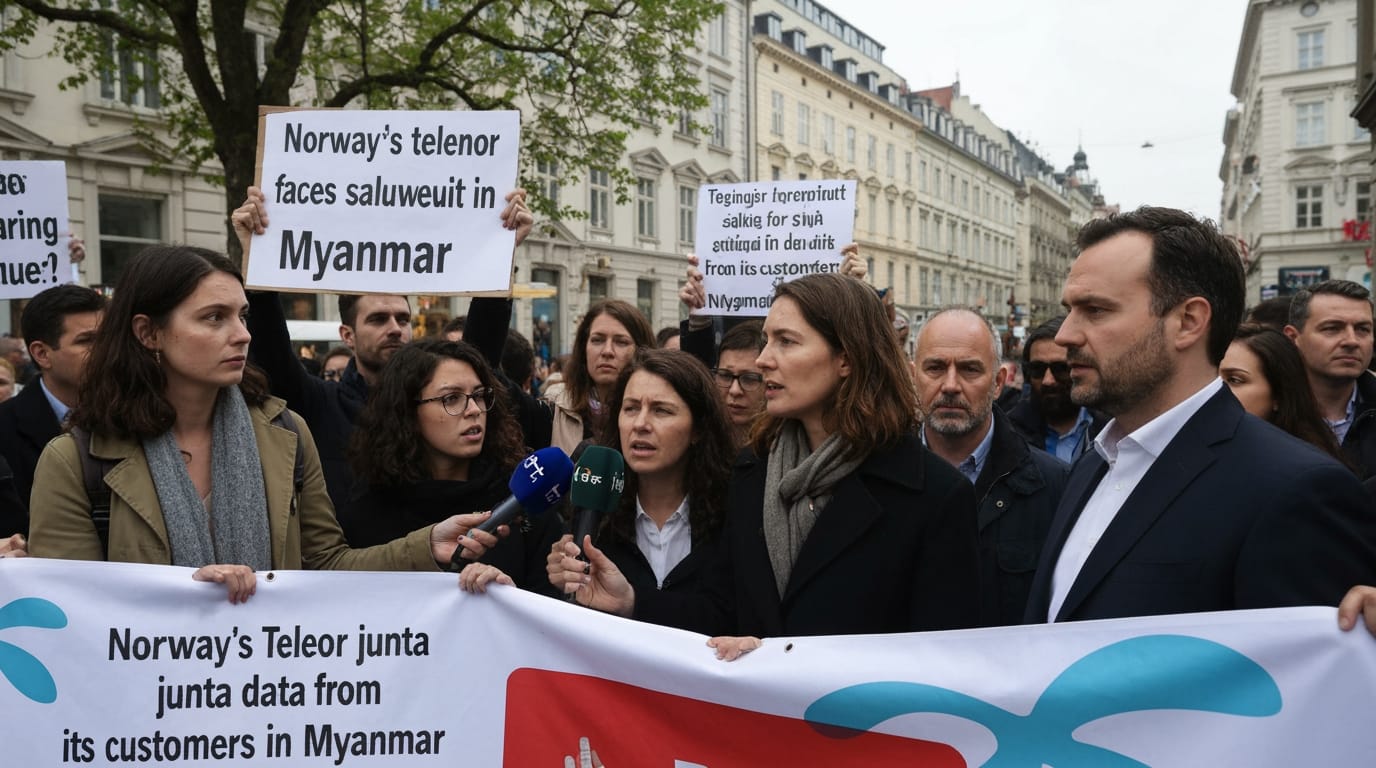
OSLO, Norway – Norwegian telecommunications firm Telenor is facing a landmark civil class action lawsuit in Norway, filed by over 1,200 customers from Myanmar. The lawsuit alleges that Telenor's Myanmar subsidiary provided sensitive personal data of its users to the military junta following the 2021 coup, leading to severe human rights violations, including arbitrary detentions, torture, and at least one execution. This legal action marks a significant moment, potentially setting a precedent for corporate accountability in protecting user data in authoritarian regimes.
The class action, filed on Wednesday, April 8, 2026, by the Swedish non-profit Justice and Accountability Initiative (JAI) and supported by the Open Society Justice Initiative (OSJI) and a Norwegian law firm, seeks damages for the Myanmar customers. Plaintiffs argue that the military junta exploited the disclosed data—which reportedly included names, physical addresses, Facebook and bank account details, location data, and call logs—to identify, arrest, and persecute pro-democracy activists. Telenor, majority-owned by the Norwegian state, has denied responsibility, claiming that its actions were taken under duress and to protect its employees.
Allegations of Complicity in Repression
The heart of the lawsuit lies in the claim that Telenor’s subsidiary, Telenor Myanmar, knowingly facilitated the junta's repressive crackdown. Court documents allege that Telenor Myanmar, with the parent company's knowledge, supplied user data to the military. This alleged data sharing is directly linked to the arrest and subsequent execution of prominent hip-hop artist and lawmaker Zeya Thaw in 2022. According to the plaintiffs, Telenor Myanmar handed over Zeya Thaw's call logs to the military in October 2021, despite internal assessments reportedly indicating a high risk to his safety. He was arrested shortly thereafter and executed in July 2022. Another case highlighted is that of civil society activist Aung Thu, who was arrested and jailed after his user data was allegedly disclosed by the company.
The plaintiffs contend that Telenor, which had approximately 18 million users in Myanmar by 2021, failed to adequately protect its customers' data, even as the human rights situation rapidly deteriorated after the February 2021 coup. They argue that Telenor's management and board were aware of the junta's violent tactics and still authorized or failed to prevent the data disclosures. The lawsuit seeks 9,000 euros (approximately $10,524 USD) in damages per affected customer for non-economic losses, including distress and anxiety.
Telenor's Difficult Position and Divestment
Telenor entered the Myanmar market in 2014, operating through its wholly-owned subsidiary, Telenor Myanmar. For years, it was seen as a key player in bringing modern telecommunications to the country. However, the military coup in February 2021 dramatically altered its operational landscape. The company announced its decision to sell its Myanmar operations in July 2021, citing an "untenable" situation marked by concerns over employee safety, regulatory hurdles, and compliance issues. Telenor stated that its continued presence would have required activating intercept equipment, creating an irreconcilable conflict between local demands and international human rights principles.
The sale process itself became a flashpoint for criticism. In March 2022, Telenor completed the sale of its Myanmar unit to a consortium involving Lebanese M1 Group and Shwe Byain Phyu, a company reportedly linked to the Myanmar military. Civil society organizations, including Access Now and SOMO, had vehemently warned against this divestment, arguing that it risked transferring vast amounts of sensitive customer data and surveillance technology directly into the hands of the military-backed regime. These concerns were explicitly raised before the sale was finalized, with critics suggesting Telenor failed to conduct sufficient human rights due diligence.
Broader Implications and International Scrutiny
The lawsuit against Telenor underscores the immense challenges telecommunications companies face when operating in politically unstable or authoritarian environments. It highlights the delicate balance between adhering to local laws, protecting employees, and upholding international human rights standards. Telenor, for its part, maintains that it had no "real options" in Myanmar and that refusing military requests could have endangered its staff. "We could not play Russian roulette with the lives of our employees," the company stated, adding that the military authorities are "solely... responsible for how they treat their own population." Telenor further asserts that it believed there was nothing in the lawsuit that the company had not already addressed and that the claim is unlikely to succeed.
Despite Telenor's defense, the company has faced significant international scrutiny. The Norwegian National Contact Point (NCP) for the OECD Guidelines on Responsible Business Conduct previously found that Telenor breached international standards regarding human rights and due diligence in its Myanmar operations and disengagement. The NCP concluded that Telenor "avoided taking 'nearly any possible actions to mitigate the risks for end users'" regarding data provision to the junta. Additionally, a police complaint was filed in December 2024 against Telenor and its management for allegedly violating Norwegian sanctions by installing and transferring surveillance equipment and sharing customer data between 2018 and 2022.
A Precedent-Setting Case
This class action lawsuit is being closely watched by human rights advocates and legal experts worldwide. If successful, it would mark the first instance of a telecommunications company being held accountable for failing to protect user data from an authoritarian regime. It raises fundamental questions about corporate responsibility, the limits of corporate neutrality in conflict zones, and the ethical obligations of companies handling vast amounts of personal data. The outcome could compel multinational corporations to re-evaluate their risk assessments and human rights due diligence processes, particularly when operating in high-risk territories. The ongoing legal battle will likely shape future dialogues on digital rights and corporate accountability in an increasingly complex global landscape.


