Taiwan Opposition Leader Embarks on Historic "Peace Journey" to China Amid Heightened Tensions
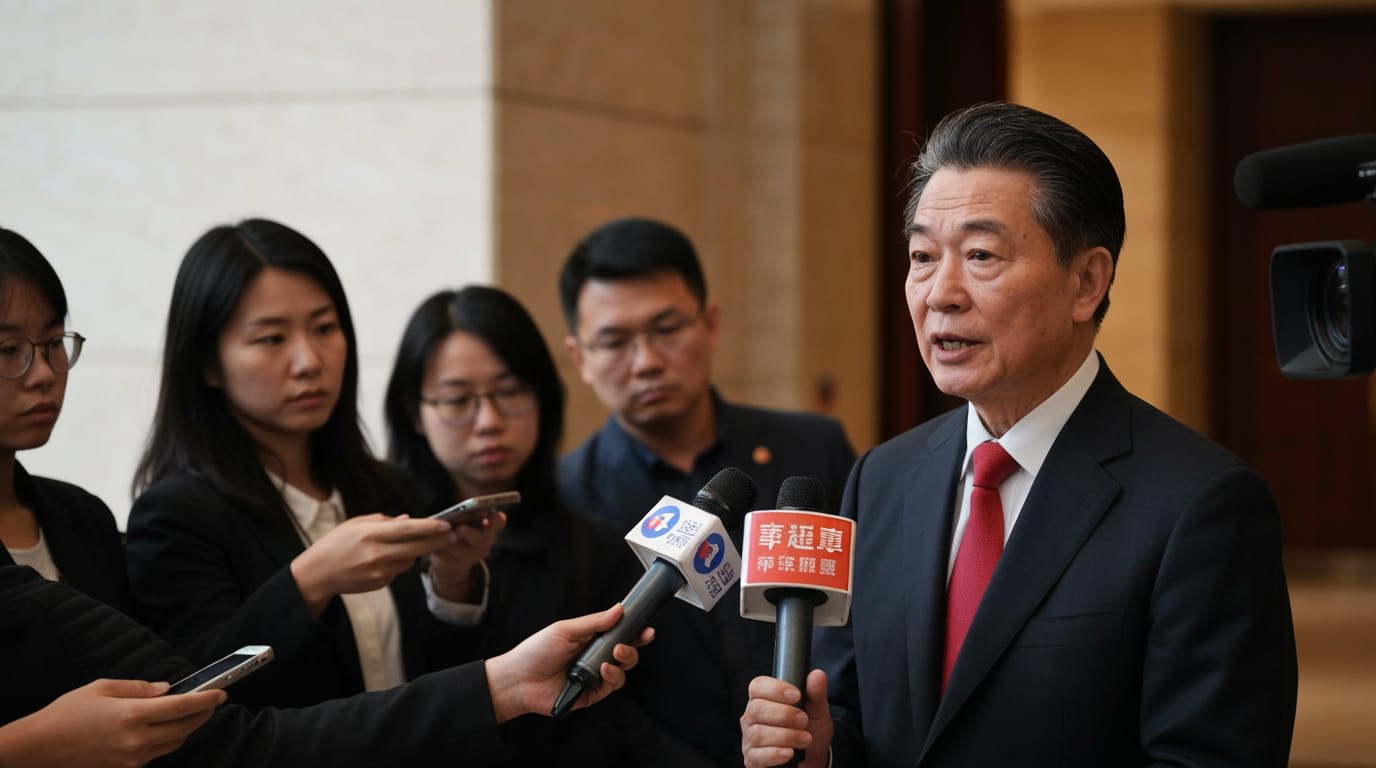
Taipei, Taiwan – In a highly anticipated and symbolically charged diplomatic overture, Cheng Li-wun, the Chairwoman of Taiwan's main opposition Kuomintang (KMT) party, arrived in mainland China in April 2026 for a six-day visit, marking the first such trip by a sitting Taiwanese opposition leader in a decade. Heralded by Cheng as a "journey for peace," the visit unfolded against a backdrop of escalating military pressure from Beijing on the self-governed island and deep divisions within Taiwan regarding cross-strait engagement. Her delegation's stated aim is to foster dialogue and de-escalate tensions, a mission met with both hope and skepticism across the Taiwan Strait.
Cheng Li-wun's trip, which included stops in Jiangsu, Shanghai, and Beijing, was undertaken at the invitation of Chinese President Xi Jinping and the Central Committee of the Communist Party of China. It represents a rare high-level interaction between Taipei's political sphere, outside of the ruling Democratic Progressive Party (DPP), and Beijing, which claims Taiwan as its own territory and has not renounced the use of force to achieve unification. This diplomatic maneuver occurs at a sensitive juncture, just weeks before Taiwan's President-elect Lai Ching-te, whom Beijing views as a "separatist," is set to take office.
A Bid for Dialogue Amidst Military Posturing
Cheng's arrival in China on April 7, 2026, was characterized by a stated commitment to peace and a desire to demonstrate that the aspiration for de-escalation is not solely unilateral from Taiwan's side. Before departing from Taipei, the KMT chairwoman emphasized the necessity for Taiwan to "spare no effort to prevent war and seize any opportunity to promote peace." Her itinerary included a significant visit to the mausoleum of Sun Yat-sen in Nanjing, a pivotal figure revered by both the KMT and the Communist Party as the founder of modern China. At this site, Cheng pledged to channel Sun Yat-sen's spirit, advocating for reconciliation and unity across the Taiwan Strait.
The timing and nature of the visit are particularly salient given the current geopolitical climate. Beijing has consistently ramped up its military activities near Taiwan, deploying warships and warplanes almost daily, and staging live-fire drills, the latest of which occurred in December. Simultaneously, Taiwan's opposition-dominated parliament has stalled a proposed $40 billion special defense budget, intended to fund crucial arms purchases and bolster the island's indigenous defense capabilities. The KMT has been critical of the ruling DPP's defense spending plans, labeling them a "blank check," further underscoring the political divides on national security strategy within Taiwan.
The KMT's Enduring Cross-Strait Philosophy
The Kuomintang, as Taiwan's oldest political party, maintains a long-standing position of advocating for closer ties with mainland China, often emphasizing shared cultural and historical heritage. This approach stands in contrast to the DPP's stance, which views Taiwan as a sovereign nation and strongly objects to Beijing's sovereignty claims. The KMT's engagement policy is largely rooted in the "1992 Consensus," an understanding that acknowledges "one China" but allows for differing interpretations of what that entails. Cheng Li-wun, in accepting Xi Jinping's invitation, reiterated her party's opposition to Taiwan independence and its adherence to this consensus.
The KMT's history of cross-strait dialogue includes notable visits by former leaders. Most prominently, former President Ma Ying-jeou, also of the KMT, made a historic trip to China in April 2024, which included a meeting with President Xi Jinping. Ma's 2024 visit, primarily focused on cultural and social links with a student group, was framed as fostering peace and mutual understanding. He also made an earlier visit in March-April 2023, primarily for ancestral worship, which still carried significant political messaging. These past interactions highlight the KMT's consistent belief that engagement, even through retired officials or cultural exchanges, is crucial for managing relations with Beijing.
Beijing's Strategic Calculations
For Beijing, extending an invitation to a prominent Taiwanese opposition leader like Cheng Li-wun serves multiple strategic purposes. It aligns with China's "united front" strategy, aimed at cultivating influence and fostering reunification efforts by engaging various sectors of Taiwanese society, particularly those amenable to closer cross-strait ties. By engaging with the KMT, Beijing attempts to signal to the international community that dialogue with Taiwan is possible, albeit only with parties that acknowledge a shared "one China" framework.
Analysts suggest that the timing of Cheng's visit is highly deliberate. It precedes a potentially significant meeting between Chinese President Xi Jinping and former U.S. President Donald Trump, scheduled for May, and sends a clear message to Washington. This engagement with the KMT could be an attempt by Beijing to demonstrate its ability to influence Taiwan's internal politics and potentially undermine the DPP's agenda, particularly regarding defense spending backed by the U.S. By showcasing engagement with the KMT, Beijing attempts to highlight internal divisions within Taiwan and project an image of a more flexible approach to cross-strait relations, contrasting with its hardline stance against the incoming DPP administration.
Divided Reactions and Domestic Implications
The "peace journey" by Chairwoman Cheng Li-wun elicited a spectrum of reactions within Taiwan. While some KMT supporters viewed the trip as a necessary step to reduce the risk of conflict and create channels for communication, others, particularly proponents of Taiwan independence and the ruling DPP, voiced strong criticism. Protests were reported at Taipei's airport upon Cheng's departure, reflecting the deep ideological chasm concerning relations with mainland China.
The ruling DPP and its allies cautioned Cheng against becoming a "tool" for Beijing's "united front" tactics, urging her to convey to Chinese officials, including President Xi, the need to cease military intimidation and respect the Taiwanese people's democratic right to choose their own future. Concerns were raised that Beijing could exploit the visit to propagate the narrative that a significant portion of Taiwan's population supports the "one China" principle. Conversely, KMT vice-chairman Chang Rong-kung defended the visit, suggesting it "buys time and space for Taiwan" by persuading Beijing that some in Taiwan favor closer ties, thereby potentially reducing the impetus for military action.
Navigating a Complex Future
Cheng Li-wun's rare visit to mainland China underscores the intricate and often paradoxical nature of cross-strait relations. While the KMT, as Taiwan's primary opposition party, cannot unilaterally forge agreements that bind the entire island, the visit's symbolic weight and potential for party-to-party dialogue remain significant. It represents a continuity of the KMT's long-held belief in engagement as a pathway to stability, even as the political landscape in Taiwan increasingly leans towards a more distinct national identity. The success of such a "peace journey" is not merely measured by tangible outcomes but by its ability to open or maintain communication channels that have become increasingly fraught. In a region frequently described as a potential flashpoint, even flawed gestures of dialogue play a role in managing misunderstandings and averting escalation, offering a barometer for the evolving dynamics between Taipei and Beijing.


