Nuclear War Risk Escalates Amidst Renewed Global Arms Race
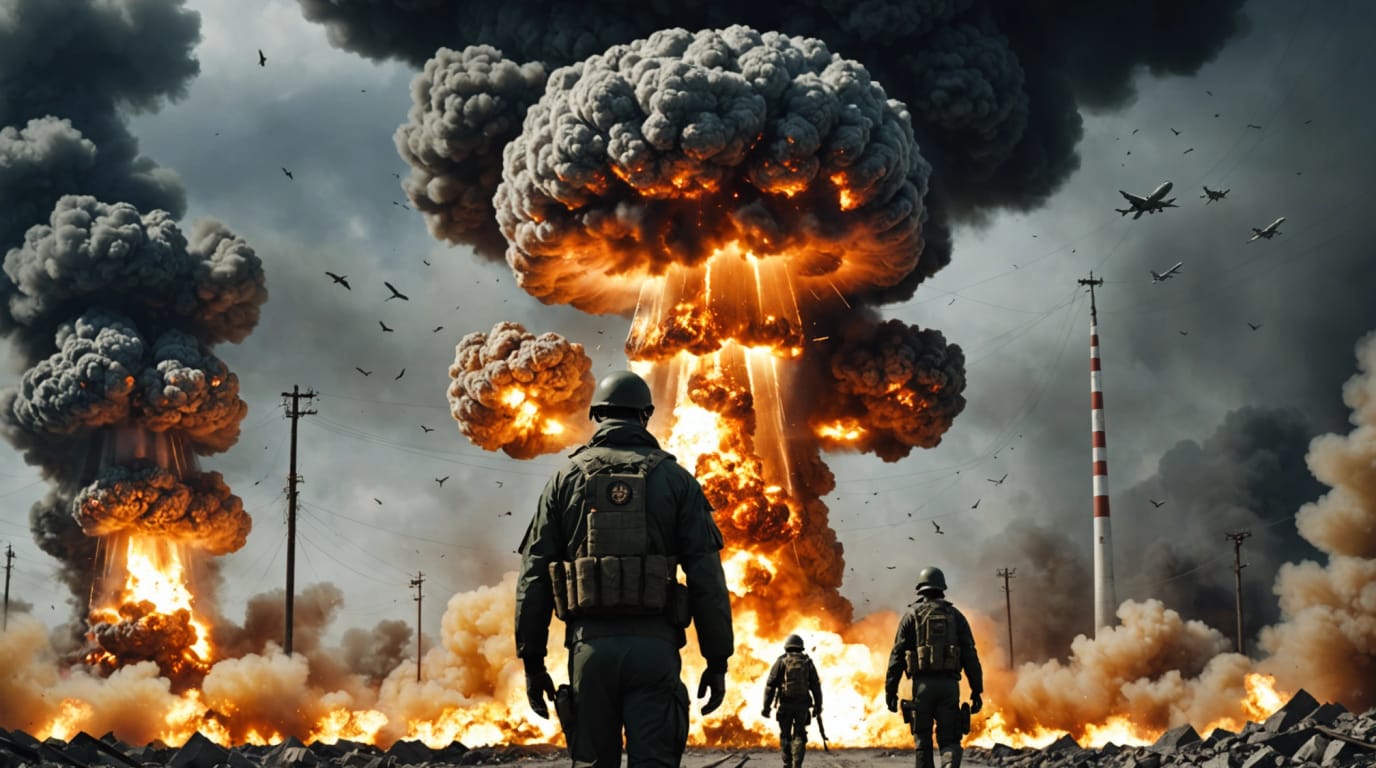
The threat of nuclear conflict is looming larger than it has in decades, as a new arms race takes shape amid eroding international relations and a weakening of arms control frameworks. Several reports and analyses indicate a dangerous trend: nuclear-armed states are modernizing and expanding their arsenals, while geopolitical tensions rise and treaties meant to limit the spread of these weapons are collapsing.
Modernization and Expansion of Arsenals
Nearly all nine nuclear-armed states—the United States, Russia, the United Kingdom, France, China, India, Pakistan, North Korea, and Israel—are actively engaged in modernizing their nuclear capabilities. This includes replacing aging warheads, developing new missile systems, enhancing submarine-launched capabilities, and integrating advanced guidance systems.
Russia and the U.S. possess roughly 90% of the world's nuclear weapons. While both countries have maintained relatively stable stockpile sizes in 2024, they are pursuing extensive modernization programs. The U.S. is facing planning and financial setbacks in its modernization efforts, while Russia has experienced delays with its Sarmat ICBM. Despite these challenges, both nations are expected to increase their nuclear deployments in the coming years. China's nuclear arsenal is also growing rapidly, with an estimated 600 warheads. The country is constructing 350 new launch silos and may now be keeping some warheads mounted on missiles during peacetime.
Eroding Arms Control Frameworks
The resurgence of nuclear weapons development is occurring alongside the deterioration of arms control agreements. The U.S. withdrawal from the Anti-Ballistic Missile (ABM) Treaty in 2002 and the collapse of the Intermediate-Range Nuclear Forces (INF) Treaty in 2019 have weakened the international framework designed to prevent nuclear proliferation. The New START treaty, which limits the number of deployed warheads on strategic missiles, is set to expire in 2026, and without a successor agreement, the number of deployed warheads could increase.
Technological Advancements and New Risks
Emerging technologies are further complicating the nuclear landscape. Hypersonic weapons, capable of traveling at more than five times the speed of sound, can deliver nuclear payloads with unpredictable trajectories. Low-yield tactical weapons, designed for battlefield use, lower the threshold for nuclear deployment. Underwater nuclear drones pose a threat to coastal targets. The integration of artificial intelligence (AI), cyber tools, and satellite-based systems into nuclear strategies also raises concerns about oversight, control, and decision-making processes. Faster decision-making enabled by new technologies increases the risk of accidental conflict.
Regional Hotspots and Escalation Risks
Several regional conflicts and geopolitical tensions are exacerbating the risk of nuclear war. The conflict between Israel and Iran has raised concerns about nuclear proliferation in West Asia. India and Pakistan, both nuclear-armed states, have seen a rise in hostile rhetoric and cross-border tensions. A brief armed conflict between India and Pakistan in early 2025 highlighted the risks of escalation, with strikes on nuclear-related military infrastructure and third-party disinformation potentially turning a conventional conflict into a nuclear crisis. In Europe, the conflict in Ukraine has led to increased military spending and heightened tensions between Russia and NATO. Belarus and Russia have reiterated claims of Russian nuclear weapons being deployed in Belarus, while several NATO states have expressed interest in hosting U.S. nuclear arms.
Global Impact and the Need for Action
The expansion and technological transformation of nuclear arsenals heighten the risk of miscalculation, destabilization, and potential conflict escalation. The rise of AI, cyber tools, and satellite-based systems complicates oversight and control mechanisms, potentially reducing decision time and increasing systemic vulnerabilities. The world now has an estimated 12,241 nuclear warheads, with about 9,600 in military stockpiles. Nearly 4,000 warheads are currently deployed on missiles or aircraft, and around 2,100 are on high alert.
The current trajectory of nuclear weapons development, coupled with deteriorating international relations, has created a dangerous environment where the risk of nuclear conflict is at its highest point since the Cold War. Without immediate and concerted action to establish new arms control frameworks, enhance crisis stability mechanisms, and reduce nuclear tensions, the world faces an increasing likelihood of catastrophic nuclear exchange. Urgent dialogue among nuclear states and re-establishment of verifiable arms control mechanisms are needed to prevent further deterioration of global security.


