Orban's Grip Loosens as New Challenger Emerges in Hungary
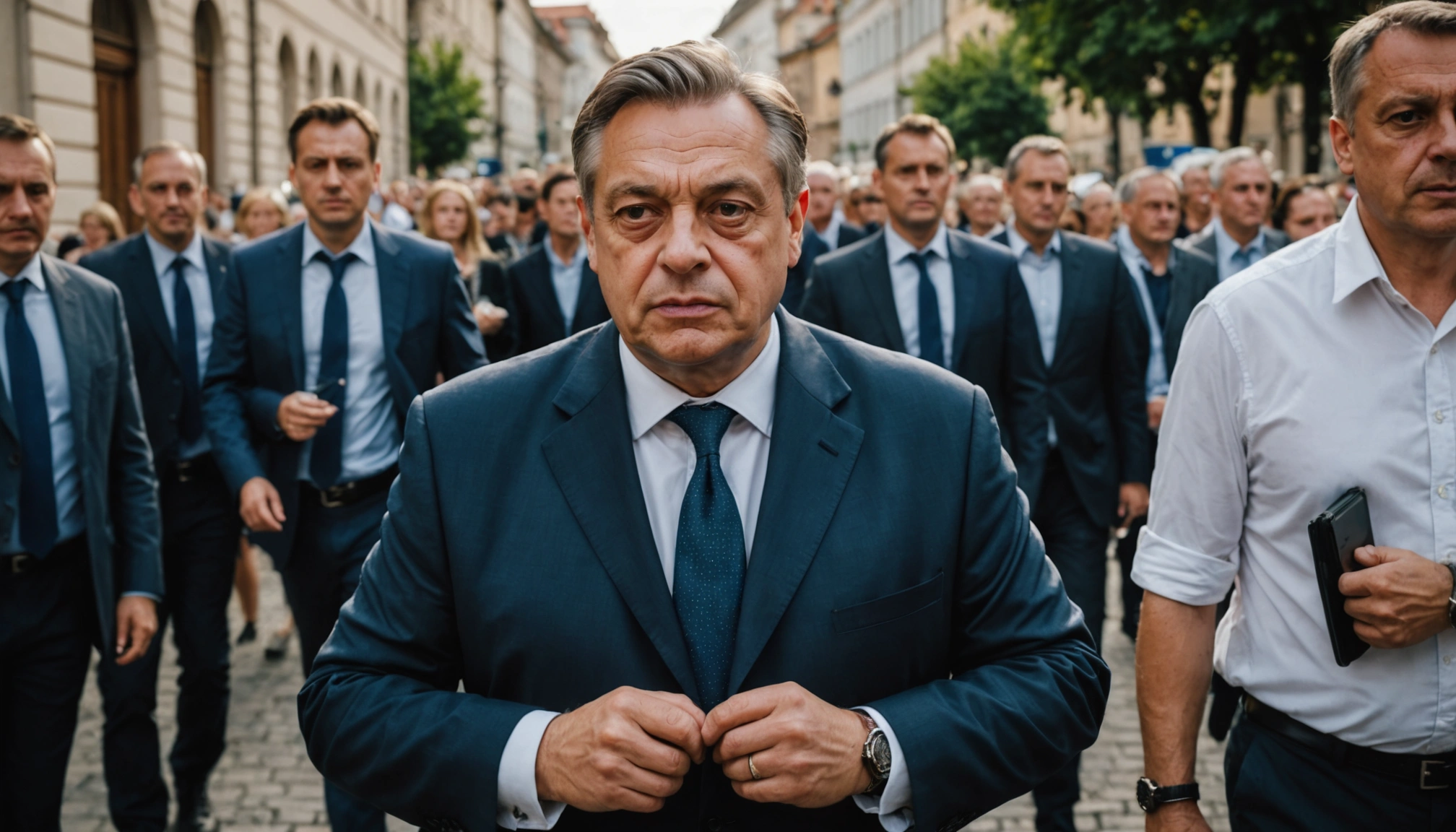
Hungary's political landscape is undergoing a seismic shift as Péter Magyar, a newcomer to the scene, rises to challenge the long-standing dominance of Prime Minister Viktor Orbán and his Fidesz party. While Orbán's Fidesz-KDNP coalition secured a victory in the recent European Parliament elections, its weakest performance since 2004 signals a growing dissatisfaction among Hungarian voters and the potential for a more competitive political future. Magyar's sudden emergence and the rapid success of his newly formed TISZA party have injected a new dynamic into Hungarian politics, raising questions about the future of Orbán's leadership.
The Rise of Péter Magyar and TISZA
Péter Magyar, a 44-year-old lawyer and former member of Fidesz, has rapidly become a prominent figure in Hungarian politics. His rise began after he broke away from Fidesz following a child abuse pardon scandal, capitalizing on growing public discontent with the Orbán government. Magyar's TISZA party, established just months before the European elections, secured nearly 30% of the vote and 7 seats in the European Parliament. This impressive debut positions TISZA as the leading opposition party and a formidable challenger to Orbán's leadership in the upcoming 2026 parliamentary elections.
Magyar's appeal stems from his ability to tap into a desire for change among Hungarian voters. He has successfully mobilized large crowds, drawing hundreds of thousands of people to his rallies across the country. Unlike Orbán, who is rarely seen on the streets, Magyar has been actively engaging with citizens in towns and villages, presenting himself as a fresh alternative to the established political order.
Fidesz's Declining Support
While Fidesz-KDNP won the European Parliament elections with 44.5% of the vote, securing 11 of Hungary's 21 seats, this result represents a significant decline in support compared to previous elections. In 2019, the party won 53% of the vote and 13 seats. The recent election marked the worst result for Orbán's party in European Parliament elections since Hungary's accession in 2004. This decline suggests that Orbán's grip on power may be weakening, and that Hungarian voters are increasingly open to considering alternative political options.
Several factors may have contributed to Fidesz's declining support. Orbán's campaign focused heavily on Euroscepticism and fears of the war in Ukraine, but this message appears to have resonated less with voters than in the past. Additionally, Magyar's emergence as a credible challenger has provided a focal point for those dissatisfied with the Orbán government, drawing support away from Fidesz.
The 2024 European and Local Elections
The 2024 European and local elections in Hungary highlighted the shifting political landscape. Voter turnout reached a record high of 59%, indicating a heightened level of engagement among Hungarian citizens. In the European Parliament elections, TISZA's strong performance overshadowed Fidesz's victory, signaling a significant realignment in the Hungarian party system.
In the local elections, Fidesz secured a majority in the assemblies of all 19 counties, demonstrating its continued strength in many regions. However, the party also experienced setbacks, losing control of the city of Győr while regaining control of Miskolc, Eger and Salgótarján. The race for mayor of Budapest was particularly close, with incumbent Gergely Karácsony narrowly defeating his Fidesz-backed challenger.
Magyar's Strategy and Appeal
Magyar's success can be attributed to several factors, including his skillful political marketing and his ability to tap into widespread dissatisfaction with the Orbán government. He has adopted some of the rhetoric and campaign tactics of Fidesz, while also presenting himself as a pro-European alternative. A key difference between Magyar and Orbán is Magyar's promise to join the European Public Prosecutor's Office (EPPO), a move that would enhance transparency and accountability in Hungary.
Magyar's campaign slogan, "The flood from the Tisza is coming!" has resonated with voters, creating an atmosphere of change and anticipation. His youthful appearance and approachable demeanor have also contributed to his popularity, particularly among younger voters. By touring Hungarian towns and villages and engaging directly with citizens, Magyar has been able to connect with voters on a personal level, building a strong base of support.
Implications for the Future
The emergence of Péter Magyar and the success of TISZA have significant implications for the future of Hungarian politics. Magyar has established himself as a credible challenger to Orbán, and his party is well-positioned to compete in the 2026 parliamentary elections. While it is too early to predict the outcome of those elections, Magyar's rise has undoubtedly injected a new level of competition into Hungarian politics.
The success of TISZA also poses an existential threat to many of Hungary's established opposition parties. Magyar has largely absorbed opposition voters, leaving traditional parties struggling to remain relevant. The Hungarian political landscape is likely to undergo further changes in the coming years as Magyar and TISZA continue to challenge the dominance of Orbán and Fidesz.
Conclusion
Péter Magyar's rapid rise and the success of his TISZA party have disrupted Hungary's political landscape, presenting a significant challenge to Viktor Orbán's long-standing rule. While Fidesz remains a powerful force, its declining support and the emergence of a credible opposition leader suggest that Hungarian voters are increasingly seeking change. The 2026 parliamentary elections will be a crucial test of Magyar's ability to capitalize on this momentum and potentially unseat Orbán, ushering in a new era for Hungary.
Related Articles


Mounting Frustration Grips Russia as Economic Hardship and War's Toll Deepen
Moscow, Russia – A palpable shift in public sentiment is emerging across Russia, with growing frustration among citizens fueled by a confluence of economic pressures, increasing internet restrictions, and the undeniable...

Germany's Strategic Calculus: Ukraine Aid is an Investment in European Security, Not Charity
Berlin – The ongoing provision of substantial aid to Ukraine by Germany and its allies is increasingly being framed not as an act of altruism, but as a crucial investment in European security and stability. This...