Palestinian Villages Vanish Under Escalating Settler Violence in the West Bank
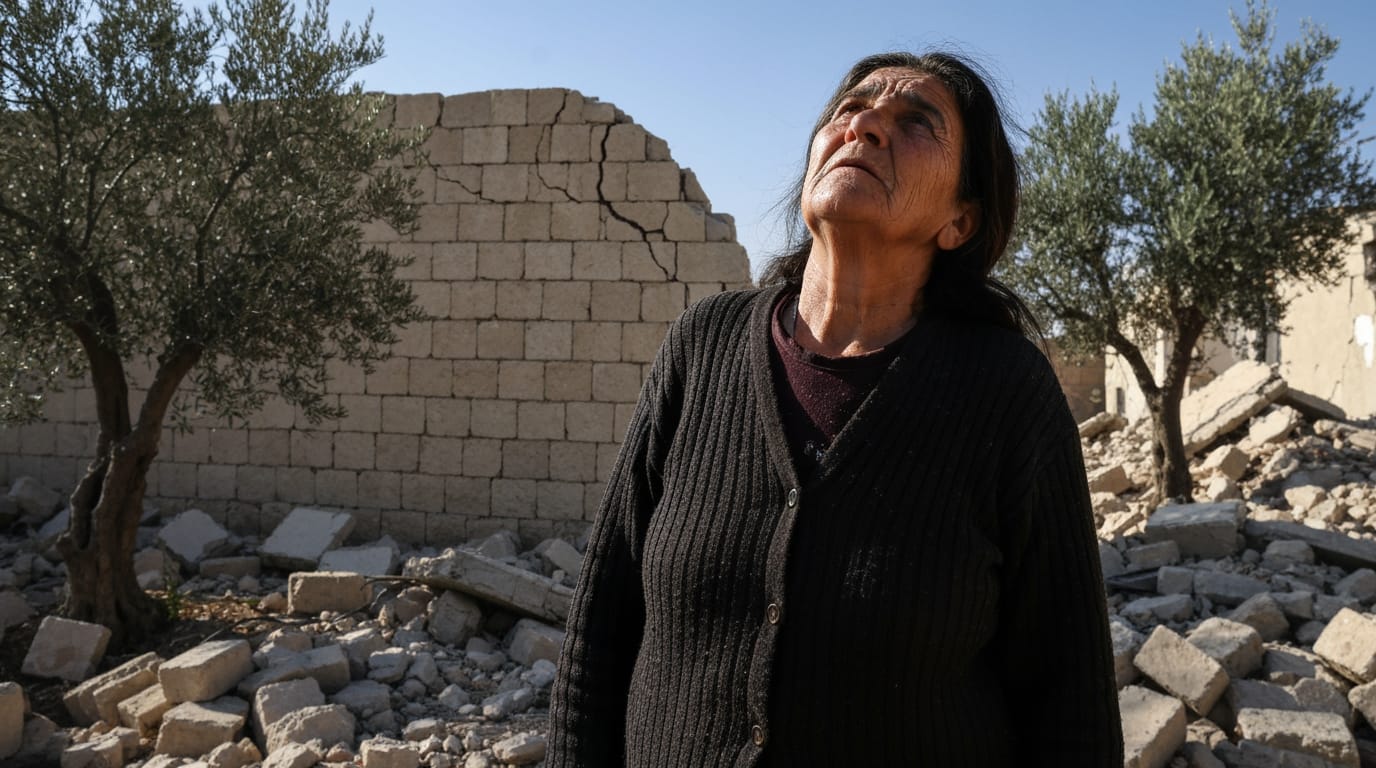
Hebron, Occupied West Bank – A disturbing and accelerating trend of Palestinian villages being emptied and erased from the landscape of the occupied West Bank is unfolding, driven by a surge in violence perpetrated by Israeli settlers. This systematic displacement, often occurring with alleged complicity or inaction from Israeli forces, has forced thousands of Palestinians from their ancestral homes, fundamentally altering the demographic and geographic realities of the territory. The humanitarian impact is profound, leaving communities shattered and livelihoods destroyed, while international calls for accountability have yet to stem the tide.
The Tide of Displacement: A Deliberate Strategy
The forced displacement of Palestinian communities in the West Bank has reached alarming levels, with human rights organizations reporting a significant escalation, particularly since October 2023. Over 50 rural Palestinian communities have been compelled to abandon their homes due to intensifying attacks, threats, and harassment by Israeli settlers. Of these, at least 50 communities have been entirely "wiped off the map," while another seven have seen partial displacement. This represents a dramatic increase, with a 30% rise in extremist right-wing violence against Palestinians in the early months of 2025 compared to the same period the previous year. Since October 7, 2023, more than 1,200 people, including 600 children, have been displaced from rural herding communities alone. This pattern extends across critical areas such as the South Hebron Hills, the Jordan Valley, and regions east of Ramallah and southeast of Bethlehem, areas where new settlement outposts are frequently established. In just two weeks leading up to late January 2026, over 100 Palestinian Bedouin and herding households were displaced from five communities, primarily from Ras Ein al 'Auja in the Jericho area.
Tactics of Intimidation and Destruction
The methods employed in these attacks are varied and designed to make life unbearable for Palestinian residents, forcing them to leave. Settler violence includes physical assaults, torture, sexual violence, and the theft of property and livestock. Homes and schools have been destroyed, and threats of permanent expulsion are common. Agricultural infrastructure is frequently targeted, with fruit-bearing trees cut down, water sources poisoned or diverted, and pastures burned. These actions directly undermine the economic stability of farming and herding communities, stripping them of their means of survival. In one instance in January 2026, Israeli settlers severed the main water pipe supplying Palestinian homes on the outskirts of Turmus'ayya town, diverting the water to a nearby settlement outpost. This act left seven households, including 13 children, reliant on dwindling on-site wells. Such incidents often fall under the category of "price tag" attacks, a term referring to acts of vandalism and violence committed by settlers, ostensibly in response to Israeli government actions.
A Climate of Impunity: The Role of Authorities
A significant factor enabling the continued displacement is the perceived impunity enjoyed by many perpetrators of settler violence. Human Rights Watch reported that the Israeli military either participated in these violent attacks or failed to protect Palestinians from them. Soldiers in uniform were reportedly present in nearly half of the more than 700 settler attacks recorded between October 2023 and April 2024. This alleged complicity extends to failing to intervene during attacks and, in some cases, actively taking part in the violence. Palestinian police are reportedly forbidden from reacting to acts of violence by Israeli settlers, further diminishing their credibility and leaving Palestinian communities vulnerable. Critics argue that this creates a climate where settlers operate with little fear of repercussion. Investigations into settler violence are often closed without indictment, or cases are dropped due to "unknown perpetrators," even when initial indictments are issued. Between January 2023 and January 2026, 1,049 Palestinians, including 229 children, were killed in the occupied West Bank, with combined settler and army actions causing the deaths of at least 1,072 Palestinians and injuring roughly 10,700 others between October 2023 and November 2025.
Eroding Livelihoods and the Human Cost
The targeting of Palestinian agricultural land, water sources, and livestock directly undermines the livelihoods of thousands. More than 72,000 farming and herding families, nearly two-thirds of all agricultural families, require urgent emergency agricultural assistance. The consistent disruption of access to homes, pastures, and water, combined with constant threats and intimidation, makes it impossible for many families to continue their way of life. For instance, in Ras Ein al 'Auja, a Bedouin community surrounded by four settlement outposts, intense settler attacks, including physical assaults, cutting solar electricity cables, and ploughing land, led to the forced displacement of 21 families (110 people, including 61 children) in a single day in January 2026. Families are often forced to dismantle their own homes, a process described as humiliating and painful. The psychological toll on these communities, facing repeated assaults and displacement, is immense.
International Condemnation and Limited Action
The international community has largely condemned the rising settler violence, with numerous countries and organizations expressing deep concern. The United States, the United Kingdom, France, Australia, and the European Union have imposed sanctions on individual extremist Israeli settlers and groups accused of engaging in violence, including financial and travel restrictions. The EU has explicitly condemned "continuous settler violence and deliberate provocations against Palestinian civilians," calling on the government of Israel to bring perpetrators to justice and comply with its obligations under international law. Germany's Foreign Office has similarly stated that the violence is unacceptable and must cease immediately, emphasizing Israel's obligation to protect Palestinians in the West Bank and prosecute those responsible. The United Nations has also raised strong concerns, with the UN Secretary-General condemning actions that violate international law. Despite these condemnations and sanctions, human rights advocates argue that the international response has been insufficient to halt the systematic displacement, which continues to reshape the West Bank.
The ongoing displacement of Palestinian communities by settler violence represents a critical and escalating humanitarian crisis in the occupied West Bank. The systematic nature of the attacks, coupled with the prevailing climate of impunity, poses a significant challenge to human rights and the potential for a peaceful resolution in the region. As villages vanish and families are uprooted, the international community faces increasing pressure to ensure accountability and protection for Palestinian civilians.


