Panama on Edge as US Targets China's Canal Influence
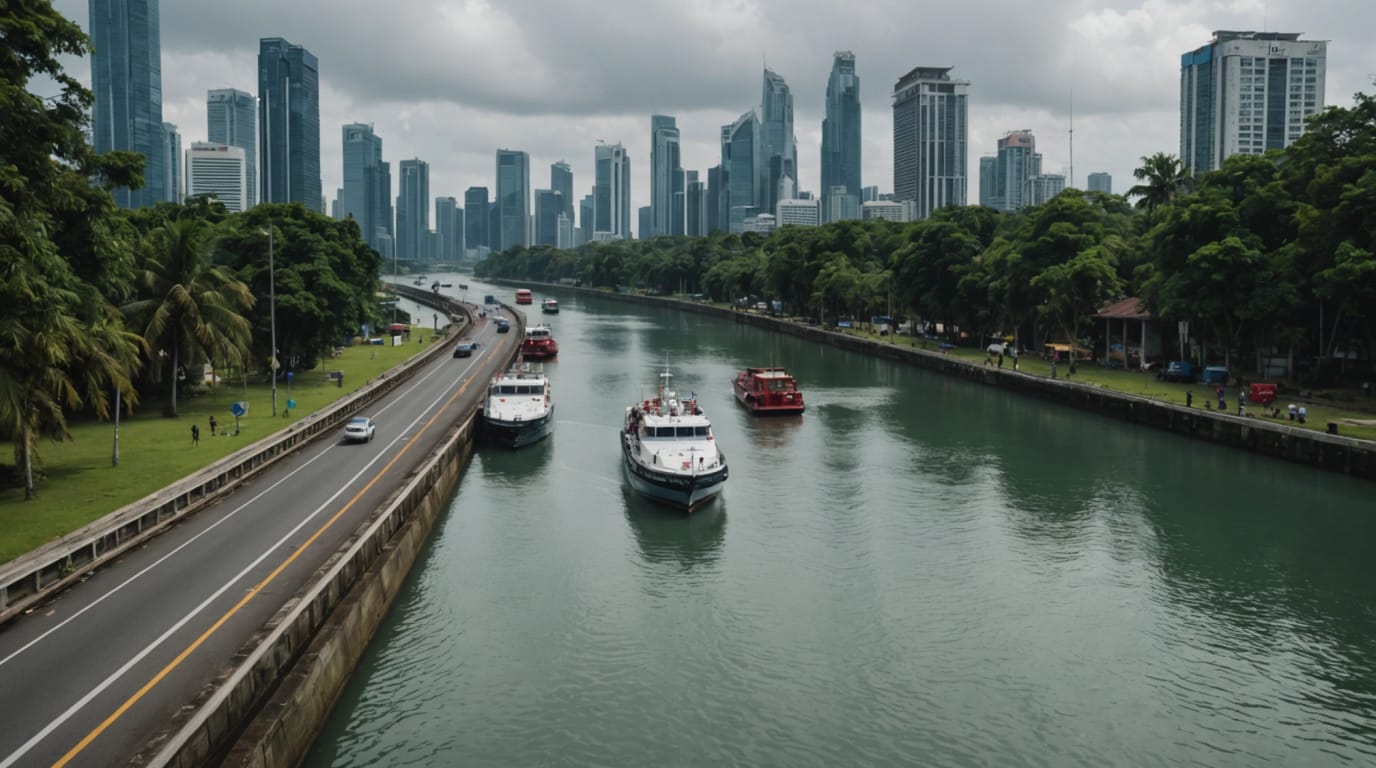
Panama is finding itself at the center of a geopolitical tug-of-war between the United States and China, with the strategic Panama Canal as the focal point. Washington is increasingly wary of Beijing's growing economic and political influence in the region, particularly its presence around the vital waterway, leading to heightened tensions and raising questions about Panama's sovereignty and the future of global trade.
US Concerns Mount Over Chinese Presence
The United States has expressed growing concerns over China's increasing involvement in Panama, particularly regarding infrastructure and port operations near the Panama Canal. U.S. officials worry that China's control of key infrastructure could allow it to exert undue influence over the canal's operations, potentially disrupting trade and hindering U.S. military efforts. These concerns have been amplified by China's Belt and Road Initiative (BRI), which has seen Chinese companies invest heavily in infrastructure projects across Latin America, including Panama.
Defense Secretary Pete Hegseth recently voiced strong concerns during a visit to Panama, stating that China's control of ports poses an unacceptable threat to U.S. security. He argued that China-based companies controlling critical infrastructure in the canal area could conduct surveillance activities, making both Panama and the United States less secure. Hegseth's remarks underscore the Trump administration's determination to counter China's influence in the Western Hemisphere and reclaim what it sees as diminishing U.S. control.
China Denies Interference, Accuses US of Bullying
China has vehemently denied any intention of interfering in the Panama Canal's operations, accusing the United States of "bullying" and "hegemony." The Chinese Embassy in Panama issued a statement asserting that Panama's decisions regarding its business partners are a sovereign matter and that the U.S. has no right to interfere. Chinese officials maintain that their investments in Panama are purely commercial and aimed at promoting economic development in the region.
China's Foreign Ministry has also pushed back against U.S. accusations, stating that the U.S. is attempting to sabotage Chinese-Panamanian cooperation by sensationalizing a "theoretical Chinese threat." They argue that the U.S. is using this narrative as a pretext to advance its own ambitions to control the canal. China insists that it respects Panama's sovereignty over the canal and acknowledges its status as a permanently neutral international waterway.
Panama Caught in the Middle
Panama finds itself in a precarious position, navigating the competing interests of two global superpowers. The country has historically maintained close ties with the United States, which built and controlled the Panama Canal for much of the 20th century. However, in recent years, Panama has also forged strong economic ties with China, which has become the canal's second-largest customer after the United States.
President José Raúl Mulino has repeatedly stated that China has no influence over the canal's operations, emphasizing that the Panama Canal Authority (ACP) is an independent body responsible for managing the waterway. However, the increasing pressure from the United States has put Mulino in a difficult position, forcing him to balance Panama's economic interests with its security relationship with the U.S.
Economic and Strategic Implications
The escalating tensions surrounding the Panama Canal have significant economic and strategic implications for all parties involved. The canal is a vital artery of global trade, facilitating the movement of goods between the Atlantic and Pacific Oceans. Any disruption to its operations could have far-reaching consequences for international supply chains and economic growth.
For the United States, maintaining control over the Panama Canal is seen as crucial for its national security and economic interests. The canal allows the U.S. Navy to quickly move warships between the Atlantic and Pacific, and it facilitates trade with key partners in Latin America and Asia. The U.S. also worries that Chinese control over nearby ports could be used to monitor U.S. naval movements and disrupt commerce.
China, on the other hand, views its investments in Panama as part of its broader effort to expand its economic and political influence around the world. Access to the Panama Canal is essential for China's growing trade with Latin America, and its investments in port infrastructure are aimed at facilitating this trade. China also sees its presence in Panama as a way to challenge U.S. dominance in the region.
Recent Developments and Future Outlook
Recent developments suggest that the United States is taking concrete steps to counter China's influence in Panama. A U.S.-led consortium, including BlackRock, acquired a majority stake in Panama Canal ports, a move seen as distancing Panama from Chinese influence. The U.S. and Panama have also announced an expanded security partnership, which includes increased military cooperation and information sharing.
Defense Secretary Hegseth announced that the U.S. Navy would send the hospital ship USNS Comfort to Panama this summer to provide medical care and deepen bilateral relationships. He also stated that the U.S. is working with Panama to revive locations where U.S. troops can work with Panamanian troops to enhance capabilities and cooperate in a rotational way.
The future of the Panama Canal remains uncertain as the U.S.-China rivalry intensifies. Panama will likely continue to face pressure from both sides, and its ability to maintain its neutrality and sovereignty will be tested. The outcome of this geopolitical struggle will have significant implications for the future of global trade, security, and the balance of power in the Western Hemisphere.
Conclusion
The Panama Canal has emerged as a key battleground in the growing competition between the United States and China. While Panama seeks to balance its relationships with both countries, the U.S. is actively working to counter China's influence in the region, raising concerns about Panama's sovereignty and the potential for increased tensions. The situation underscores the complex geopolitical dynamics at play in Latin America and the challenges faced by smaller nations navigating the interests of global superpowers. The world watches as Panama walks a tightrope, striving to maintain its strategic importance while preserving its autonomy in an increasingly polarized world.


