"Politzek": A Clandestine Glimpse into Russia's Expanding System of Repression
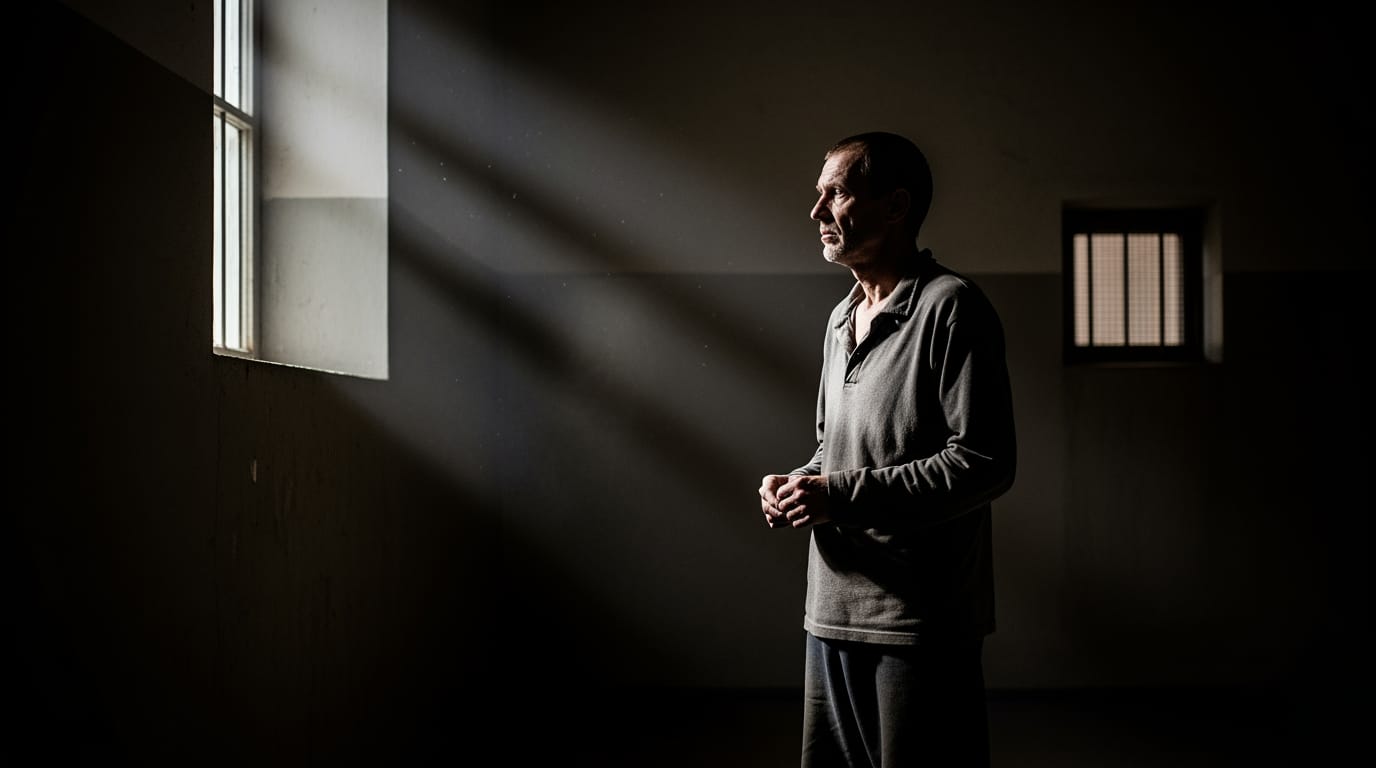
A new documentary, "Politzek," offers a rare and harrowing look into the escalating state repression within Russia, exposing the "machinery of state repression" that targets ordinary citizens for dissenting against the government or the ongoing war in Ukraine. Filmed clandestinely over more than a year, the film brings to light the personal stories of those labeled "Politzek"—political prisoners—who, despite immense fear, continue to challenge the Kremlin's tightening grip. Its release comes at a critical juncture, underscoring a period widely characterized as the most severe crackdown on free expression since the Soviet era.
Unveiling a Shadow System: The Faces of Repression
Directed by Manon Loizeau and Ekaterina Mamontova, "Politzek" documents how criticizing the war in Ukraine or President Vladimir Putin's regime has become a criminal offense in Russia. The documentary focuses on several compelling individual cases that illustrate the breadth and arbitrary nature of this repression. Among them is the story of a teenager, Arseniy Turbin, who was sentenced to six years in a penal colony 2,000 kilometers from Moscow for "terrorism" after posting anti-Putin videos on social media and advocating for the release of political prisoners and an end to the war. Another narrative features a young artist, Sasha Skotchilenko, who faced imprisonment for replacing price tags in supermarkets with anti-war messages.
The film also chronicles the "Kafkaesque trials" of two theater directors, Evgenia Berkovich and Svetlana Petriychuk, who were controversially sentenced to six years on terrorism charges for a play that, ironically, exposed the indoctrination of young girls by ISIS. Their case, like many others, reveals the state's readiness to reinterpret creative expression as extremist activity. Additionally, the documentary features human rights activist Oleg Orlov, co-founder of the Nobel Peace Prize-winning organization Memorial, who was condemned to nearly three years in prison for his work. These diverse stories collectively paint a picture of a society where even seemingly minor acts of dissent can lead to severe punishment, effectively terrorizing the populace into silence.
The Escalation of State Control
Manon Loizeau, who has documented Russia for over two decades, noted that the film was born out of the urgency following the death of opposition leader Alexeï Navalny in February 2024—an event she described as a "point of no return" and an "electrocution" that necessitated witnessing. The documentary highlights that the current scale of political imprisonment in Russia is unprecedented, with estimates suggesting between 3,000 and 4,000 political prisoners—a figure reportedly higher than during Leonid Brezhnev's era in the Soviet Union.
Since September 1, 2022, a vast array of repressive laws, numbering over 750, have been implemented, making it increasingly perilous to express any form of opposition. These laws extend to all strata of society, from children to the elderly, and encompass actions as simple as a social media post or even a mere search for unapproved keywords. The state's pervasive control is further exemplified by surveillance measures, such as mandated social media applications on mobile phones, intended to monitor and suppress any potential dissent.
Clandestine Filming and Unseen Resistance
The production of "Politzek" itself was an act of quiet defiance. Co-director Ekaterina Mamontova undertook the significant risk of filming inside Russia, operating clandestinely for more than a year. This secret footage forms the core of the documentary, presenting rare images and "broken yet unyielding voices" of those directly affected by the state's actions. Loizeau, prevented from re-entering Russia, collaborated with Mamontova and others who harbored visions of a different Russia, weaving together a narrative of "silenced resistance." The documentary reveals that despite the pervasive fear, a resilient network of solidarity exists among Russian citizens.
The film intentionally focuses on the personal narratives and struggles of individuals to humanize the often-abstract concept of political repression. It underscores that Russia is not a monolith of unified opinion, contrary to state propaganda, and that numerous people continue to resist in various, often subtle, ways.
The Call for Global Awareness and Solidarity
"Politzek" serves as a powerful call to international attention, urging viewers to recognize the daily realities faced by those within Russia who oppose the regime. The documentary emphasizes the importance of external support, highlighting how seemingly small acts, such as sending letters to political prisoners, can have a profound impact, potentially "saving a life" or preventing despair. Organizations like Memorial and the 30 October Foundation, which provides aid to political prisoners and their families, play crucial roles in this support system.
The documentary's international release on platforms like France 5, Deutsche Welle, and RTBF amplifies its message, seeking to ensure that the stories of these "Politzek" are not forgotten. In its totality, "Politzek" transcends being merely a film; it acts as a critical document of a challenging period in Russian history, revealing the human cost of a state determined to quash any voice of opposition. Its unflinching portrayal of courage in the face of overwhelming state power provides invaluable insight into a society grappling with profound political and social pressures.