Pope Francis Dies at 88, Setting in Motion Process to Elect Successor
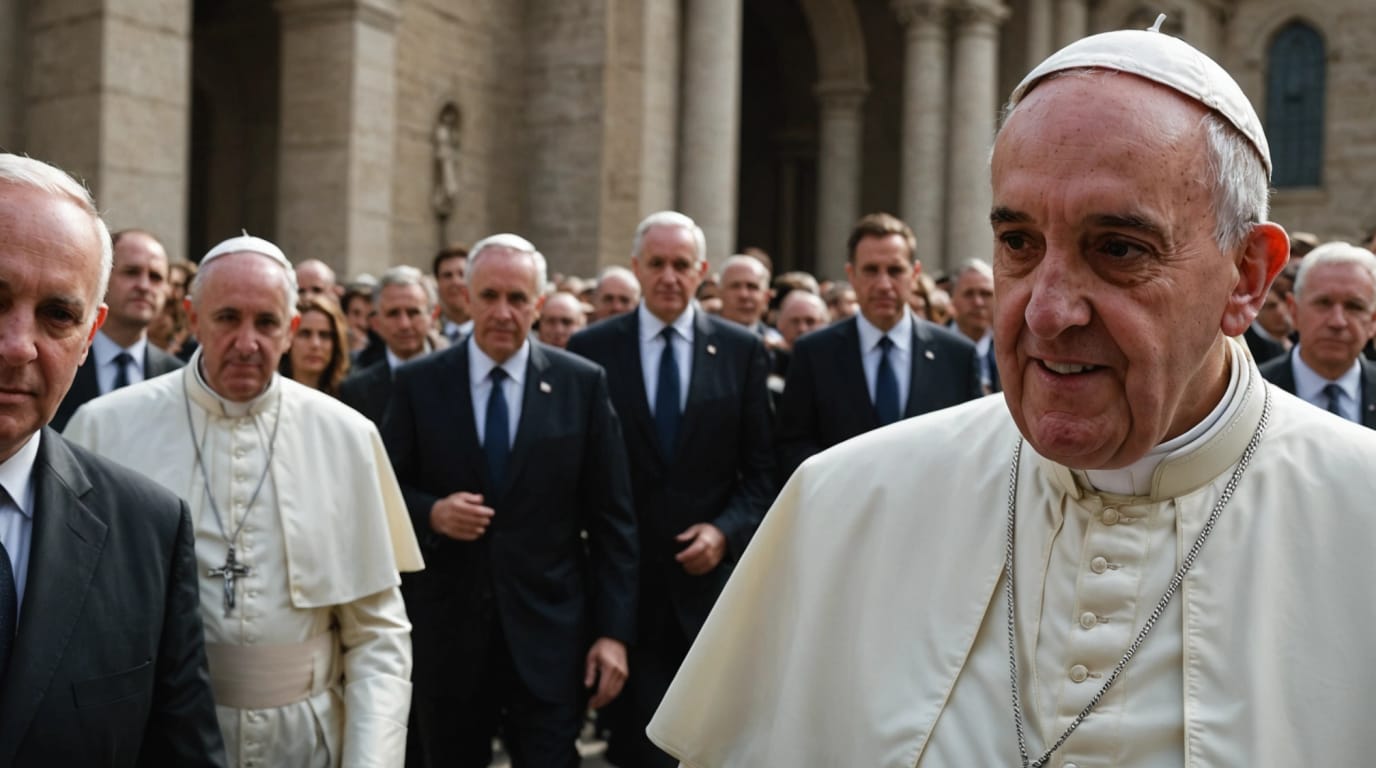
VATICAN CITY (April 22, 2025) – Pope Francis, the 266th pontiff of the Roman Catholic Church, died Monday at the age of 88, triggering a series of carefully orchestrated procedures steeped in centuries of tradition. The Vatican confirmed that Francis passed away at his residence, Casa Santa Marta, following complications from a stroke and irreversible heart failure. His death initiates a period known as "sede vacante," meaning "vacant seat," as the Catholic Church begins the process of selecting his successor.
Confirmation and Initial Procedures
Following the Pope's death, Cardinal Kevin Farrell, the Camerlengo of the Holy Roman Church, officially confirmed the passing. In a statement broadcast on Vatican television, Farrell announced, "At 7:35 this morning, the Bishop of Rome, Francis, returned to the Father's house. His entire life was dedicated to the service of the Lord and His church."
Farrell, appointed Camerlengo by Francis in 2019, is now responsible for safeguarding the temporal rights of the Holy See during the interregnum. His initial actions included sealing the papal apartments and organizing the funeral arrangements. Traditionally, the Camerlengo would have tapped the Pope's head three times with a silver hammer while calling out his baptismal name, but this practice has been discontinued.
Other key steps include the breaking of the Fisherman's Ring, used to seal official documents, and the lead seal, both done to prevent misuse during the vacancy. These items will be buried with the Pope.
Mourning Period and Funeral
The death of Pope Francis initiates a nine-day mourning period known as the "Novemdiales," a tradition dating back to Roman times. During this period, Vatican flags will fly at half-staff, and daily prayer services and Requiem Masses will be held at St. Peter's Basilica and in Catholic churches worldwide.
The funeral, called the “Missa Poenitentialis,” is expected to take place in St. Peter's Square within four to six days of the Pope's death. Delegations from around the world, including heads of state and religious leaders, are expected to attend. The service will be led by the Dean of the College of Cardinals, currently Giovanni Battista Re.
Breaking with tradition, Pope Francis had requested a simpler funeral. He will be laid in a plain wooden coffin, and the ceremony will be streamlined, reflecting his desire to be buried "like any son or daughter of the Church." Francis also chose to be buried at the Basilica of Santa Maria Maggiore in Rome, rather than the Vatican Grottoes, where many of his predecessors are interred.
The Conclave and Election of a New Pope
The central event following the Pope's death is the conclave, a gathering of the College of Cardinals to elect a new pontiff. The conclave is scheduled to begin between 15 and 20 days after the Pope's death, allowing time for mourning and for cardinals from around the world to travel to Rome. Benedict XVI introduced a rule in 2013 that allows the cardinals to begin the conclave sooner if all voting cardinals are present.
Only cardinals under the age of 80 are eligible to vote. Currently, approximately 135 cardinals meet this requirement. The cardinals will be sequestered in the Sistine Chapel, cut off from the outside world, and sworn to secrecy.
The voting process is conducted by secret ballot. Cardinals write the name of their chosen candidate on a ballot, and the votes are counted. A two-thirds majority is required to elect a new Pope. If no candidate receives the necessary majority, the ballots are burned, and black smoke is released from the Sistine Chapel chimney, signaling to the world that no decision has been reached.
The process continues with up to four rounds of voting each day until a Pope is elected. Once a candidate receives the required two-thirds majority and accepts the election, white smoke is released from the chimney, announcing "Habemus Papam" ("We have a Pope"). The new Pope then chooses a papal name and is presented to the world from the balcony of St. Peter's Basilica.
The Interregnum: Governance During the Vacancy
During the "sede vacante," the College of Cardinals assumes limited administrative functions. However, they cannot make decisions that are reserved for the Pope alone, such as appointing bishops or convening the Synod of Bishops.
The Camerlengo plays a crucial role during this period, administering the goods and temporal rights of the Holy See. He governs with the help of three cardinal assistants, chosen by lot and renewed every three days.
Pope Francis' Legacy
Pope Francis, born Jorge Mario Bergoglio in Argentina, was elected Pope in 2013, becoming the first Latin American pontiff. His papacy was marked by a focus on social justice, environmental concerns, and outreach to marginalized communities.
He was known for his humility, his calls for peace, and his efforts to reform the Catholic Church. Francis addressed issues such as climate change, poverty, and inequality, and he sought to promote dialogue and understanding between different religions and cultures.
His landmark encyclical Laudato Si' (2015) called for action on climate change and highlighted the interconnectedness of environmental and social issues. He also took steps to address the clergy sex abuse crisis and promote greater transparency within the Church.
While praised by many for his progressive stance on certain issues, Francis also faced criticism from conservatives within the Church who felt that he was undermining traditional doctrines.
The Future of the Catholic Church
The election of a new Pope will have a significant impact on the future direction of the Catholic Church. The cardinals will consider the challenges facing the Church, including declining membership in some parts of the world, the ongoing clergy sex abuse crisis, and the need to address social and environmental issues.
The next Pope will be tasked with leading the world's 1.3 billion Catholics and navigating the complex issues facing the Church in the 21st century. The selection process, steeped in tradition and guided by prayer, will be closely watched by Catholics and non-Catholics alike. The world awaits the announcement of "Habemus Papam" and the beginning of a new chapter in the history of the Catholic Church.


