Pope Leo XIV Concludes Historic Africa Tour, Urging Peace and Unity Amidst Continental Challenges
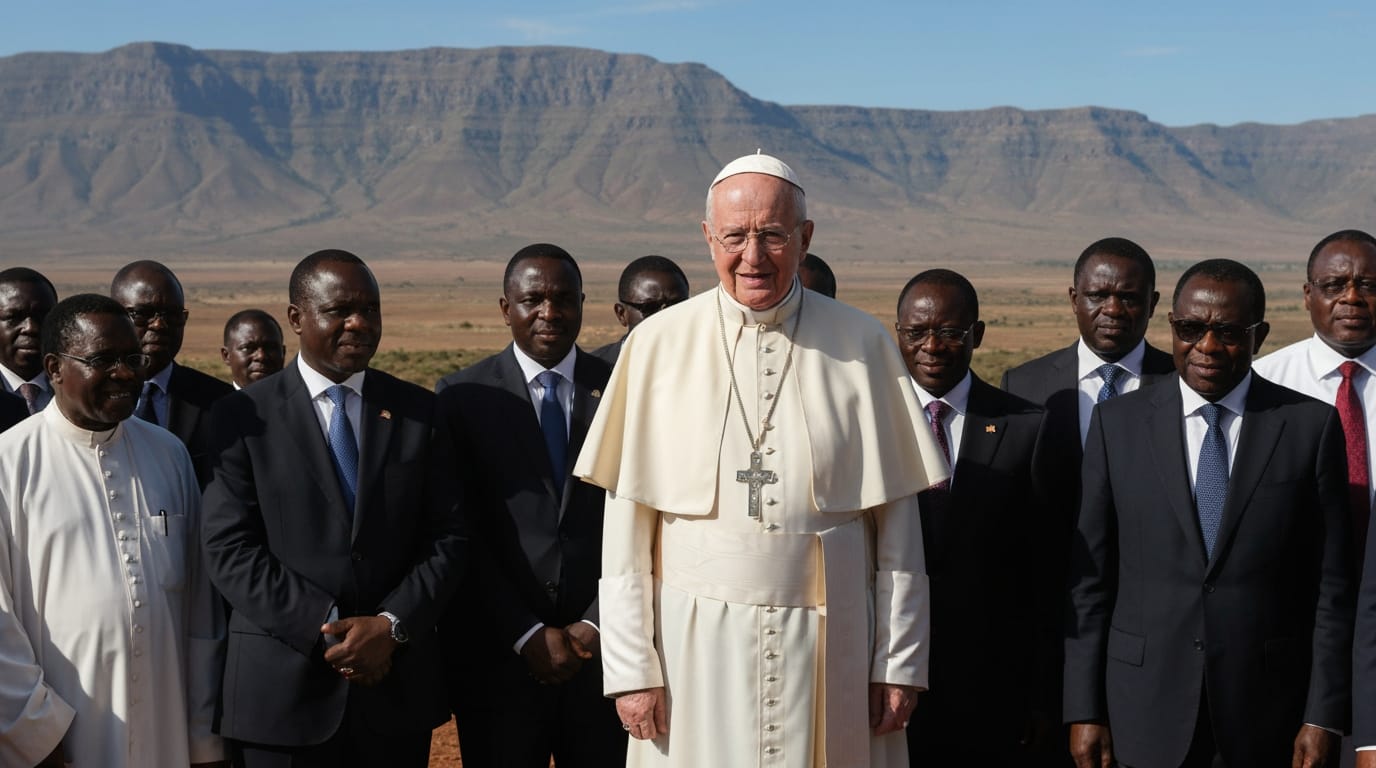
VATICAN CITY – Pope Leo XIV concluded a landmark 11-day apostolic journey across four African nations, delivering a fervent message of peace, unity, and social justice at a time of profound global tension and continental flux. The trip, spanning Algeria, Cameroon, Angola, and Equatorial Guinea from April 13 to April 23, 2026, marked the pontiff's most ambitious international engagement since his election, underscoring Africa's burgeoning importance within the global Catholic Church and its critical role in shaping a more harmonious future. His Holiness directly addressed the complex interplay of conflict, inequality, and interfaith relations, leaving behind a powerful call for dialogue and reconciliation that resonated deeply with leaders and ordinary citizens alike.
A Pilgrimage of Dialogue: Bridging Divides in Algeria
The papal visit commenced in Algeria, a nation predominantly Muslim, a strategic choice that immediately signaled a strong emphasis on interfaith dialogue. Pope Leo XIV became the first pontiff to visit Algeria, marking a significant milestone in relations between the Vatican and the North African country. During his time in Algiers, he met with President Abdelmadjid Tebboune and visited the historic Great Mosque, demonstrating a profound commitment to Christian-Muslim coexistence and mutual respect. This engagement was widely hailed as a model for interfaith solidarity, emphasizing shared values and the possibility of harmonious encounter despite religious differences.
Beyond interreligious outreach, the Pope's Algerian itinerary included a poignant pilgrimage to Annaba, the ancient site of Hippo, the homeland of Saint Augustine. This visit held personal significance for the pontiff, a member of the Augustinian order, connecting the Church's contemporary mission with its deep historical roots on the African continent. He also paid tribute to migrants who perished attempting to reach Europe by sea and prayed privately for the 19 priests and nuns killed during Algeria's "Black Decade" civil war between 1992 and 2002. International non-governmental organizations had urged Pope Leo to use his visit to raise concerns about the treatment of religious minorities with Algerian authorities, adding another layer to the delicate diplomacy of his initial stop.
Calls for Reconciliation: Addressing Conflict in Cameroon
Moving to Cameroon, Pope Leo XIV's focus shifted squarely to peace and reconciliation, particularly in the nation's conflict-affected English-speaking northwest region. In a powerful gesture, separatists reportedly announced a temporary cessation of hostilities during his presence, highlighting the moral authority associated with the papal visit. The pontiff led a significant "peace meeting" and celebrated Mass in Bamenda, a city at the heart of the violence, under heightened security. Here, he unequivocally declared that peace "must be embraced and lived," transcending mere rhetoric to become a lived reality.
His schedule in Cameroon also included a meeting with President Paul Biya and visits to numerous Catholic Church-run hospitals, schools, and charitable organizations, showcasing the Church's extensive grassroots involvement in social welfare and community support. The pontiff recognized the Catholic Church's unique position in bridging the Anglophone and Francophone cultural and linguistic divides within Cameroon, emphasizing its role as an institution capable of fostering unity. The Church's direct contributions to peacebuilding through its "capillary presence" in tens of thousands of institutions, from healthcare to education, are vital for empowering local communities and fostering dialogue, a message strongly reiterated during the Cameroonian leg of the trip.
Confronting Inequality: Justice in Angola and Equatorial Guinea
The latter half of the papal tour brought Pope Leo XIV to Angola and Equatorial Guinea, where his message underscored the urgent need for social justice and equitable resource distribution. In Angola, an oil-rich nation grappling with significant inequality, the Pope addressed issues of poverty and corruption, advocating for a more just distribution of the country's natural wealth. His itinerary included stops in the capital, Luanda, and Muxima, one of Southern Africa's most revered holy sites, bringing spiritual solace to communities living amidst stark economic disparities.
The visit to Equatorial Guinea proved particularly dramatic, as Pope Leo XIV directly challenged the nation's leaders to prioritize the common good over private interests, urging them to bridge the chasm between the privileged and the disadvantaged. He noted the sobering reality that despite vast oil and gas reserves, over half of the population lives in poverty under an authoritarian government. The pontiff advocated for "countercurrent politics"—a governance approach centered on collective well-being—and critically observed how new technologies, often conceived for warlike purposes, contribute to the exploitation of raw materials and the proliferation of armed conflicts, with disregard for international law.
A deeply symbolic moment occurred during his visit to a prison in Bata, Equatorial Guinea, where inmates loudly chanted "freedom, freedom" as the Pope departed. This spontaneous outcry brought global attention to human rights concerns in the country, including issues of prolonged detention and limited legal access. While not directly confronting the government on specific allegations, the Pope called for improved prison conditions, emphasizing the importance of education and work opportunities for detainees, highlighting the Church's consistent condemnation of corruption, violence, and exploitation.
Africa's Central Role in the Global Church and Peacebuilding Efforts
Pope Leo XIV's journey underscored Africa's rapidly expanding and increasingly central role in global Catholicism. The continent is home to a youthful and growing Catholic population, estimated at 280 million, representing nearly 20% of the world's Catholics. This demographic shift, coupled with the continent's vibrant faith, positions Africa as a vital force in shaping the future direction of the Church.
The visit also amplified the Catholic Church's long-standing engagement in peacebuilding, human rights advocacy, sustainable development, and good governance across Africa. Throughout the tour, the Pope reiterated themes familiar from previous papal visits to Africa: the promotion of dialogue, the rejection of violence, and the critical importance of forgiveness and reconciliation for lasting peace. Despite persistent challenges such as terrorism, violent extremism, ethnic disputes, bad governance, and human rights abuses that continue to threaten peace and stability in various African nations, the Church remains a steadfast advocate for those suffering from conflict and poverty. Scholars and observers recognize Africa as a "laboratory of peace," where the universal message of unity is rigorously tested against complex realities.
The Pope's historic tour was more than a series of diplomatic engagements; it was a profound human encounter aimed at fostering solidarity and hope. Through gestures of compassion, messages of unity, and unwavering calls for justice, Pope Leo XIV affirmed Africa's indispensable place not only in the life of the Catholic Church but also in the broader global quest for a more compassionate and equitable world. His visit served as a powerful reminder that peace without love and forgiveness is unattainable, urging every individual to contribute to forging peace regardless of ethnicity, culture, religion, or social status.


