Port Assab: A Volatile Fulcrum in Shifting Ethiopia-Eritrea Dynamics
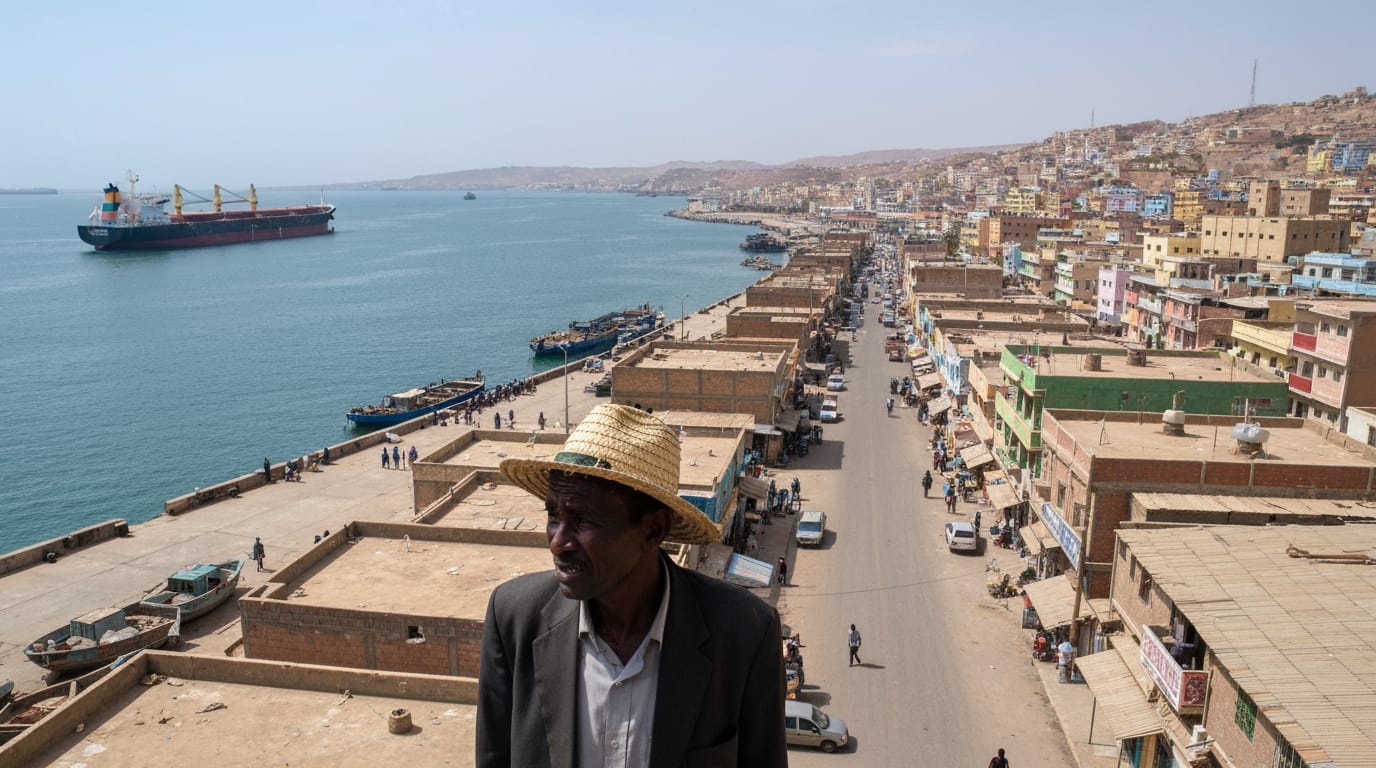
The Eritrean port city of Assab has re-emerged as a significant flashpoint in the delicate and often fraught relationship between Ethiopia and Eritrea. Once Ethiopia's primary maritime gateway, Assab now symbolizes a complex interplay of historical grievances, economic imperatives, and geopolitical ambitions, threatening to destabilize the fragile peace in the Horn of Africa. Ethiopia, a landlocked nation of over 120 million people, views access to the Red Sea as an existential national interest, crucial for its burgeoning economy and long-term security. Conversely, Eritrea steadfastly asserts its sovereignty over Assab, considering it a hard-won symbol of independence and a non-negotiable national asset. This fundamental divergence in perspectives has led to escalating rhetoric and heightened tensions, prompting international concern over the potential for renewed conflict in a strategically vital region.
The Enduring Legacy of Landlocked Ethiopia
Ethiopia's current landlocked status dates back to Eritrea's independence in 1993. Before this, Assab served as Ethiopia's main maritime outlet, handling over 90% of its trade and housing its only oil refinery. The separation, followed by the devastating 1998-2000 border war, severed these crucial ties completely. The conflict rendered Assab largely idle, its facilities aging and infrastructure underused, while Ethiopia became almost entirely dependent on the Port of Djibouti for its import and export needs. This reliance on a single port costs Ethiopia an estimated $1.5 to $2 billion annually in fees and services, presenting significant economic and strategic vulnerabilities. Ethiopia's need for diversified sea access is not merely an economic convenience but a developmental bottleneck, hindering its industrial growth and integration into global trade systems. Historically, Ethiopia's connection to the Red Sea coast is ancient and integral to its identity, with ports like Assab playing a central role in its trade and influence for centuries.
A Fleeting Peace and Unfulfilled Hopes
The 2018 peace agreement between Ethiopia and Eritrea, which earned Prime Minister Abiy Ahmed the Nobel Peace Prize, initially sparked hope for a new era of cooperation, including the potential reopening of Assab. The agreement marked the formal end of two decades of hostilities and promised renewed diplomatic relations. However, despite the initial optimism, the full economic integration, particularly regarding port access, did not materialize as expected. The reasons are complex, stemming from lingering mistrust and Eritrea's firm stance on its sovereignty. While Ethiopia continued to seek various avenues for sea access, including leasing arrangements with Somaliland, the issue of Assab remained a sensitive, unresolved question between the two former adversaries.
Ethiopia's Renewed Maritime Ambition
In recent times, Ethiopia has intensified its rhetoric regarding the indispensable need for sovereign sea access. Prime Minister Abiy Ahmed has framed this as a matter of national survival, emphasizing that a country of Ethiopia's size and economic ambition cannot remain landlocked indefinitely. Official and public discourse in Ethiopia increasingly hints at "historic claims" to Assab, with some officials openly stating that Ethiopia's ownership of the port has become a "survival interest worth paying any price for." The Ethiopian government asserts that its quest for sea access is rooted in historical rights, international law, and geopolitical necessity, aiming to correct what it views as a historical injustice. Ethiopia's Transport and Logistics Minister, Alemu Sime, even described the country's landlocked status as a "historical colonial sabotage" that the current generation must overcome. This robust advocacy is supported by significant investments in maritime education and a broader strategy to transform Africa into a global maritime hub, with Ethiopia playing a leading role.
Eritrea's Unwavering Stance and Regional Ramifications
Eritrea's response to Ethiopia's renewed maritime ambitions has been unequivocal. The Eritrean Ministry of Information has declared that sovereignty over its ports, including Assab, is "non-negotiable" and that any access must be governed by "direct bilateral agreement." For Eritrea, Assab is not just a port but a profound symbol of its hard-won independence and national identity. Eritrean officials have described Ethiopia's interest in Assab as "reckless and expansionist ambition," warning of serious consequences for regional stability if Ethiopia attempts to alter borders by force. The military has issued stark warnings against crossing this "red line," signaling a readiness to defend its territorial integrity.
The potential for renewed tensions over Assab extends beyond Ethiopia and Eritrea. Regional and international powers are closely monitoring the situation. Egypt, for instance, views any Ethiopian naval or commercial presence in Assab as a potential threat to its primacy in Red Sea security and Suez Canal-related issues. Saudi Arabia has also shown interest in developing the Port of Assab, aligning with its Vision 2030 strategy, which adds another layer of geopolitical complexity. The Red Sea is a critical global trade route, and any instability in the region could have far-reaching implications.
A Delicate Balance on a Strategic Coast
The dispute over Port Assab encapsulates the deep-seated challenges in the Horn of Africa, where economic aspirations, historical narratives, and national sovereignty clash. Ethiopia's imperative for sea access, driven by a growing population and economic ambitions, stands in direct opposition to Eritrea's steadfast defense of its territorial integrity. While international law recognizes the right of landlocked countries to access the sea, its practical application relies heavily on diplomacy, mutual benefit, and regional cooperation. The path forward demands a delicate balance, where dialogue, respect for sovereignty, and mutually beneficial agreements could transform Assab from a flashpoint of conflict into a conduit for shared prosperity. However, without a genuine will from both sides to engage constructively, the strategic port remains a volatile symbol, holding the potential to either foster integration or reignite conflict in an already fragile region.


