Pressure Mounts for Probe Into Palestinian Medics' Deaths
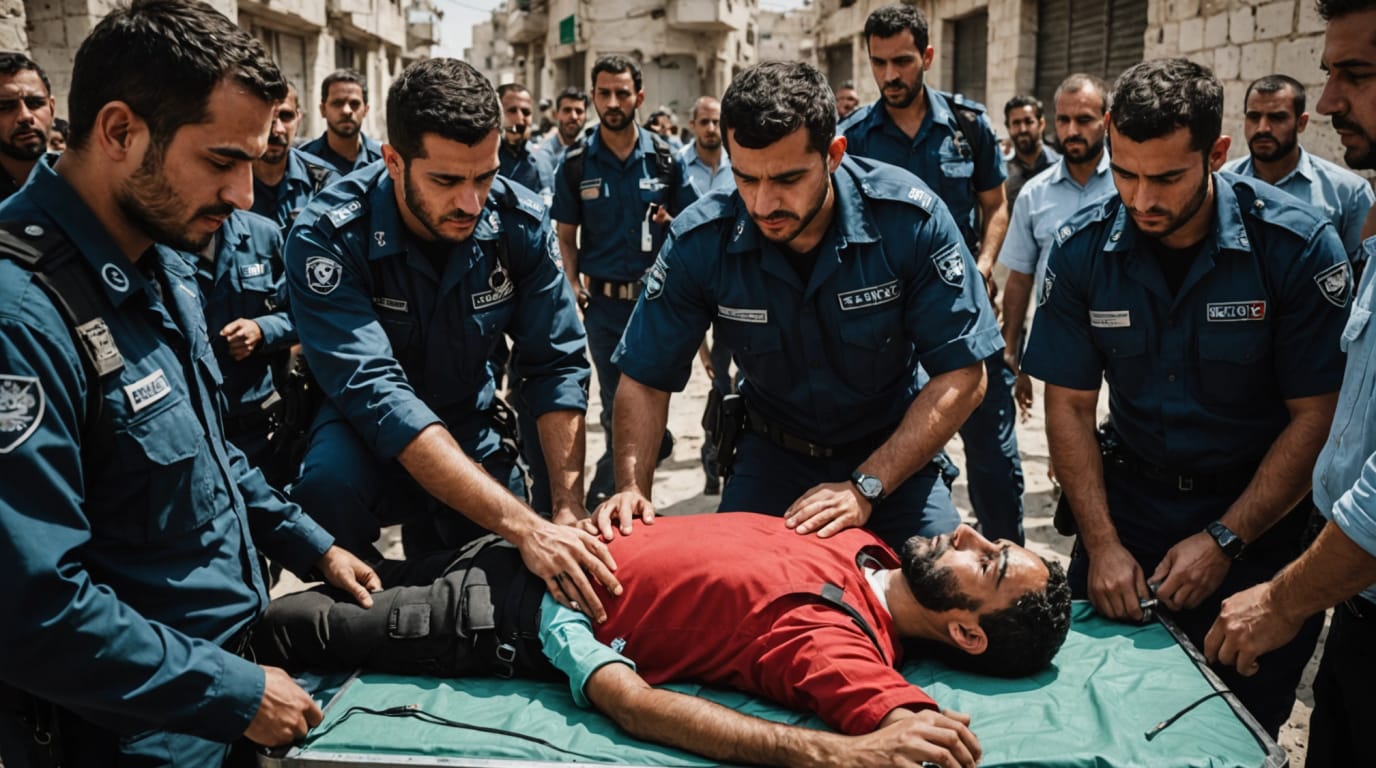
International pressure is escalating for a thorough and impartial investigation into the deaths of at least 15 Palestinian medics and rescue workers in Gaza last month. The incident, which occurred near the southern city of Rafah, has sparked outrage and condemnation from humanitarian organizations and the international community, who are demanding accountability for the loss of life.
The events unfolded on March 23 when a convoy of emergency vehicles, clearly marked as ambulances, was struck by Israeli fire in the Tel al-Sultan neighborhood of Rafah. Among those killed were eight members of the Palestinian Red Crescent Society (PRCS), six Palestinian Civil Defense workers, and one staff member from the United Nations Relief and Works Agency for Palestine Refugees in the Near East (UNRWA). One PRCS paramedic remains missing.
Conflicting accounts of the incident have emerged. Initially, the Israel Defense Forces (IDF) stated that its troops opened fire on the vehicles because they were deemed "suspicious," claiming they were traveling without headlights or emergency lights and arrived on the scene shortly after a group of "terror operatives." However, video footage later surfaced, appearing to contradict the IDF's initial account, showing the emergency vehicles clearly marked and with their emergency lights activated.
Following the emergence of the video, the IDF issued a revised statement acknowledging that its initial account was "mistaken." The military said it was conducting an ongoing investigation into the incident, led by Southern Command chief Maj. Gen. Yaniv Asor. The IDF has also stated that initial findings suggest at least six of those killed have been identified as Hamas operatives. However, the IDF denies claims that any of the medics were executed or had their hands tied.
Calls for Independent Investigation
The PRCS has led calls for an independent international investigation into the deaths, rejecting the IDF's internal inquiry as insufficient. Dr. Younis Al-Khatib, President of the PRCS, has appealed to the UN Security Council to form an investigation committee, emphasizing the need for accountability under international humanitarian law and the Geneva Conventions. He questioned why the rescuers were killed, their ambulances destroyed, and their bodies allegedly hidden.
Amnesty International has also joined the call for an independent and impartial investigation, urging immediate access for independent monitors to the occupied Gaza Strip. Erika Guevara Rosas, Amnesty International's Senior Director for Research, Policy, Advocacy and Campaigns, stated that the killings must be investigated and the perpetrators held to account.
Physicians for Human Rights (PHR) has also released a statement calling for an urgent, credible, independent, international investigation into the attack. Sam Zarifi, JD, executive director at Physicians for Human Rights (PHR) stated that the killings and apparent efforts to hide the bodies are a horrific development in a conflict that has already been characterized by egregious breaches of the laws of war and human rights, including widespread attacks on health care.
Contradictory Accounts and Allegations
Adding to the controversy, allegations have surfaced that the bodies of the medics were found in a mass grave, with some reportedly showing signs of having been shot at close range and possibly tortured. ITV News reported that a pathologist who examined the remains of 13 of the victims found gunshot wounds that may be consistent with torture. The survivor ITV News interviewed described being detained by the Israelis alongside a colleague who has not been seen or heard from since.
The IDF has denied allegations of a cover-up, stating that troops informed the UN of the location of the grave. However, the conflicting accounts and the discovery of the mass grave have fueled suspicions and intensified calls for an independent investigation to determine the truth.
Humanitarian Crisis and Aid Worker Casualties
The incident highlights the immense risks faced by medical personnel and aid workers operating in conflict zones. The World Health Organization (WHO) has reported 1415 attacks on health care in the Occupied Palestinian Territories since October 7, 2023. Since that date, at least 408 aid workers have been killed in Gaza, including at least 280 UNRWA staff and 34 PRCS staff.
The targeting of medical personnel and facilities is a violation of international humanitarian law, which requires parties to armed conflict to distinguish between civilians and combatants and to protect medical workers and facilities.
Implications and the Path Forward
The deaths of the Palestinian medics have further strained relations between Israel and the international community and raised serious questions about the IDF's rules of engagement. A credible and transparent investigation is crucial to determine the facts, hold those responsible accountable, and prevent similar incidents from happening in the future.
The outcome of the investigation will have significant implications for the ongoing conflict and the prospects for peace. Failure to conduct a thorough and impartial inquiry will further erode trust and undermine efforts to protect civilians and humanitarian workers in Gaza. The international community must continue to press for accountability and ensure that international law is respected.