Prominent Opposition Figure Juan Pablo Guanipa Freed in Broader Venezuelan Prisoner Release
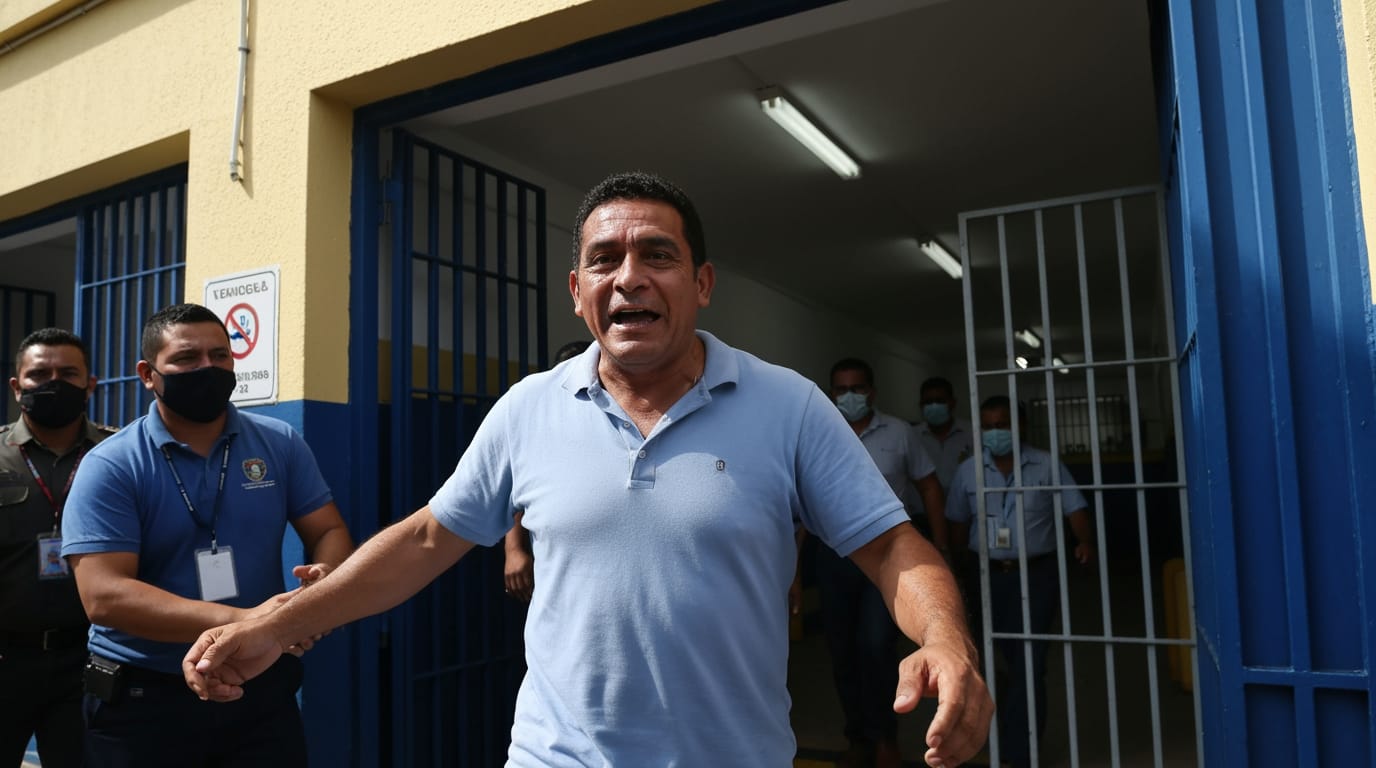
CARACAS, Venezuela – Juan Pablo Guanipa, a leading Venezuelan opposition figure and a close ally of political leader María Corina Machado, was released Sunday after more than eight months in detention on what were widely regarded as politically motivated charges. His liberation is part of a significant, albeit slow-moving, series of prisoner releases by the Venezuelan government, occurring amidst mounting international pressure and a nascent shift in the nation's political landscape.
Guanipa, who had been held at a detention facility in Caracas since his arrest in late May 2025, confirmed his release in a video shared on social media. In his statement, he indicated a readiness to engage in discussions about Venezuela's present and future, emphasizing the importance of truth. His release, alongside at least 17 others on Sunday, marks another step in a process that has seen hundreds of individuals, many considered political prisoners, regain their freedom since early January.
The Release and its Immediate Context
The Sunday release of Guanipa and other detainees was confirmed by the Venezuelan-based prisoners' rights group Foro Penal, which reported that at least 18 people were freed on that day. This brings the total number of political prisoners released to approximately 383 since the government initiated a new series of releases on January 8. Among those also freed on Sunday were local political organizers affiliated with María Corina Machado's movement and her attorney, Perkins Rocha.
The timing of these releases coincides with the government of acting President Delcy Rodríguez facing intensified pressure from both domestic human rights organizations and the international community, particularly the United States, to address the issue of political detentions. The Venezuelan National Assembly is currently debating a proposed amnesty bill, a legislative effort that could potentially lead to the freedom of hundreds more political prisoners.
Juan Pablo Guanipa: A Profile in Opposition
Juan Pablo Guanipa has long been a prominent voice in Venezuela's opposition movement. A lawyer and politician, he served as a councilor of Maracaibo, a deputy in the National Assembly, and held the position of First Vice President of the National Assembly. His political career also saw him controversially elected as governor of Zulia in 2017, a mandate that was subsequently annulled by the national government after he refused to take an oath of subordination to the National Constituent Assembly, an entity established under contentious circumstances. He remained an active leader within the Justice First political party and a steadfast ally of María Corina Machado, a figure central to the opposition's efforts.
Guanipa's detention in May 2025 stemmed from accusations by Interior Minister Diosdado Cabello, who alleged his involvement in a "terrorist group" aiming to boycott a legislative election held that same month. These charges, however, were widely dismissed by human rights advocates and opposition members as politically motivated, designed to suppress dissent. His brother, Tomás Guanipa, publicly rejected the accusations, asserting that the arrest constituted a crackdown on those holding differing views. His imprisonment for over eight months underscored the precarious situation faced by political opponents in Venezuela, often detained on vague charges.
A Broader Amnesty Initiative and Political Shifts
Guanipa's release is not an isolated event but rather part of a wider government initiative to free political prisoners, a move that gained momentum following the capture of then-President Nicolás Maduro by U.S. forces in January 2026. This development led to Delcy Rodríguez assuming the role of acting president. The new administration, under increased scrutiny and international pressure, announced a proposed general amnesty law in late January. This legislation is intended to cover periods of political violence stretching back to 1999, though it explicitly excludes those convicted of serious crimes such as murder, drug trafficking, corruption, or human rights violations.
While human rights groups like Foro Penal have welcomed the releases, they have also expressed concerns about the pace of the process and the lingering legal uncertainties for many freed individuals, as charges against them often remain. The organization noted a significant increase in the confirmed number of releases since the amnesty announcement, with several hundred now freed.
Implications for Venezuela's Future
The release of Juan Pablo Guanipa and other political prisoners carries significant implications for Venezuela's complex political landscape. It signals a potential willingness by the acting government to de-escalate tensions and perhaps open avenues for dialogue, a long-standing demand from both the domestic opposition and international actors. The pressure from the U.S. has been a consistent factor, and the releases coincide with efforts to re-establish diplomatic presence in Caracas, following years of strained relations.
However, the path forward remains uncertain. While the releases offer a glimmer of hope for improved human rights conditions and a more inclusive political environment, the underlying issues that led to widespread detentions persist. The debate surrounding the amnesty bill and its eventual implementation will be closely watched as a gauge of the government's commitment to broader reforms. The continued advocacy of human rights groups and the vigilance of the international community will be crucial in ensuring that these releases lead to substantive and lasting changes, rather than merely serving as temporary concessions.


