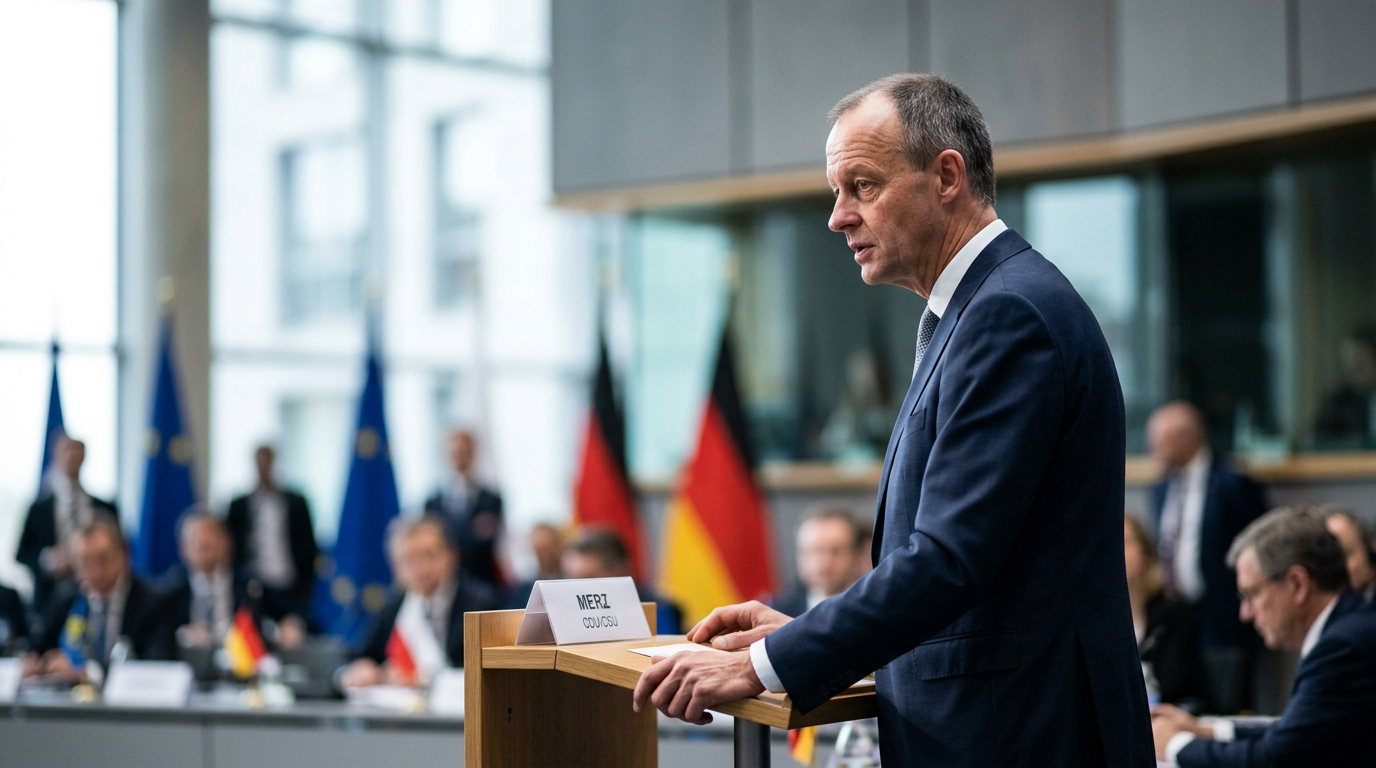
Putin Floats UN-Led Administration for Ukraine, White House Dismisses Proposal

Russian President Vladimir Putin proposed Friday that Ukraine be placed under a temporary administration led by the United Nations, a suggestion the White House swiftly rejected as fighting intensifies in eastern Ukraine. The proposal, made during a visit to the northern port of Murmansk, comes as the Kremlin continues to question the legitimacy of Ukrainian President Volodymyr Zelenskyy and seeks to solidify its gains in the ongoing conflict.
Putin's Proposal: A Path to Peace or Political Maneuvering?
Putin stated that this temporary administration, potentially involving the United States, European countries, and Russia's allies, could oversee democratic elections and establish a government that "enjoys the trust of the people." He argued that such a government would be better positioned to negotiate a lasting peace treaty with Russia. Putin has repeatedly claimed that Zelenskyy's term expired in May 2024, undermining his legitimacy to sign any agreements. Ukraine's constitution, however, prohibits elections during martial law, which has been in effect since Russia's full-scale invasion in February 2022.
Putin referenced previous UN administration missions in places like the former Yugoslavia, East Timor, and New Guinea as potential models. He also suggested that a broader range of countries, including North Korea, China, India, Brazil, and South Africa, should be involved in peace negotiations.
White House Rejects the Idea
The White House National Security Council quickly dismissed Putin's proposal. A spokesperson emphasized that Ukraine's governance is determined by its constitution and its people, not by external actors. The rejection underscores the deep distrust between Washington and Moscow and the continued U.S. support for Ukraine's sovereignty.
Dmytro Lytvyn, a Ukrainian presidential advisor, responded to Putin's proposal suggesting that Putin might need "some pills to kickstart his brain activity" if he struggles to understand who to engage with for peace talks.
The Legitimacy Question and Internal Politics
Putin's questioning of Zelenskyy's legitimacy is not new. He has consistently used this argument to justify Russia's actions and to undermine Ukraine's standing on the international stage. Analysts suggest this is a tactic to weaken Ukraine's negotiating position and to create a pretext for installing a pro-Russian government.
Meanwhile, Russia itself is classified as a consolidated authoritarian regime with manipulated elections, according to Freedom House. Putin has systematically eliminated political opposition by imprisoning, exiling, or silencing his rivals. The death of opposition leader Alexei Navalny in an Arctic prison in February 2024 further highlights the Kremlin's suppression of dissent.
Battlefield Developments and Shifting Dynamics
Putin's proposal comes amid reports of intensified fighting in eastern Ukraine. He declared that the Russian military has "gained steam" and is pushing offensives along the front line. While Ukraine has agreed to a 30-day ceasefire proposed by U.S. President Donald Trump, Putin has conditioned a complete ceasefire on a halt of arms supplies to Kyiv and a suspension of Ukraine's military mobilization – demands rejected by Ukraine and its Western allies.
Russia has also demanded that Kyiv withdraw its forces from the four regions Moscow has partially seized, renounce joining NATO, sharply cut its army, and legally protect the Russian language and culture.
Implications for the Future
Putin's proposal for a UN-led administration in Ukraine is unlikely to gain traction given the strong opposition from Ukraine and its Western allies. The move is widely seen as a political maneuver to destabilize Ukraine and to advance Russia's strategic goals. The conflict in Ukraine remains at a critical juncture, with both sides digging in for a protracted struggle. The possibility of a negotiated settlement appears remote as long as fundamental disagreements persist over Ukraine's sovereignty, territorial integrity, and political orientation.
Related Articles

Ratko Mladić, "Butcher of Bosnia" and Convicted War Criminal, Dies at 84
THE HAGUE, Netherlands – Ratko Mladić, the former Bosnian Serb military commander known as the "Butcher of Bosnia" and convicted of genocide, war crimes, and crimes against humanity, has died at the age of 84. Serbian...

Long-Awaited 9/11 Mastermind Trial Set for 2028, Decades After Attacks
GUANTANAMO BAY, Cuba – Nearly a quarter-century after the devastating terror attacks of September 11, 2001, a military judge has finally set a trial date for Khalid Sheikh Mohammed, the alleged mastermind behind the...