Record Rain Batters Eastern Japan, Leaving Four Dead and Thousands Stranded

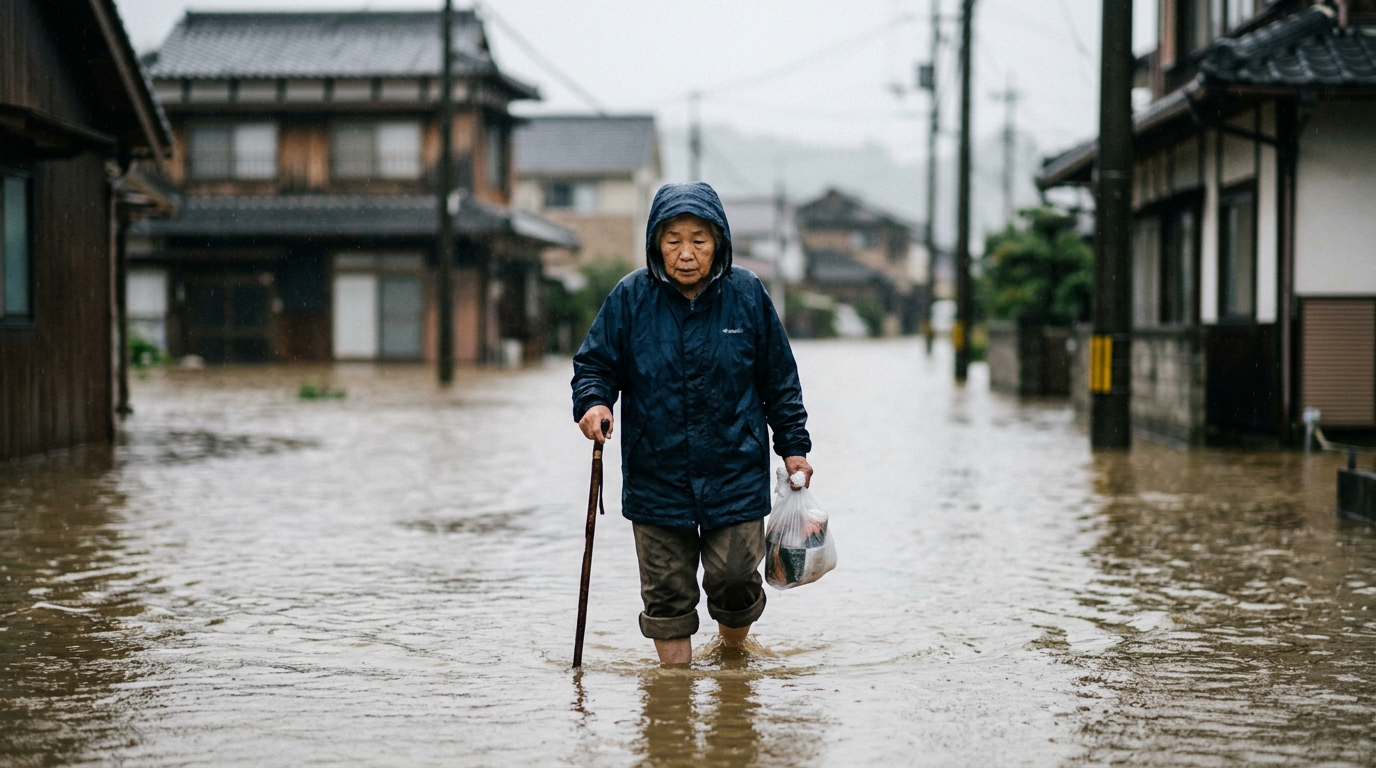
CHIBA, Japan – Unprecedented torrential rainfall has lashed Eastern Japan, particularly Chiba Prefecture, adjacent to Tokyo, resulting in at least four confirmed fatalities, stranding thousands of travelers, and unleashing widespread disruption to infrastructure and daily life. The deluge, described by authorities as an "extremely unusual situation," caused flash flooding, power outages, and severe transportation paralysis on Friday, August 14, 2026, during one of the nation's busiest holiday periods.
The Japan Meteorological Agency (JMA) issued its highest-level heavy rain warning, Level 5, for parts of Chiba Prefecture for the first time, signaling immediate threats to life as record-breaking precipitation inundated the region overnight from Thursday into Friday. Emergency services have been battling to reach affected areas and assist those impacted by the widespread flooding and disruptions.
Unprecedented Deluge Claims Lives and Homes
More than 360 millimeters (approximately 14 inches) of rain fell within 24 hours in parts of Chiba Prefecture, overwhelming drainage systems and turning roads into raging rivers. Chiba City alone recorded an astounding 11.5 centimeters (4.5 inches) of rain in just one hour, setting a new all-time high for the area, while Sakura city saw 9.7 centimeters (3.8 inches) in the same timeframe.
The rapid onset of the floods proved deadly. Among the four confirmed victims were a man in his 60s or 70s found floating on a flooded road in Ichikawa city, and a 66-year-old woman discovered trapped in her submerged vehicle in Sakura city. A third victim, a man whose age was not immediately known, was found collapsed on a street, while the identity and age of the fourth fatality remain unclear. Authorities also reported one person missing and another feared dead after experiencing cardiopulmonary arrest. The intense rainfall not only claimed lives but also caused significant property damage, with floodwaters entering at least 45 homes and another 39 experiencing water seeping below floorboards in cities like Ichikawa, Kashiwa, and Sakura.
Transportation Network Paralyzed, Thousands Stranded
The torrential downpour brought Japan's normally efficient transportation networks to a standstill, leaving thousands of people stranded. Narita Airport, one of Tokyo's primary international gateways, saw approximately 7,000 travelers stranded overnight as surrounding areas became impassable due to flooding. Though flights were expected to operate normally on Friday, major highways connecting Narita with central Tokyo remained closed, forcing motorists onto alternative routes and creating severe congestion. Rail services across the region were also widely suspended, including some lines connecting Narita to Tokyo, exacerbating the travel chaos.
Beyond the airport, an estimated 4,000 people were stranded at Soga train station in Chiba, prompting the dispatch of Japan's Self-Defense Forces to assist with transportation to temporary shelters. The widespread flooding and power outages also affected tens of thousands of households. At its peak, approximately 68,000 homes were without electricity, a figure that stood at about 22,000 to 26,000 across Chiba, Ibaraki, and Tochigi prefectures on Friday morning.
Emergency Response Amidst "Unusual Situation"
Chiba Governor Toshihito Kumagai emphasized the extraordinary nature of the event, stating that he had "never experienced a case like this" despite responding to numerous disasters in the past. The JMA had similarly warned on Thursday that the rainfall was "shaping up to be an unprecedented level of heavy rain."
In response to the crisis, soldiers were quickly mobilized to aid in relief efforts, including the provision of support to stranded citizens. As Friday progressed, the JMA downgraded some of its most severe warnings, but authorities urged residents to remain vigilant for continued risks of landslides and further flooding. Unstable atmospheric conditions were forecast to persist across the Kanto region and neighboring prefectures through early Saturday, with additional rainfall expected.
Climate Context and Future Resilience
Japan is highly susceptible to natural disasters, including earthquakes, typhoons, and heavy rainfall, making robust disaster preparedness a continuous effort for the nation. However, the intensity and unprecedented nature of this week's downpour underscore a growing concern among scientists who suggest that human-driven climate change is contributing to more frequent, prolonged, and intense extreme weather events globally.
While immediate relief and recovery operations are underway, the long-term implications for the region, including potential economic impacts on local logistics and supply chains, particularly from a major hub like Narita, are being closely monitored. The event serves as a stark reminder of the escalating challenges posed by changing weather patterns and the critical need for ongoing investment in resilient infrastructure and comprehensive disaster mitigation strategies.
Related Articles


Ratko Mladić, "Butcher of Bosnia" and Convicted War Criminal, Dies at 84
THE HAGUE, Netherlands – Ratko Mladić, the former Bosnian Serb military commander known as the "Butcher of Bosnia" and convicted of genocide, war crimes, and crimes against humanity, has died at the age of 84. Serbian...


Long-Awaited 9/11 Mastermind Trial Set for 2028, Decades After Attacks
GUANTANAMO BAY, Cuba – Nearly a quarter-century after the devastating terror attacks of September 11, 2001, a military judge has finally set a trial date for Khalid Sheikh Mohammed, the alleged mastermind behind the...