Regional Tensions Mount as Middle East Watches Iran's Internal Unrest with Trepidation
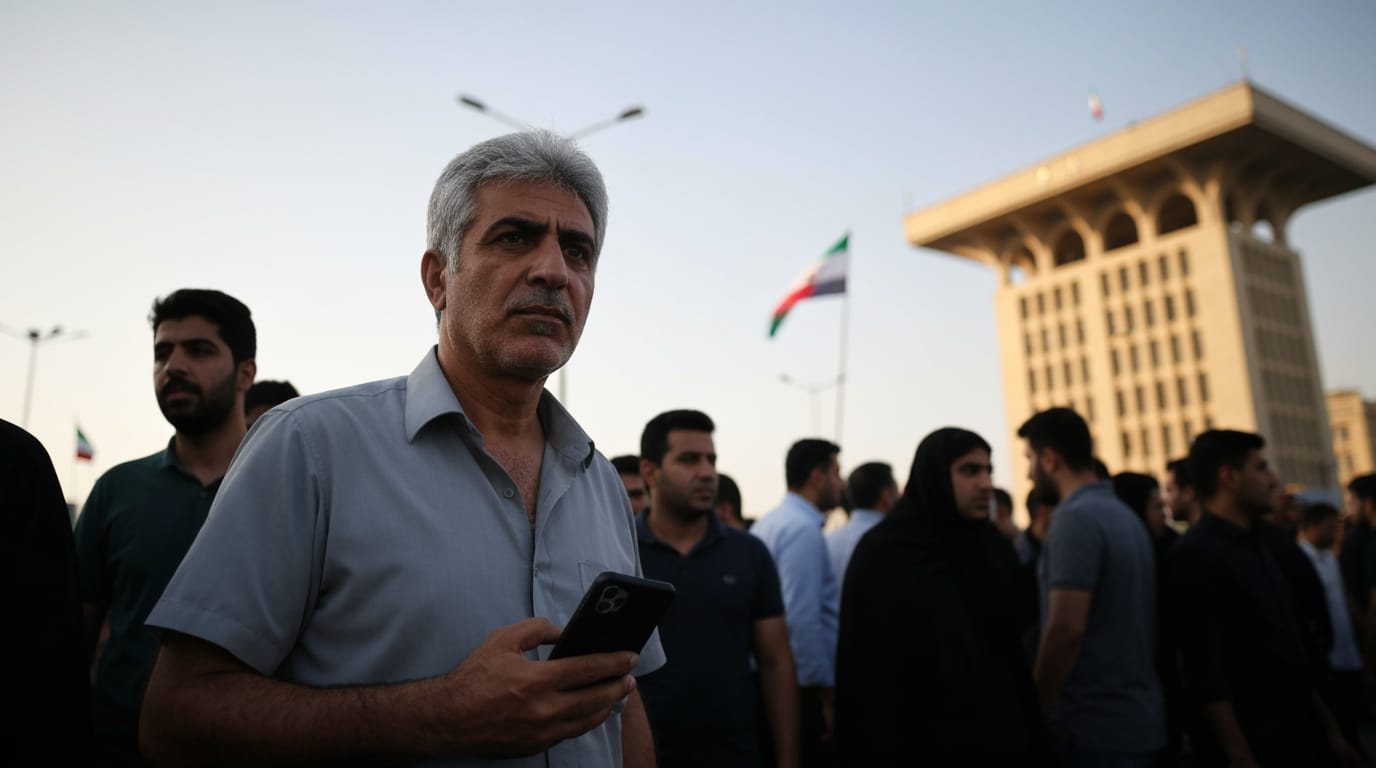
Across the Middle East, a delicate geopolitical tightrope walk is underway as governments closely monitor the escalating protests within Iran. From Riyadh to Ankara, and from Baghdad to Cairo, regional capitals are gripped by a strategic paradox: while many harbor long-standing rivalries with Tehran and might welcome internal pressures on the Islamic Republic, they also dread the potential for uncontrolled chaos, refugee crises, and a wider regional destabilization should Iran's protests spiral out of control. The internal fragility of Iran, driven by deep-seated economic grievances and social discontent, is creating a complex tapestry of cautious optimism, profound concern, and strategic calculations among its neighbors, all acutely aware that significant shifts within Iran could reverberate across the entire region.
The Gulf's Double-Edged Sword: Opportunity Meets Apprehension
For Saudi Arabia, the United Arab Emirates (UAE), Qatar, Kuwait, and Oman, the unfolding events in Iran present a multifaceted challenge, perceived simultaneously as a strategic opportunity and a profound risk. These Gulf monarchies, long at odds with Tehran over its regional influence and proxy networks, observe Iran's internal strife with a nuanced perspective. A regime consumed by domestic crises would inherently possess fewer resources for its expeditionary operations in Syria, Iraq, and Yemen, and might scale back its support for proxy groups, thereby reducing threats against Gulf infrastructure. This narrative advantage also allows Gulf leaderships to highlight their own relative stability and prosperity, contrasting it with Iran's internal repression.
However, the prospect of an uncontrolled collapse of the Iranian regime casts a long shadow of apprehension. Such an event could trigger massive refugee flows across the Gulf, facilitate the proliferation of arms and criminal networks, and lead to an uptick in smuggling and piracy in the Persian Gulf and Gulf of Oman. Historically, Arab states have maintained a muted stance on Iran's internal issues, partly to avoid providing Tehran with a pretext for intervening in their own domestic affairs, and partly out of a fear of a "domino effect" of popular uprisings. While certain nations like Saudi Arabia may desire the downfall of the Iranian regime, their reluctance to openly engage with Iran's protests stems from the uncertainty surrounding the consequences of an adversarial approach, especially amidst concerns about U.S. security commitments. More recently, following military exchanges between Iran and Israel, Gulf states, including Qatar and Oman, have urged immediate de-escalation and diplomatic solutions, signaling a desire to prevent wider regional instability rather than exploit current vulnerabilities. Egypt, too, has echoed these concerns, calling for restraint and warning against actions that could plunge the region into chaos.
Ankara's Calculated Approach: Prioritizing Stability Above All
Turkey, a major non-Arab power bordering Iran, approaches the situation with a distinct set of priorities. Ankara's primary concern is not the political orientation of the Iranian government but rather the stability of the Iranian state itself. Turkish President Recep Tayyip Erdogan's government has historically emphasized valuing Iranian stability, seeing uncontrolled fragmentation or civil war in its neighbor as a direct threat. The potential for large-scale refugee flows into Turkey, which already hosts millions of Syrian refugees, is a significant worry. Furthermore, Ankara is concerned that chaos in Iran could embolden Kurdish militant groups, such as the Kurdistan Free Life Party (PJAK), an affiliate of the outlawed Kurdistan Workers' Party (PKK), leading to increased cross-border threats.
While Turkey has in some instances filled regional power vacuums left by a weakened Tehran, particularly in Syria, its overarching policy appears to be one of cautious hedging. Turkish officials have been noted to portray a strong response – including border fortification and intelligence sharing – as necessary for national security, underscoring their commitment to preventing spillover effects. This stance reflects a pragmatic realization that a stable, albeit rival, Iran is preferable to a chaotic one that could unleash unforeseen and detrimental consequences on Turkey's own security and economy.
The Shadow of Tehran: Iraq and Jordan on Edge
The impact of Iran's internal instability is perhaps most acutely felt in Iraq and Jordan, two nations with complex and often strained relationships with Tehran. For Iraq, the risks are particularly pronounced due to its extensive shared border and the deep, pervasive influence Iran exerts over its political and security landscape. While a significant portion of the Iraqi population, particularly supporters of cleric Moqtada Sadr, may express solidarity with Iran and protest against perceived US and Israeli aggression, there is also a palpable resentment against Iranian interference and its proxy groups within Iraq. The Iranian government has previously utilized domestic unrest as a pretext to launch attacks on Iranian-Kurdish opposition groups based in Iraqi Kurdistan, further complicating regional dynamics. Any significant internal instability in Iran could either weaken Tehran's grip on Iraqi politics or, conversely, lead to a more aggressive reassertion of influence, both outcomes carrying major implications for Iraq's future.
Jordan finds itself in an equally precarious position, increasingly caught in the crosshairs of regional tensions. Amman faces internal anger and external pressure, especially following its role in intercepting Iranian drones targeting Israel. There are significant concerns in the Gulf and within Jordan that Iran, often in coordination with groups like Hamas and the Muslim Brotherhood, is actively seeking to exploit internal protests to destabilize the Hashemite monarchy and potentially create a new front against Israel. Jordanian officials have viewed actions such as Iraqi Shiite armed factions appearing near their border as Iranian ploys to destabilize the country. The delicate balancing act for Jordan involves defending its sovereignty and ensuring stability while navigating strong public sentiments regarding regional conflicts and avoiding being drawn into a larger proxy war.
Israel's Strategic Calculus: Caution Amidst Opportunity
Israel, a long-standing adversary of Iran, watches the protests with intense interest, perceiving potential strategic opportunities while exercising caution regarding overt intervention. Analysts in Israel acknowledge Iran's internal fragility, which they believe impacts Tehran's strategic choices and regional balance. While some in Israel may view the unrest as an opportunity to weaken the Iranian regime, there's a strong awareness that direct, overt external support could be counterproductive. Such actions could be exploited by the Iranian government to validate its narrative of a "foreign plot" behind the protests, thereby undermining the legitimacy of the demonstrators and potentially galvanizing domestic support against perceived external meddling.
Instead of direct intervention, Israel's strategy appears to lean towards indirect support, such as providing secure internet access and financial aid to striking workers, aiming to bolster civil society without overtly associating with a foreign agenda. Concurrently, the Israeli military has been accelerating preparations for the possibility of a "surprise war" on multiple fronts, including Iran, Lebanon, and the occupied West Bank, indicative of the heightened regional volatility. This posture reflects a strategic calculus that seeks to exploit Iran's internal weakness while carefully avoiding actions that could inadvertently strengthen the regime's hand or ignite a wider, unpredictable conflict.
The Unfolding Crisis in Iran: A Catalyst for Regional Unease
The current wave of protests in Iran, particularly those observed in late 2025, underscores a deep structural fragility within the Islamic Republic. Driven by severe economic hardship—including a plunging currency, rampant inflation, high unemployment, and widespread corruption—the unrest reflects a society exhausted by decades of economic struggle, exacerbated by international sanctions. The involvement of various segments of society, from the closure of establishments in Tehran's Grand Bazaar to student rallies and broader public demonstrations, signals a widespread erosion of the social contract between the populace and the ruling establishment.
While the Iranian government has sometimes responded with relative caution to economically driven protests, acknowledging "legitimate demands" while also warning of "decisive responses" to insecurity, the underlying causes of discontent remain potent. This internal volatility, coupled with the regime's past use of proxy warfare and military escalation to project strength and distract domestic attention, creates an environment of profound uncertainty for the entire Middle East. The delicate balance maintained by regional governments signifies a recognition that the future trajectory of Iran's internal dynamics will inevitably shape the geopolitical landscape of the broader Middle East for years to come.