Resurfacing History: U.S. Revitalizes WWII Pacific Airfields Amid Rising China Threat
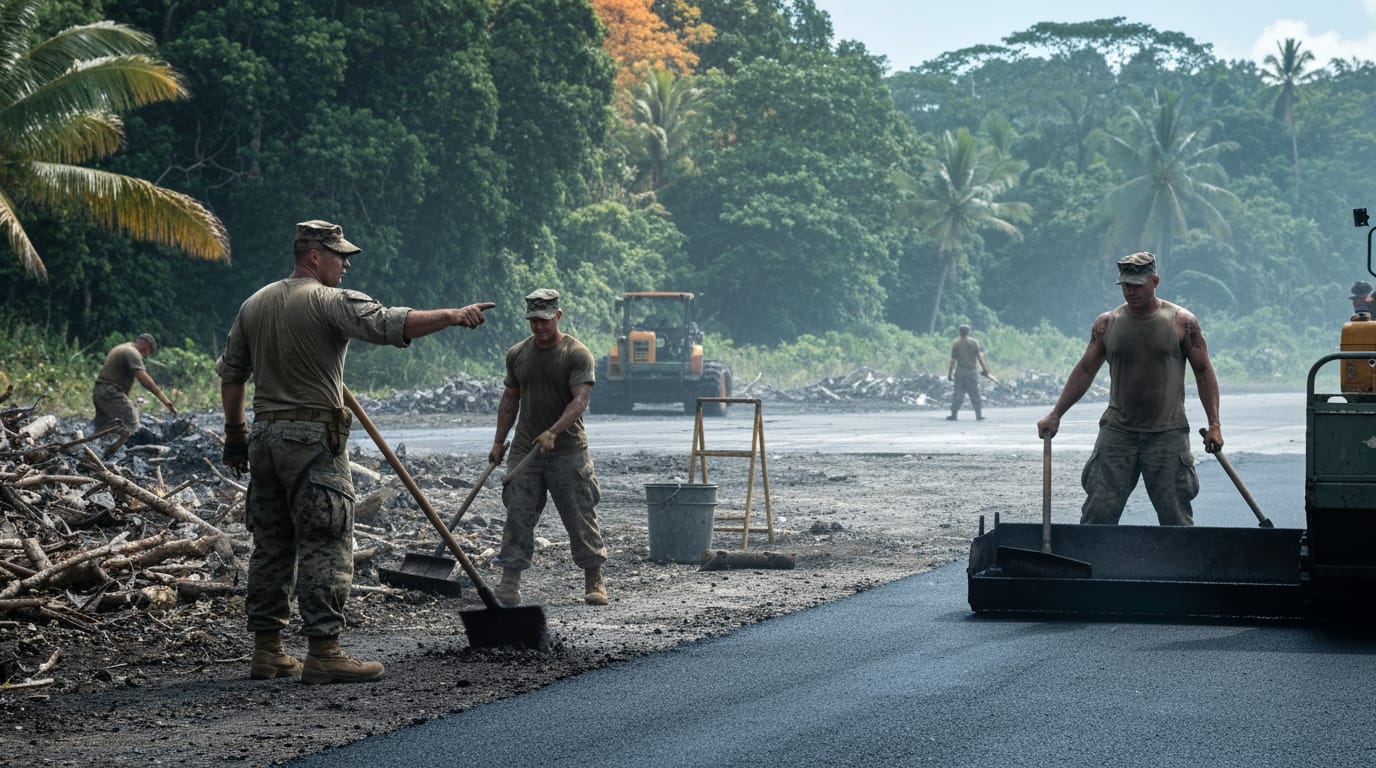
In a significant strategic pivot echoing the island-hopping campaigns of World War II, the United States military is undertaking an ambitious initiative to restore and modernize numerous former airfields across the vast expanse of the Pacific. This multi-billion-dollar effort, driven by escalating concerns over China's burgeoning military capabilities and its advanced anti-access/area denial (A2/AD) strategies, marks a profound shift in America's defense posture in the Indo-Pacific region. The objective is to enhance resilience, ensure operational agility, and bolster deterrence against potential aggression.
The comprehensive restoration project is a direct response to China's sophisticated weaponry, including long-range ballistic missiles like the DF-26, often dubbed the "Guam killer," and hypersonic missiles, which pose a credible threat to large, concentrated U.S. military installations such as Andersen Air Force Base in Guam. By reactivating a network of smaller, strategically dispersed airfields, the Pentagon aims to complicate enemy targeting, protect critical assets, and maintain the ability to project airpower across the theater even under attack.
The Strategic Imperative: Countering A2/AD
China's military modernization over the past decades has focused heavily on developing A2/AD capabilities, a layered defensive system designed to deter and deny adversaries freedom of movement and action within a specific operational area, particularly in its "near seas" and around the First Island Chain. This network incorporates advanced long-range missiles, radars, air defenses, and naval assets, all aimed at pushing U.S. forces farther from potential conflict zones and making intervention more difficult and costly.
For years, the U.S. military has largely relied on a few large, well-established bases in the Pacific, making them attractive targets. The emergence of China's formidable A2/AD umbrella has compelled a reassessment of this traditional force projection model. The new strategy, known as Agile Combat Employment (ACE), emphasizes spreading assets across numerous, smaller, and often austere locations. This "hub-and-spoke" approach ensures that if a primary base is incapacitated, aircraft and personnel can disperse to alternative sites, maintaining operational continuity and reducing vulnerability. This strategic decentralization is deemed crucial for the United States to maintain its ability to operate effectively and uphold regional stability in the face of evolving threats.
Echoes of the Past: Revitalizing Historic Airfields
Many of the airfields now undergoing revitalization trace their origins back to World War II, having played pivotal roles in the Pacific theater. These sites were originally critical for supporting the Allied forces' advance across the Pacific. After the war, many were abandoned or fell into disuse, gradually being reclaimed by dense jungle overgrowth. The current effort involves extensive engineering work, including clearing vegetation, repairing and lengthening runways, and installing modern infrastructure such as lighting, drainage, hardened shelters, new fuel storage, and maintenance facilities.
On Tinian in the Northern Mariana Islands, for example, North Field, from which B-29 bombers launched the atomic strikes against Japan, is undergoing a substantial $409 million rehabilitation project. Abandoned since 1947, satellite imagery confirms that over 20 million square feet of runway and infrastructure were rehabilitated between December 2023 and January 2025, with two of its four runways expected to be operational by 2027. This historic airfield will serve as a crucial alternative to Andersen AFB on Guam, just 100 miles away. Similarly, on Peleliu, an island in Palau famous for one of WWII's bloodiest battles, the airfield has been recertified and is now capable of accommodating large fixed-wing aircraft like the C-130J, providing a vital refit and refuel point beyond China's immediate A2/AD reach. Wake Island Airfield has also received an $87 million upgrade, supporting transpacific refueling and missile defense testing.
A Network of Distributed Power
The geographical scope of this initiative extends across key locations in the Second Island Chain, an arc of islands stretching from Japan through the Marianas, Micronesia, and Palau. These include Tinian, Peleliu, Angaur (also in Palau), and Wake Island, with plans potentially involving other locations such as Yap in Micronesia, and allied nations like Australia and the Philippines. The intent is to create a robust, redundant network of "lily pads" that can host a variety of U.S. and allied military aircraft, including advanced fighters like the F-35B and long-range transport aircraft.
This distributed network directly addresses the "tyranny of distance" inherent in Pacific operations, allowing for quicker responses and sustained presence across vast maritime expanses. The ability to rapidly deploy, refuel, and rearm from multiple points complicates an adversary's planning and enhances the survivability and effectiveness of U.S. forces. Training exercises are already testing these dispersed operations, with the Seventh Air Force, for instance, practicing command and control from multiple separated locations to ensure airpower can be sustained even if primary command centers are compromised.
Implications and the Indo-Pacific Future
The U.S. military's revitalization of WWII-era airfields carries significant implications for the geopolitical landscape of the Indo-Pacific. It signals a strong commitment to deterring aggression, protecting allies, and maintaining freedom of navigation in a region increasingly vital to global commerce and security. However, this proactive strategy unfolds amidst parallel efforts by China, which is reportedly pursuing its own ambitious plan to construct dozens of military bases and dual-use civilian infrastructure across the Pacific by 2030, potentially challenging existing U.S. influence.
While U.S. officials emphasize the defensive nature of these upgrades, local populations on some of these small islands, like Tinian, express concerns about their homes becoming potential targets in a future conflict between global powers. Nevertheless, the rapid pace and scale of the airfield restoration projects underscore a new era of strategic competition. The U.S. is not building new bases in the traditional sense, but rather "renovating, rejuvenating, and rehabilitating" existing infrastructure to meet contemporary challenges. This strategic adaptation, rooted in historical lessons and driven by modern threats, aims to ensure that the U.S. and its allies can maintain a decisive military advantage in the Indo-Pacific for decades to come.


