Rising Tensions: Japan's Growing Closeness with Taiwan Stirs Chinese Ire
TOKYO – A deepening alignment between Japan and Taiwan is increasingly agitating Beijing, sparking a diplomatic and military friction across the East China Sea. This growing engagement, driven by shared democratic values, economic imperatives, and mounting security concerns over China's regional assertiveness, marks a significant shift in Tokyo's long-standing, delicate foreign policy. The intensifying relationship has prompted sharp condemnations and retaliatory measures from China, elevating geopolitical stakes in the Indo-Pacific.
A Historical Trajectory and Evolving Relations
The relationship between Japan and Taiwan carries a complex history, including Japan's fifty-year colonial rule of the island from 1895 to 1945. After World War II, Japan surrendered control of Taiwan to the Republic of China. Following the Japan-China Joint Communiqué in 1972, Japan ceased official diplomatic recognition of the Republic of China (Taiwan) as the sole legitimate government of China, acknowledging the "One China" policy. Despite this, Japan maintained robust non-governmental and working-level relations with Taiwan, primarily focusing on economic and cultural exchanges.
In recent decades, particularly since Taiwan's democratization, the unofficial ties have strengthened, fueled by favorable public sentiment in both societies. However, a more pronounced shift has become evident, moving beyond mere economic and cultural ties to encompass strategic dimensions. This evolution reflects a reassessment in Tokyo of regional security dynamics and Taiwan's critical role within them.
Economic Interdependence and Supply Chain Resilience
Economic ties between Japan and Taiwan are substantial and growing, forming a critical pillar of their relationship. Bilateral trade exceeded $75 billion in 2023, with integrated circuits, machinery, and automotive components forming major exports. Japan is Taiwan's third-largest trading partner, and Taiwan ranks as Japan's fourth-largest. The two economies are deeply intertwined, particularly in the advanced technology sector.
Taiwan's dominant position as a global semiconductor manufacturer is of particular importance to Japan. Recognizing Taiwan's crucial role in global technological supply chains, Japan has intensified collaboration to enhance economic stability and diversify supply chains, thereby reducing reliance on external parts procurement and seeking to bolster Taiwan against potential economic coercion from China. Japanese companies are also investing in Taiwan, with cumulative investments reaching approximately $27.0 billion across various industries, including electronic components and machinery. Recent formal agreements in 2025 further aim to align supply chains, collaborate on green energy, and foster joint ventures.
Shifting Security Landscape and Strategic Concerns
A notable shift in Japan's stance towards Taiwan's security has emerged, departing from its traditional strategic ambiguity. Japan now views a "Taiwan contingency" as directly impacting its own security, a position articulated by former Prime Minister Shinzo Abe, who famously stated that "a Taiwan crisis is a Japan crisis." This perspective is rooted in several factors, including Taiwan's geographic proximity to Japan's westernmost islands, concerns over China's expanding military activities, and the vital importance of the Taiwan Strait as a critical sea lane for Japan's trade and energy imports.
In response, Japan has begun to significantly boost its military capabilities and defense spending, aiming to reach 1.6% of GDP by 2027. Acquisitions include long-range missiles and advanced defense systems, along with an expansion of its naval fleet to include F-35B fighter jets. In a historic move in September 2024, the Japanese Maritime Self-Defense Force (JMSDF) sent a naval vessel through the Taiwan Strait, signaling a more assertive posture towards maintaining a rules-based order in the Indo-Pacific. Japan's participation in US-led exercises like Valiant Shield further underscores its implicit commitment to Taiwan's safety and sovereignty. The 2022 National Security Strategy explicitly recognizes Taiwan's importance as a democratic ally and an "indispensable element" for regional security and prosperity.
China's Vigorous Denunciation and Retaliation
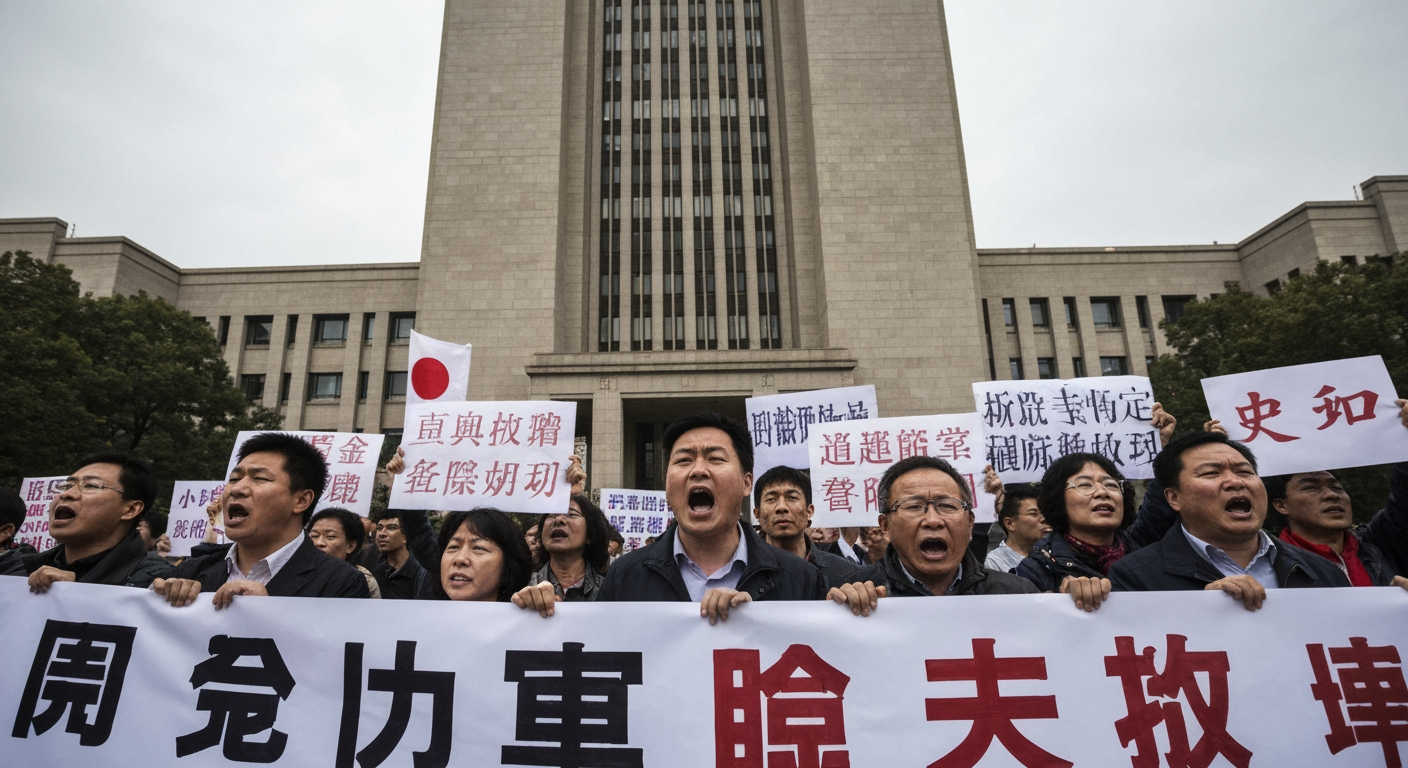
Beijing has reacted vehemently to Japan's increasing engagement with Taiwan, viewing it as a direct challenge to its "One China" principle and an infringement on its sovereignty. The Chinese government has lodged numerous diplomatic complaints and issued strong warnings, particularly following statements by Japanese Prime Minister Sanae Takaichi, who suggested that a Chinese attack on Taiwan could be deemed a "survival-threatening situation" for Japan, potentially triggering a military response under its collective self-defense laws.
These remarks have led to a sharp deterioration in Sino-Japanese relations, resulting in the postponement of bilateral economic talks, informal bans on Japanese seafood, and a drop in tourist arrivals. China has also intensified its military maneuvers around Japan, including flying unmanned aircraft and sailing naval vessels through Japanese straits, demonstrating its displeasure and asserting its claims. Chinese officials have accused Japan of "reviving militarism" and attempting to destabilize the Taiwan Strait, urging Tokyo to abide by commitments made in the 1972 communiqué.
Broader Geopolitical Implications
The escalating tensions between Japan, Taiwan, and China have significant implications for regional and global stability. Japan's closer alignment with Taiwan is congruent with US interests in promoting a free and open Indo-Pacific and strengthening regional security frameworks. This forms a part of a broader strategy by democratic nations to counter China's growing influence and assertive behavior.
However, this increased cooperation also risks further exacerbating tensions between Washington and Beijing. The delicate balance of power in the region is increasingly fragile, with the potential for miscalculation and escalation. While Japan maintains its official "One China" policy, its actions signal a clear resolve to deter aggression and safeguard its national interests, which are now inextricably linked to the peace and stability of the Taiwan Strait. The interplay of economic interdependence, historical grievances, and evolving security paradigms continues to shape a volatile but critically important geopolitical landscape.
Related Articles


Mounting Frustration Grips Russia as Economic Hardship and War's Toll Deepen
Moscow, Russia – A palpable shift in public sentiment is emerging across Russia, with growing frustration among citizens fueled by a confluence of economic pressures, increasing internet restrictions, and the undeniable...


Germany's Strategic Calculus: Ukraine Aid is an Investment in European Security, Not Charity
Berlin – The ongoing provision of substantial aid to Ukraine by Germany and its allies is increasingly being framed not as an act of altruism, but as a crucial investment in European security and stability. This...