Rita Süssmuth, Pioneering Feminist Reformer and Former Bundestag President, Dies at 88
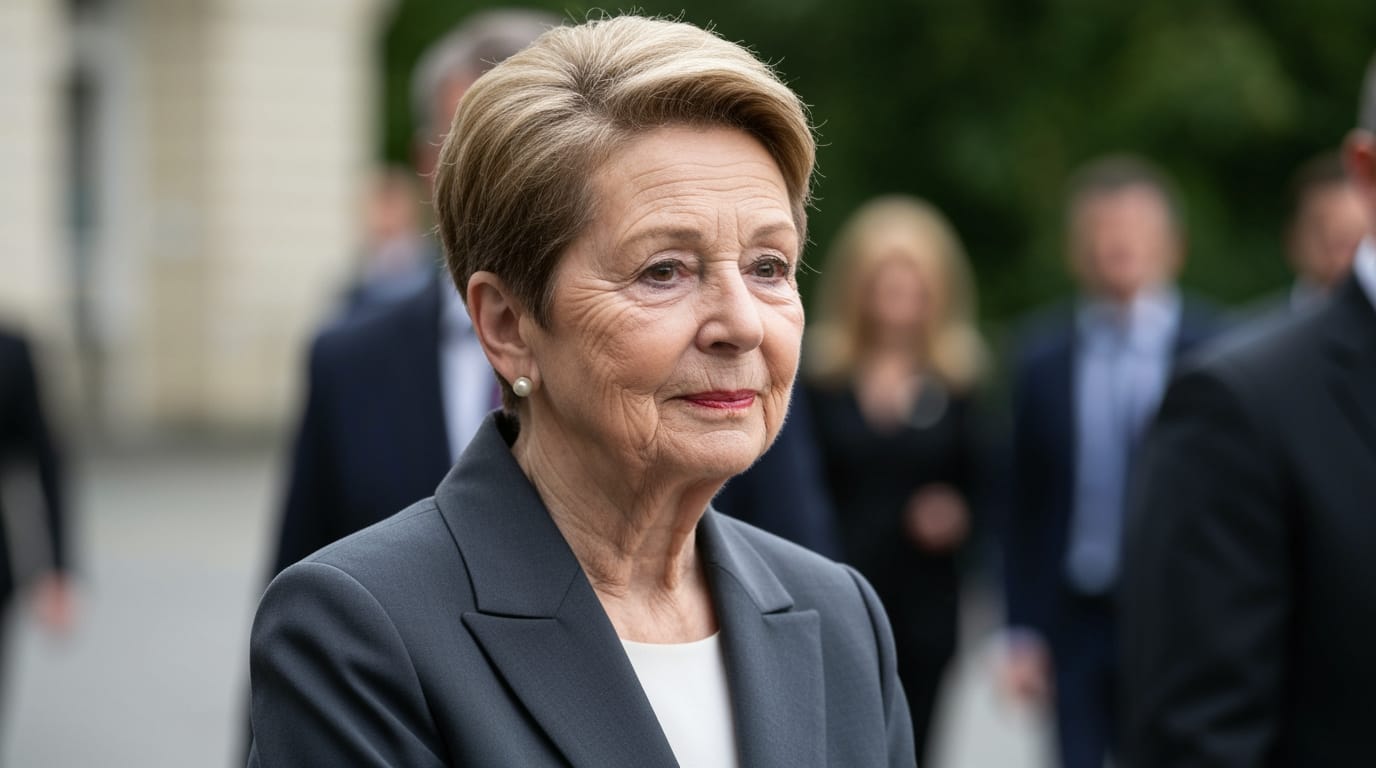
BERLIN – Dr. Rita Süssmuth, a formidable figure in German politics renowned for her progressive social reforms and groundbreaking tenure as President of the Bundestag, died Friday at the age of 88. Her passing marks the end of an era for a politician who consistently championed women's rights, public health, and social justice, leaving an indelible mark on post-war Germany.
Süssmuth, a member of the Christian Democratic Union (CDU), was a politician who defied easy categorization, often challenging conservative norms from within her own party to advocate for forward-thinking policies. Her career was characterized by a deep commitment to societal advancement, particularly in areas concerning family, youth, women, and health. She served as Federal Minister for Youth, Family, and Health from 1985 to 1988, a period during which she became a pivotal voice in the fight against AIDS, and subsequently made history as the tenth President of the German Bundestag, a role she held for nearly a decade from 1988 to 1998.
A Scholar's Entry into Public Service
Born Rita Kickuth on February 17, 1937, in Wuppertal, Süssmuth's journey to political prominence began in academia. She pursued extensive studies in Romance languages, history, education, sociology, and psychology at universities in Münster, Tübingen, and Paris, ultimately earning a Ph.D. from the University of Münster in 1964. Her early professional life saw her as a respected academic, holding professorships in educational science at various institutions, including the Ruhr University in Bochum and the University of Dortmund. This academic foundation instilled in her a methodical approach to problem-solving and a profound understanding of social structures, which she would later bring to the political arena.
Süssmuth's formal entry into politics came in 1981 when she joined the CDU. Her commitment to social issues was already evident, as she directed the Institute for Women and Society in Hanover from 1982 to 1985. This role provided a platform to deepen her understanding of gender disparities and social needs, laying the groundwork for her impactful ministerial career.
Driving Reform as Federal Minister
In 1985, Süssmuth was appointed Federal Minister for Youth, Family, and Health under Chancellor Helmut Kohl, a position that quickly saw her emerge as a courageous and often controversial reformer. Her tenure was particularly marked by her proactive and empathetic response to the burgeoning AIDS crisis. At a time when fear and prejudice often dictated public discourse, Süssmuth advocated for comprehensive medical education and preventative measures, including the promotion of condom use. This stance, notably progressive for a conservative politician, met with significant resistance from within her own party and conservative religious institutions.
Despite the opposition, she steadfastly championed a policy of enlightenment and prevention over stigmatization, supporting the establishment of the National AIDS Foundation in 1987 and increasing federal funding for AIDS research. Her efforts earned her the Magnus Hirschfeld Medal for Sexual Reform in 2006, recognizing her far-sighted approach. Beyond AIDS policy, Süssmuth was instrumental in renaming her ministry in 1986 to include "Women," a symbolic and substantive change that underscored her dedication to advancing women's rights and integrating them more centrally into policy-making. She led the Frauenunion, the CDU's women's organization, for 15 years, from 1986 to 2001, exercising significant influence within the party to push for gender equality.
A Decade at the Helm of the Bundestag
Süssmuth's influence expanded significantly in 1988 when she was elected President of the Bundestag, becoming only the second woman to hold this prestigious office. For nearly ten years, until 1998, she presided over the German parliament during a period of immense historical change, most notably the reunification of Germany. Her tenure was the third-longest in the history of the Bundestag, a testament to her effective leadership and consensus-building skills.
As President, Süssmuth steered parliamentary proceedings with authority and a commitment to democratic principles. She viewed the Bundestag not merely as a legislative body but as a "workshop of democracy," emphasizing the need for continuous creativity and fostering an environment of open debate and constructive engagement. Her leadership during the integration of East German parliamentarians following reunification was crucial in establishing a unified democratic culture within the newly expanded Bundestag. She played a significant role in raising the stature of adult and continuing education through her position, notably influencing the UNESCO World Conference on adult and continuing education CONFINTEA V in 1997.
Enduring Legacy and Continued Advocacy
Even after stepping down from her political offices, Süssmuth remained an active and respected voice in public life. She continued her commitment to social issues, heading a high-profile bipartisan commission on immigration policies in 2000, underscoring her belief in the importance of integration and social cohesion. Her work on migration and integration resulted in publications that reflected her insights into these complex societal challenges.
Süssmuth also dedicated herself to adult education, serving as president of the German Association for Adult and Continuing Education (DVV) for over 27 years and later becoming its honorary president. Her academic background and political experience converged in her advocacy for lifelong learning, recognizing its crucial role in personal development and societal progress. She also served on numerous advisory boards and committees, including the European Council on Tolerance and Reconciliation, continuing to champion tolerance and fight xenophobia.
Rita Süssmuth's career was a powerful demonstration of how principled leadership and a willingness to challenge the status quo can drive meaningful social change. Her progressive stance on public health, her unwavering fight for women's rights, and her steadfast commitment to democratic values cemented her status as a revered figure in Germany. She was a bridge-builder, a reformer, and a testament to the enduring power of political courage, whose contributions will continue to resonate in the fabric of German society.


