Russia Intensifies Disinformation Campaign to Destabilize Armenia Ahead of 2026 Elections
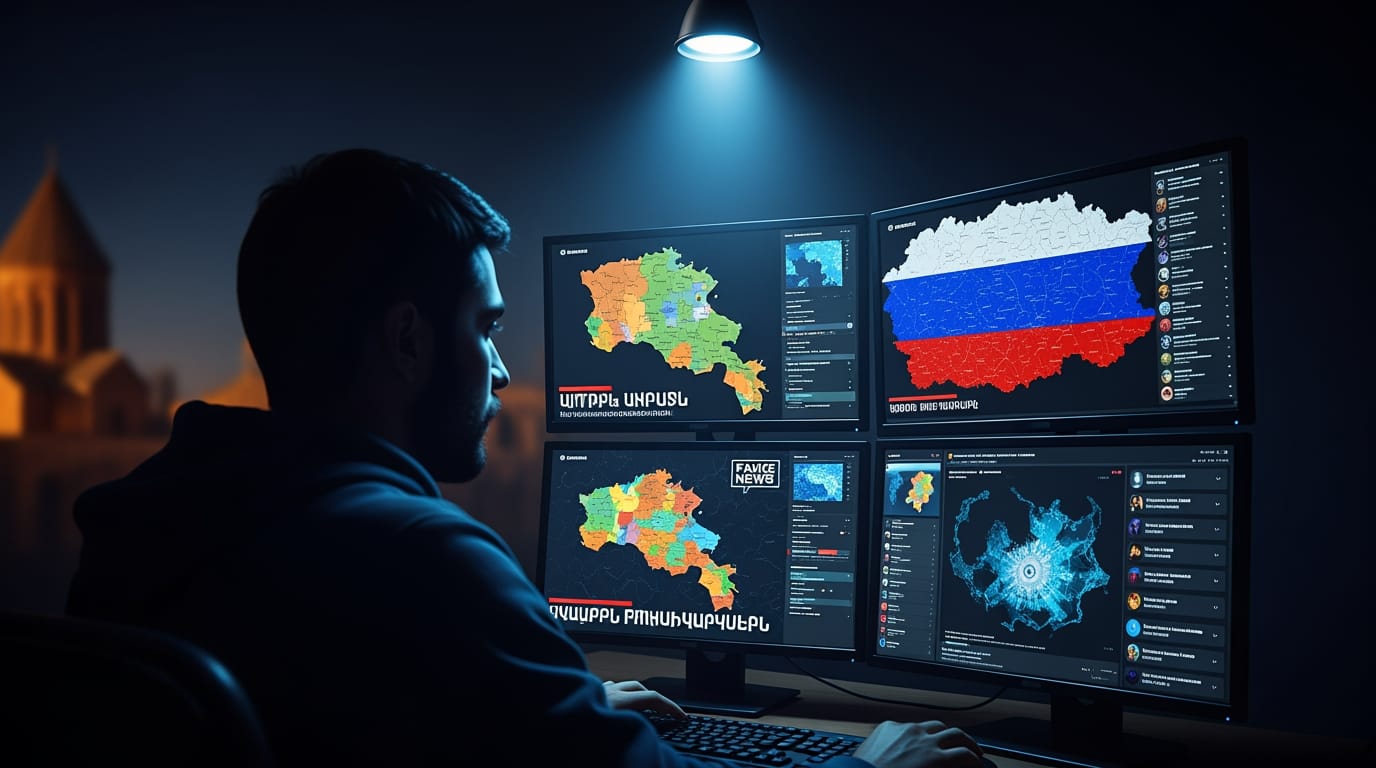
YEREVAN, Armenia – Russia has dramatically escalated a sophisticated disinformation campaign targeting Armenia, aiming to undermine the country's pro-Western government and destabilize its democratic institutions ahead of parliamentary elections scheduled for June 2026. This concerted effort employs advanced tactics, including artificial intelligence, to propagate narratives designed to erode public trust and sow discord, reflecting Moscow's increasing concern over Yerevan's pivot towards the West.
Escalation of an "Information War"
While Russian-linked propaganda in Armenia is not new, the current scale and sophistication of these influence operations mark a significant intensification. Experts indicate a surge in disinformation messages targeting Prime Minister Nikol Pashinyan and his administration, suggesting a coordinated campaign rather than isolated incidents. The deliberate timing of this heightened activity, occurring well in advance of the 2026 parliamentary elections, highlights a strategic effort by Moscow to shape Armenia's political landscape. Hasmik Hambardzumyan, editor-in-chief of the independent Armenian fact-checking media outlet Fact Investigation Platform, noted that the dissemination of these narratives has become more organized, circulates more quickly, and is significantly more targeted. A notable development in these campaigns is the emergence of AI-generated photos, audio, and deepfakes within Armenia's information space, marking a new frontier in the tactics employed.
Tactics and Networks of Deception
The Kremlin-linked networks are deploying a broad spectrum of tactics to influence Armenia's information environment. These include pro-Kremlin bot networks, organized Telegram groups, and fake news websites designed to mimic legitimate Western publications. Investigations by disinformation watchdogs, such as NewsGuard, have attributed these operations to groups like Storm-1516 and the Foundation to Battle Injustice, both previously active in influence campaigns across the United States, Germany, France, and Moldova. These entities are part of an information warfare network reportedly established by the late Yevgeny Prigozhin.
The Matryoshka network, identified for its prior involvement in influence operations in the U.S., Germany, and Moldova, has also reportedly begun targeting Armenia and Prime Minister Pashinyan since June, marking an unusually early start for pre-election activities. This network spreads disinformation through AI-generated videos and posts that cleverly imitate trusted Western media. Tactics involve fabricating allegations of corruption and sexual crimes, forging documents, and using AI to impersonate Armenian and European news outlets. These narratives are then amplified through fake NGOs, fringe websites, and social media platforms, including X (formerly Twitter), where a false claim alleging a land handover to Azerbaijan garnered more than 17 million views.
Geopolitical Context and Underlying Tensions
The surge in Russia's disinformation efforts coincides with a noticeable strain in Armenia-Russia relations and Yerevan's increasing efforts to align with Europe and the United States. Historically, Armenia, a post-Soviet state in the South Caucasus, has maintained strong ties with Russia. However, a rift began to emerge after Nikol Pashinyan's ascent to power in 2018 through the Velvet Revolution.
Relations significantly deteriorated when Armenia accused Russia and the Collective Security Treaty Organization (CSTO), a military alliance led by Russia, of failing to uphold security obligations during Azerbaijani attacks in 2021 and 2022. This perceived inaction during conflicts, particularly regarding Nagorno-Karabakh, has fueled public discontent and driven Armenia to reassess its geopolitical orientation. In February 2024, Armenia froze its participation in the CSTO and has since pursued legislation to initiate the European Union membership process. This strategic reorientation by Yerevan is viewed by Moscow as an unacceptable drift toward the West, prompting a forceful response in the information space.
Targeting the Government and Public Opinion
The primary objective of this disinformation campaign appears to be undermining trust in Armenian state institutions, discrediting Armenia's engagement with Western partners, and creating political space for more Kremlin-friendly actors. Narratives disseminated by Russian and pro-Russian media ecosystems frequently portray the Armenian government as corrupt, morally compromised, or secretly aligned with Western intelligence. A recurring theme is the depiction of the West as a threat to Armenia's sovereignty, while Moscow is presented as the country's only reliable protector.
Armenian high-ranking officials have publicly accused Moscow of waging a "hybrid war," with Parliamentary Speaker Alen Simonyan noting that this hybrid warfare periodically intensifies, often involving commentators on Russian TV channels attempting to incite political unrest. The campaign targets not only government policies but also the personal integrity of Prime Minister Pashinyan and his family with fabricated accusations.
Resilience and International Response
The ongoing disinformation campaign poses a significant challenge to Armenia's democratic development and societal cohesion. The proliferation of false and misleading information, exacerbated by crises like the COVID-19 pandemic and the Second Nagorno-Karabakh War, has created vulnerabilities in Armenia's information space and affected public perceptions of state institutions.
However, the international community has taken note of these developments. The European Union, in particular, has publicly accused Russia of ramping up pre-election disinformation in Armenia, noting that the "playbook is identical" to networks deployed in Moldova. The EU foreign policy chief, Kaja Kallas, announced in December that the EU would provide 15 million euros in additional aid to make Armenia "more resilient," with part of this funding specifically allocated for the detection, analysis, and response to foreign interference. This commitment signals a recognition of the severity of the threat and an intent to support Armenia in safeguarding its democratic processes against external manipulation. Despite Russia's refutations of interference, the evidence compiled by various research initiatives points to a deliberate and sophisticated effort to shape public opinion and political outcomes in Armenia.


