Russian Military Transport Plane Crash in Crimea Kills 29
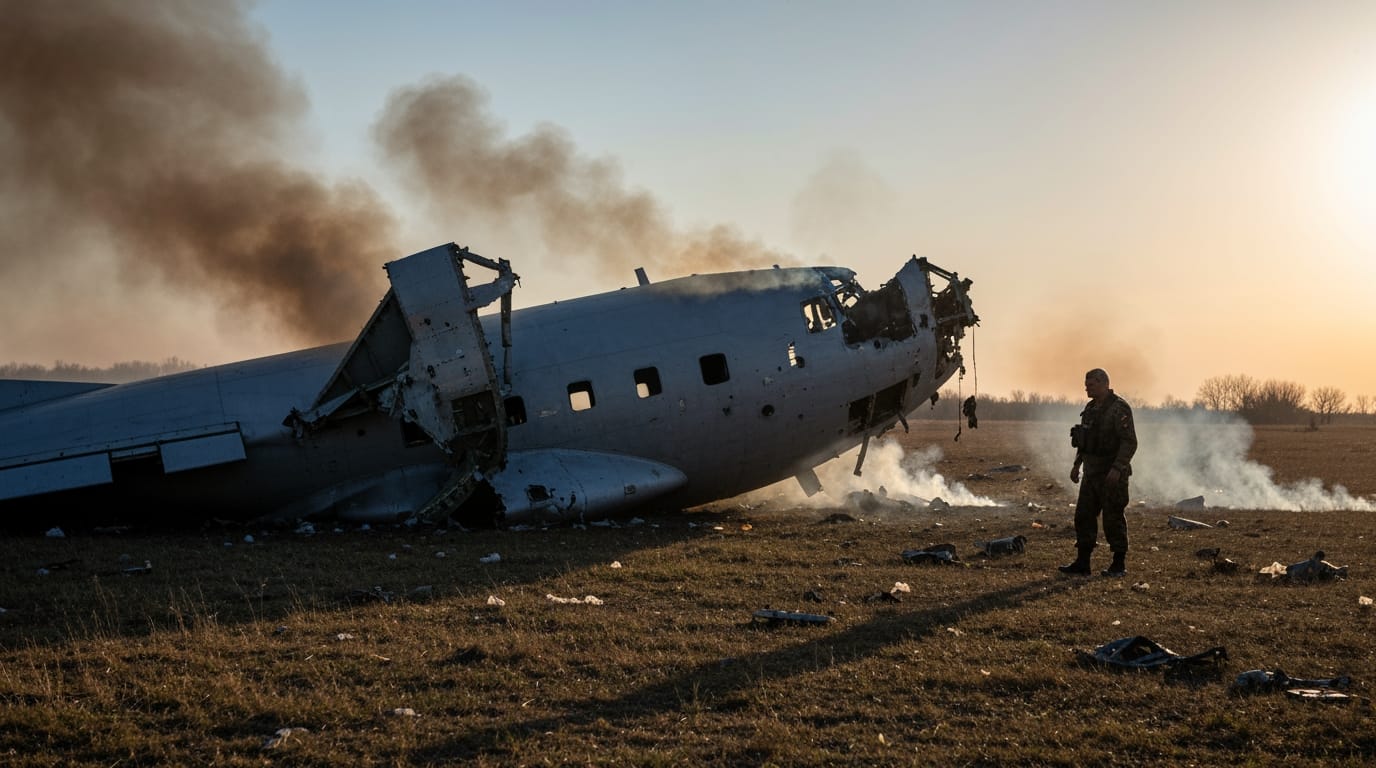
A Russian Antonov An-26 military transport aircraft crashed in Crimea on March 31, 2026, claiming the lives of all 29 individuals on board. The incident, which occurred during a scheduled flight over the annexed peninsula, has prompted an immediate investigation by Russian authorities into the cause of the fatal accident. Preliminary assessments suggest a technical malfunction led to the disaster, with no indications of external interference.
The Fatal Incident
Contact with the An-26 aircraft was lost around 6:00 PM Moscow time on Tuesday, March 31, while it was conducting a routine flight over the Crimean Peninsula. Search and rescue teams were quickly dispatched to the area, eventually locating the wreckage of the plane, which had reportedly crashed into a cliff. The Russian Ministry of Defense confirmed that there were no survivors among the 29 people aboard, which included 23 passengers and six crew members. While some reports indicated the crash site was near the village of Kuibyshevo in the Bakhchysaray district, others placed it approximately 25 kilometers east of Sevastopol.
Russian state media, citing the Defense Ministry, indicated that initial findings pointed towards a technical malfunction as the probable cause of the crash. Crucially, authorities found no evidence of external impact, ruling out possibilities such as missile strikes, drone attacks, or bird strikes. The Russian Investigative Committee has initiated a criminal case into the incident, focusing on potential violations of flight safety rules or regulations governing flight preparation, a standard procedure in such serious aviation accidents. Military investigators, rescue workers, police, and forensic experts are reportedly involved in the ongoing efforts at the crash site.
The An-26: A Veteran Transport Aircraft
The ill-fated aircraft, an Antonov An-26, is a twin-engine turboprop military transport plane of Soviet-era design. It has been a workhorse in military and civilian operations since its introduction in the late 1960s, primarily used for transporting cargo and a limited number of passengers over short to medium distances. Despite its long service record, the An-26 model has been involved in several fatal accidents globally over the past decade.
Previous notable An-26 crashes include a Ukrainian incident in 2020 that killed 26 people, mostly cadets, during a training flight in northeastern Ukraine. Another crash in Russia's Far East in 2021 resulted in 28 fatalities, and a Ukrainian An-26 crashed during a technical flight in the Zaporizhzhia region in 2022, killing one person. International incidents also include a 2020 crash in South Sudan, which killed eight people, and a 2017 crash in Côte d'Ivoire where four of 10 people on board died during landing. The frequency of incidents involving this aging aircraft model often raises questions about maintenance, operational standards, and the continued airworthiness of older fleets.
Geopolitical Landscape and Regional Tensions
The crash occurred in Crimea, a peninsula annexed by Russia from Ukraine in 2014, a move not recognized by most of the international community. Since its annexation, Crimea has served as a critical logistical and military hub for Russia, particularly amid its ongoing conflict with Ukraine. The region has seen heightened military activity and tensions, with both sides conducting operations that occasionally result in incidents.
While Russian authorities have explicitly stated no external impact was involved in this particular An-26 crash, the volatile geopolitical context of Crimea often leads to initial speculation regarding hostile action. Ukraine's military intelligence had previously claimed responsibility for destroying two Russian An-26 transport aircraft in a drone attack on occupied Crimea in September 2025, highlighting the active conflict in the area. However, in the wake of the recent crash, Ukraine's military has not issued any immediate comments. The absence of external factors in the current crash underscores the inherent risks associated with military aviation, even in the absence of direct combat.
Conclusion
The crash of the Russian An-26 military transport plane in Crimea, resulting in 29 fatalities, represents a tragic loss of life and a significant blow to the Russian military. The ongoing investigation into the technical malfunction cited as the preliminary cause will be crucial in determining the exact sequence of events that led to the disaster. As authorities work to uncover the full details, the incident also serves as a somber reminder of the challenges of maintaining and operating aging military aircraft, particularly in a region marked by persistent geopolitical tensions. The findings of the inquiry will be vital for understanding and potentially preventing similar tragedies in the future.