Saudi Air Strike Escalates Yemen Tensions, Direct Link to UAE Cited in Separatist Advances
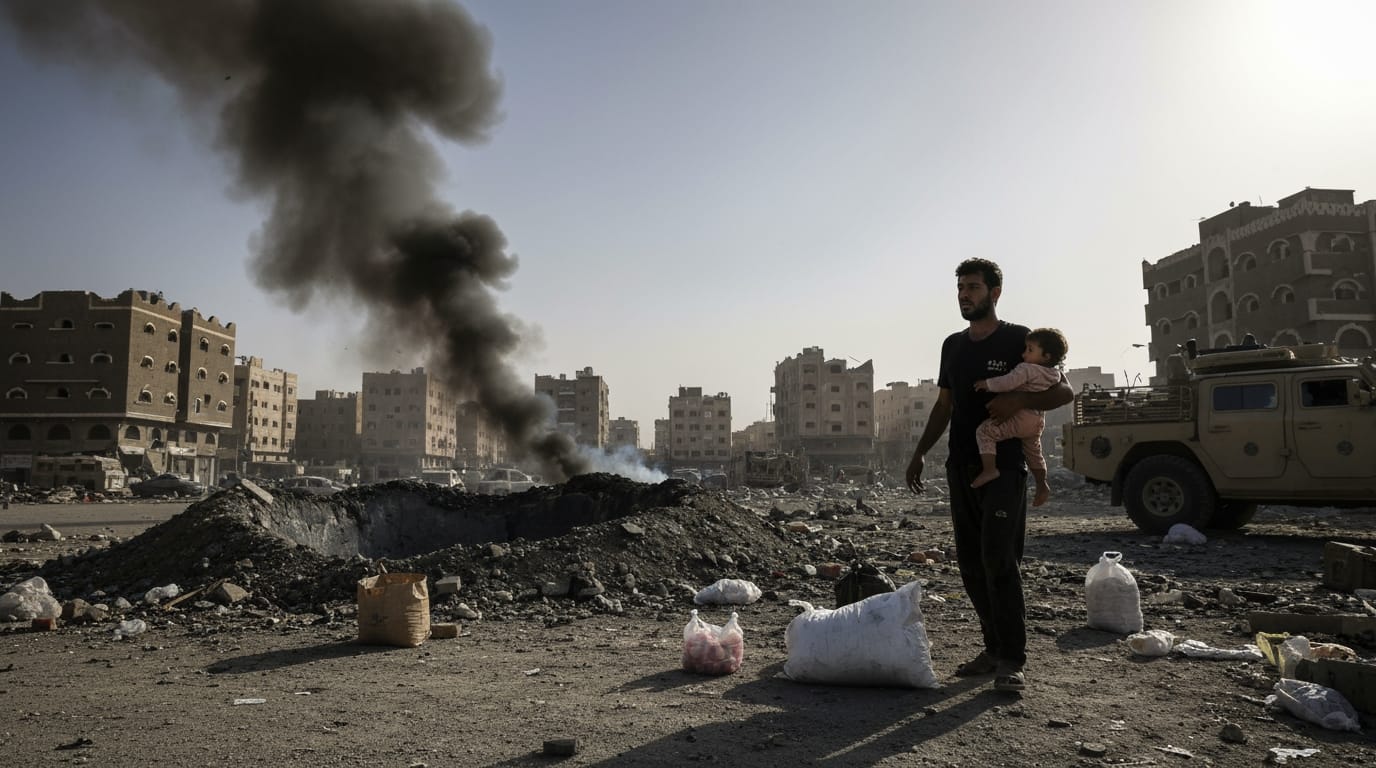
DUBAI – Saudi Arabia on Tuesday launched an airstrike on Yemen's port city of Mukalla, targeting a weapons shipment described as destined for the Emirati-backed Southern Transitional Council (STC). The action marks a significant escalation in the multifaceted Yemen conflict, exposing deep fissures within the Saudi-led coalition that has been battling Houthi rebels for nearly a decade. Riyadh directly accused the United Arab Emirates (UAE) of backing the STC's recent territorial advances and issued a stark warning to Abu Dhabi, characterizing its actions as "extremely dangerous" for regional stability. This development not only intensifies the proxy wars in the war-torn nation but also threatens to unravel the already strained alliance between two of the Gulf's most influential powers, with profound implications for Yemen's future and the broader Red Sea region.
A Coalition Under Strain: Shifting Alliances and Competing Interests
The conflict in Yemen, initiated in 2014 when Iranian-backed Houthi rebels seized the capital Sanaa, prompted a Saudi-led coalition intervention in March 2015 aimed at restoring the internationally recognized government. While Saudi Arabia's primary objective has been to counter Houthi expansion and Iranian influence, the UAE, a key coalition member, has pursued a distinct agenda, particularly in southern Yemen. Abu Dhabi's support for the Southern Transitional Council, a separatist movement advocating for an independent South Yemen, has increasingly diverged from Riyadh's commitment to a unified Yemeni state under the Presidential Leadership Council (PLC). This divergence has created a "conflict within a conflict," with both Gulf states backing ostensibly allied but ultimately competing factions on the ground. The STC, formed in 2017, seeks to re-establish a South Yemen along the borders of the former independent state, a goal that directly challenges the authority of the Saudi-backed government.
The recent surge in hostilities highlights these internal divisions. Over the past month, the STC has launched a sweeping military campaign, seizing control of substantial territories in the Hadramawt and Mahra governorates, crucial areas that include strategic ports and the vital PetroMasila oilfields. These advances displaced forces aligned with the Saudi-backed National Shield Forces, further underscoring the growing fragmentation within the anti-Houthi coalition. This territorial shift, driven by the Emirati-backed separatists, has placed significant pressure on the delicate balance of power in southern Yemen and has directly led to the latest confrontation with Saudi forces.
The Mukalla Airstrike and Riyadh's Condemnation
The Saudi airstrike on Mukalla, a key port city in Hadramawt, occurred early Tuesday following intelligence reports of weapon deliveries. A military statement released by the state-run Saudi Press Agency detailed that ships originating from Fujairah, a port city on the UAE's eastern coast, had arrived in Mukalla. According to the statement, the vessels' crews disabled their tracking devices before offloading significant quantities of weapons and combat vehicles intended for the Southern Transitional Council forces. Viewing these armaments as an "imminent threat" and an escalation that imperils peace and stability, the Coalition Air Force conducted a "limited airstrike" to neutralize the newly arrived military hardware.
Beyond the immediate military action, Saudi Arabia's diplomatic response was swift and pointed. The Saudi Foreign Ministry issued a public warning to the UAE, asserting that Abu Dhabi's actions in supporting the separatists' advances were "extremely dangerous." This direct condemnation marks a significant deterioration in the public relations between Riyadh and Abu Dhabi, two nations that have historically been closely aligned on many regional issues but have increasingly found themselves competing economically and politically. The Saudi message underscores a clear red line regarding the arming of factions deemed destabilizing to its efforts to secure Yemen.
Yemeni Government's Ultimatum and Regional Fallout
In a dramatic reaction to these developments, Rashad al-Alimi, the head of Yemen's Presidential Leadership Council (PLC), declared a state of emergency across territories under its control. Al-Alimi publicly accused the UAE of actively pressuring and directing the STC to undermine and rebel against state authority through military escalation. As a direct consequence, the PLC leader announced the cancellation of a defense pact with the UAE and issued a stringent 24-hour ultimatum for all Emirati forces to evacuate Yemeni territory. Furthermore, the government imposed a 72-hour ban on all border crossings, airports, and seaports in its held territories, with exceptions only for those authorized by Saudi Arabia.
This decisive stance by the internationally recognized Yemeni government underscores the gravity of the internal strife plaguing the anti-Houthi alliance. The confrontation risks not only further fragmenting the already fragile Yemeni government but also complicating ongoing, albeit slow-moving, peace negotiations with the Houthi rebels. Experts note that the Saudi-led coalition's internal discord could inadvertently empower the Houthis and prolong the broader conflict, which has already pushed Yemen into one of the world's worst humanitarian crises.
Humanitarian Crisis Deepens Amid New Front Lines
The renewed internal conflict between nominal allies further exacerbates the catastrophic humanitarian situation in Yemen. Years of war, economic collapse, and recurrent disease outbreaks have left millions in dire need of assistance. Over 19 million people require humanitarian aid in 2025, with women, girls, and internally displaced persons disproportionately affected. The healthcare system remains on the verge of collapse, and millions of children face disrupted education and severe malnutrition.
The emergence of new front lines and intensified skirmishes among anti-Houthi factions diverts critical resources and attention away from stabilization efforts, jeopardizing the delivery of life-saving aid. The ongoing power struggles among various groups, including the STC, the Saudi-backed government, and the Houthis, complicate prospects for a lasting peace and impede efforts to address the widespread suffering. With external powers backing different sides, the path toward a comprehensive resolution appears increasingly fraught, threatening to entrench the nation's instability and humanitarian catastrophe for the foreseeable future.
Conclusion: A Precarious Future for Yemen
The Saudi airstrike in Mukalla and the subsequent warnings to the UAE represent a critical juncture in the long-running Yemen conflict. The direct confrontation between two key regional powers, even through proxies, signals a profound breakdown in the unity that once defined the anti-Houthi coalition. This internal fracture, driven by competing geopolitical ambitions and differing visions for Yemen's future, risks transforming a stalemated civil war into a more complex regional proxy battle. The internationally recognized government, caught between its primary backers, faces an existential threat to its authority. As tensions mount and new battle lines are drawn within the south, the prospects for a unified, stable Yemen recede further, leaving its population to bear the brunt of a conflict that continues to defy resolution and deepen an already catastrophic humanitarian crisis. The coming weeks will be crucial in determining whether the Gulf allies can mend their fractured alliance or if their divergent interests will lead to an even more chaotic and protracted struggle for control over Yemen.


