Seoul Seeks European Intervention to Reignite Stalled Dialogue with Pyongyang
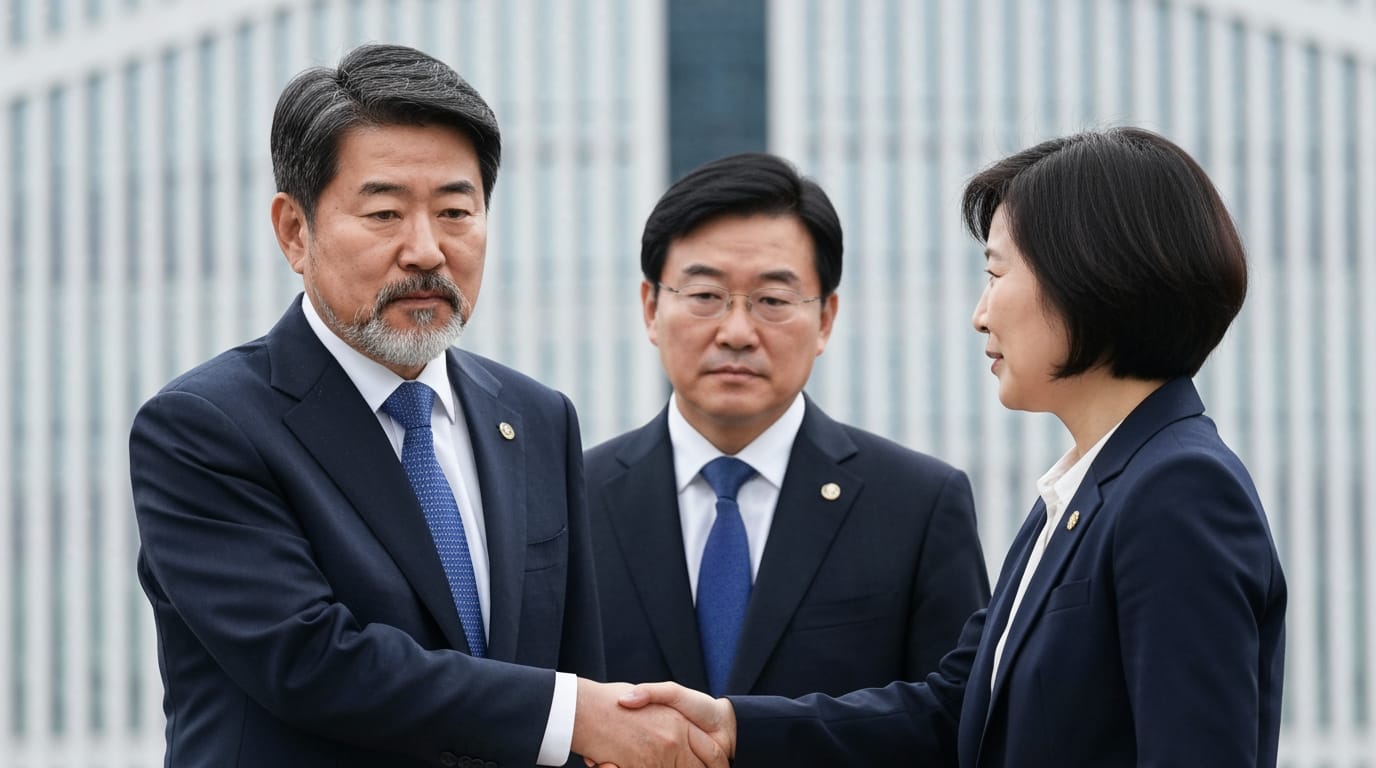
SEOUL – In a significant diplomatic maneuver, South Korea has formally appealed to the European Union to assume a mediating role in reviving long-stalled talks with North Korea, aiming to de-escalate burgeoning tensions on the Korean Peninsula. Unification Minister Chung Dong-young, speaking in Seoul on April 1, 2026, proposed a "2+1" political dialogue format, positioning the EU as a neutral arbiter between the two Koreas. This strategic outreach underscores Seoul's urgent desire to break the current "swamp of distrust and hostility" that characterizes inter-Korean relations, as President Lee Jae-myung's administration seeks pathways to lasting peace amidst Pyongyang's continued military buildup.
The overture to Europe represents a departure from traditional diplomatic frameworks, reflecting Seoul's recognition of the EU's distinct experience in navigating complex, protracted conflicts and fostering regional integration. However, the path to re-engagement is fraught with challenges, given North Korea's entrenched confrontational stance and a history of inter-Korean dialogue frequently collapsing into stalemate.
A Deepening Stalemate: South Korea's Urgent Call for Mediation
Inter-Korean relations have plunged into a period of profound estrangement, marked by a palpable increase in military tensions and a near-complete cessation of meaningful dialogue. North Korean leader Kim Jong-un recently underscored this divide, publicly labeling South Korea as the "most hostile state" and declaring the impossibility of peaceful reunification, signaling a hardened stance from Pyongyang. This declaration follows a period of significant deterioration, particularly under the Yoon Suk Yeol administration and continuing into the present, effectively nullifying earlier, more hopeful periods of engagement.
Historically, efforts to bridge the divide have been sporadic and often short-lived. Notable periods of dialogue in 2009, 2011, and 2015 each concluded in stalemate, highlighting the fragility of any diplomatic breakthroughs. Even the more active engagement seen in 2018, which witnessed 36 meetings between the two sides, ultimately succumbed to renewed deadlock by mid-2019, exacerbated by the collapse of denuclearization talks between the United States and North Korea.
Against this backdrop of entrenched animosity and a history of failed direct engagement, the Lee Jae-myung administration's appeal to the EU is a calculated move. Minister Chung emphasized that the EU's unparalleled experience in "overcoming long-standing conflicts and advancing regional integration" positions it as an "optimal mediator" for the Korean Peninsula. This aligns with a broader South Korean strategy to strengthen alliances with the EU as a counterweight to regional threats, seeking to leverage external, impartial influence to achieve what direct bilateral efforts have not.
The European Union's "Critical Engagement" and Potential Leverage
The European Union's relationship with North Korea is characterized by a policy of "critical engagement," a nuanced approach developed since 2003 that balances diplomatic outreach with pressure. The core objectives of this policy include promoting denuclearization, improving human rights, and contributing to peace and stability on the Korean Peninsula.
Diplomatic relations between the EU and North Korea were formally established in 2001, with most EU member states maintaining ties with Pyongyang. Early engagement saw the EU providing humanitarian assistance to North Korea since 1995 and participating in political dialogues. However, the nature of this engagement fundamentally shifted following North Korea's accelerated nuclear weapons program. After 2003, the EU's engagement became increasingly conditional, leading to a reduction in cooperation and the imposition of sanctions beginning in 2006 to comply with international efforts to curb Pyongyang's weapons ambitions. Consequently, political and human rights dialogues were suspended in 2013 and 2015, respectively, signaling a more constrained interaction.
Despite this history of conditional engagement, South Korea views the EU as a unique and potentially effective mediator due to its perceived neutrality compared to other major powers with direct strategic interests in the region. The EU does not possess the same historical baggage or confrontational relationship with Pyongyang as the United States, nor is it a direct party to the complex security dynamics of Northeast Asia. This perceived impartiality, coupled with the EU's established diplomatic infrastructure and commitment to multilateralism, offers a distinct advantage. Recent developments also highlight closer EU-South Korea cooperation, including their first "Strategic Dialogue" and a Security and Defense Partnership signed in November 2024. Both entities have jointly condemned North Korea's alleged arms transfers to Russia and called for the withdrawal of North Korean troops from Ukraine, demonstrating a growing alignment of strategic interests.
Pathways and Hurdles for EU Mediation
The "2+1" dialogue proposed by South Korea envisions the EU actively facilitating communication and trust-building measures between Seoul and Pyongyang. This could involve direct mediation, hosting talks, or even initiating humanitarian channels that could pave the way for broader political discussions. Such an approach might leverage the EU's history of providing assistance to vulnerable communities in North Korea, mainly through support for the agricultural sector, which has been ongoing since 1995.
However, the path to successful mediation is fraught with significant hurdles. North Korea has consistently rejected dialogue with South Korea, particularly given its recent hardened rhetoric and the official declaration of the South as a hostile entity. Pyongyang has historically shown little interest in European engagement for its own sake, preferring direct dealings with the United States on critical security issues like denuclearization. The EU's existing policy of critical engagement, which includes stringent sanctions, could also be a point of contention for North Korea, potentially limiting its willingness to participate in EU-mediated talks.
Furthermore, any meaningful diplomatic initiative involving the EU would almost certainly need to operate in close coordination with American efforts. The EU's foreign policy, particularly concerning nuclear non-proliferation, has increasingly aligned with US actions, leading to a reduction in independent engagement with North Korea after 2003. For the EU to effectively mediate, it would require a delicate balancing act – maintaining its commitment to sanctions and human rights while simultaneously creating an environment conducive to dialogue with a highly recalcitrant state. Appointing a special envoy for Korean Peninsula affairs, as suggested by South Korea, could be a concrete initial step for the EU to signal its commitment and consolidate its diplomatic resources.
Broader Geopolitical Implications
South Korea's appeal to the EU for mediation reflects a broader re-evaluation of its diplomatic strategy in a rapidly shifting global landscape. Seoul has intensified its diplomatic efforts against North Korea and China, concurrently strengthening its alliance with the EU. This reflects a growing understanding in Seoul that the "security of the Indo-Pacific region and Europe" are increasingly interconnected, necessitating collaborative responses to shared threats.
The deepening ties between North Korea and Russia, including alleged arms deals, further complicate the geopolitical calculus, demanding a more unified and robust international response. The potential for the EU to act as a bridge between the two Koreas, while coordinating with key global players like the United States, could contribute to a more comprehensive and multilateral approach to regional security. The future trajectory of US foreign policy, particularly concerning a potential return of former President Donald Trump, also casts a long shadow over security dynamics, prompting allies to diversify their diplomatic options and strengthen independent strategic alignments.
In conclusion, South Korea's call for the European Union's mediation marks a critical juncture in the long and arduous quest for peace on the Korean Peninsula. While the challenges are formidable, the symbolic and practical significance of this appeal underscores the urgent need for innovative diplomatic solutions. The EU's unique blend of critical engagement, multilateral experience, and perceived impartiality offers a potential new avenue for dialogue where traditional approaches have faltered. Should the EU embrace this role, it could not only help de-escalate tensions between the Koreas but also reinforce the interconnectedness of global security, demonstrating the enduring power of diplomacy in an increasingly complex world.