Virtual Romanian AI Singer Ignites Global Debate Over Art, Authenticity, and Cultural Appropriation
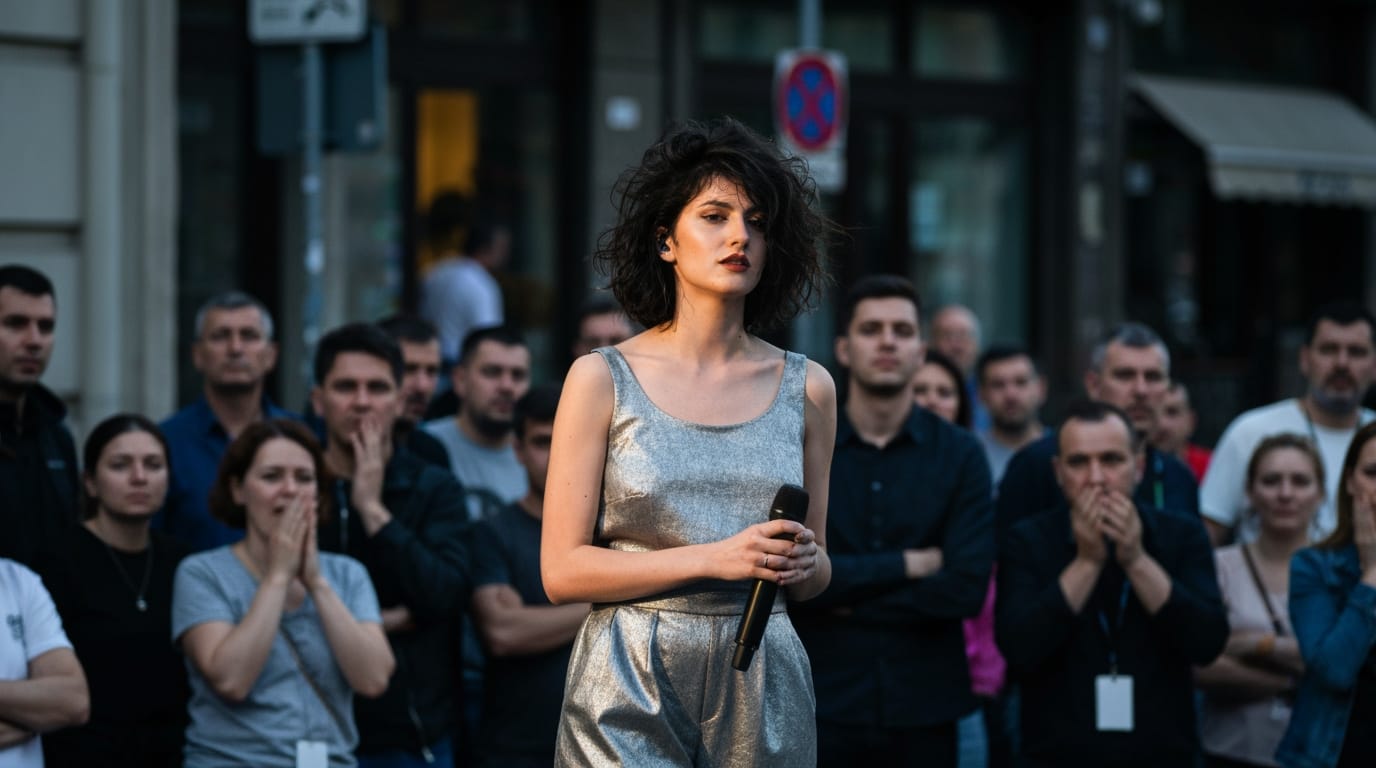
BUCHAREST – A virtual Romanian singer, Lolita Cercel, has swiftly captured the attention of millions across social media platforms, achieving viral status with her distinctive blend of Balkan nostalgia and synthetic pop. Her rapid ascent, however, has simultaneously ignited a fervent debate within artistic circles and among cultural activists, probing deep into questions of authenticity, the future of human creativity, and the sensitive issue of cultural appropriation in the age of artificial intelligence.
The Meteoric Rise of a Digital Icon
In a matter of weeks, Lolita Cercel, an entirely AI-generated persona, garnered millions of views for her seven initial songs on platforms like TikTok and YouTube. Her meticulously crafted digital appearance and unique sound resonated with a broad audience, quickly cementing her status as a significant, albeit virtual, influencer in Romanian popular culture. Behind the digital phenomenon is a young visual designer from Bacau, known only as "Tom," who prefers anonymity to keep the spotlight squarely on his creation. Tom asserts that while he conceptualizes the lyrics and persona, artificial intelligence is responsible for generating the music and accompanying video visuals based on his prompts. He describes his process as a blend of AI tools and classical editing methods, with each video requiring up to two weeks of dedicated work. His stated inspiration for Lolita's lyrics comes from an 80-year-old collection of poems by a Romanian author, utilizing colloquial and "slum language" to craft an authentic feel.
Accusations of Cultural Exploitation and Stereotyping
Despite her widespread popularity, Lolita Cercel has faced severe criticism, particularly from Roma activists and artists, who argue that her persona and music constitute a troubling instance of cultural exploitation. Roma activist Alexandra Fin contends that the project "represents an exploitation and instrumentalization of Roma culture," labeling it "deeply inhuman for a marginalized identity/culture to be used to generate profit through a virtual artist". Critics point to Lolita's visual presentation, which appears Roma, and her musical style, which heavily draws from the community's traditions, as evidence of this appropriation.
Further concerns have been raised regarding the virtual singer's name itself. The moniker "Lolita" is perceived by some as "exotic and infantile," while "Cercel" references a well-known manele musician in Romania, a genre often associated with Roma culture. The use of words derived from Romani languages, including the slur "tiganesti," within her lyrics, which Tom states were inspired by Romani songs, has been highlighted as a "clear theft of Romani music and heritage" that contributes to "Romani stigmatization". This contentious blend of aesthetics and linguistics, crafted by an anonymous creator and disseminated by AI, has sparked calls for Lolita Cercel's content to be blocked on social media platforms as a form of protest against the normalization of such AI-generated material.
The Unsettling Future of Human Artistry
Beyond the cultural appropriation debate, Lolita Cercel's success has thrown a harsh spotlight on the broader implications of AI in the music industry, raising anxieties among human artists and producers. Singer Paulina expressed a sentiment shared by many, noting the "sadness for independent artists who struggle to do everything from scratch" when AI-generated "shortcuts" effortlessly achieve viral status and radio play. This concern extends to the potential for widespread job displacement, with reports indicating that many composers are already experiencing a significant reduction in work due to the ease with which AI can create full songs from simple prompts.
The legal and ethical dimensions of AI's creative process are also a central point of contention. Critics question the very concept of "originality" when AI systems are trained on vast datasets of human-made work without transparent consent or compensation. One commentator starkly described it as "blatant infringement copyright" and "stealing," drawing parallels to past efforts to combat copyright infringement in other mediums. This technological advancement forces a re-evaluation of intellectual property rights and the traditional framework of artistic creation.
Navigating a New Creative Landscape
The phenomenon of Lolita Cercel serves as a microcosm for a much larger, ongoing global discussion about the integration of AI into creative industries. While some express deep concern about the erosion of human artistry and cultural integrity, others see potential in AI as a tool to "extend human experience" and foster new forms of creative collaboration. Supporters of AI in art suggest that the "human touch" remains central, even as AI assists in production, and argue that the pushback from "real artists" might stem from "hurt pride" rather than objective concerns.
However, the rapid evolution of generative AI tools presents an urgent need for regulatory frameworks and ethical guidelines to ensure that technological progress does not come at the expense of human creators or the respectful representation of diverse cultures. The debate surrounding Lolita Cercel highlights the critical juncture at which the creative world finds itself, grappling with how to balance innovation with ethical responsibility.
Conclusion: A Flashpoint for the Digital Age
Lolita Cercel, the virtual Romanian singer, stands as a potent symbol of the opportunities and challenges presented by artificial intelligence in the creative sector. Her viral success underscores AI's capacity to generate engaging content and capture public imagination, while the ensuing criticism from Roma activists and human artists reveals the profound ethical, cultural, and economic complexities that accompany such advancements. As AI continues to evolve, the conversations sparked by Lolita Cercel will undoubtedly shape how societies define art, recognize authenticity, and protect cultural heritage in an increasingly digital world. The future of creative expression, whether human or algorithmic, hangs in the balance, demanding thoughtful consideration and proactive solutions from all stakeholders.


