Serbian Student Uprising: A Growing Challenge to Vučić's Authority Amidst Calls for Fresh Elections
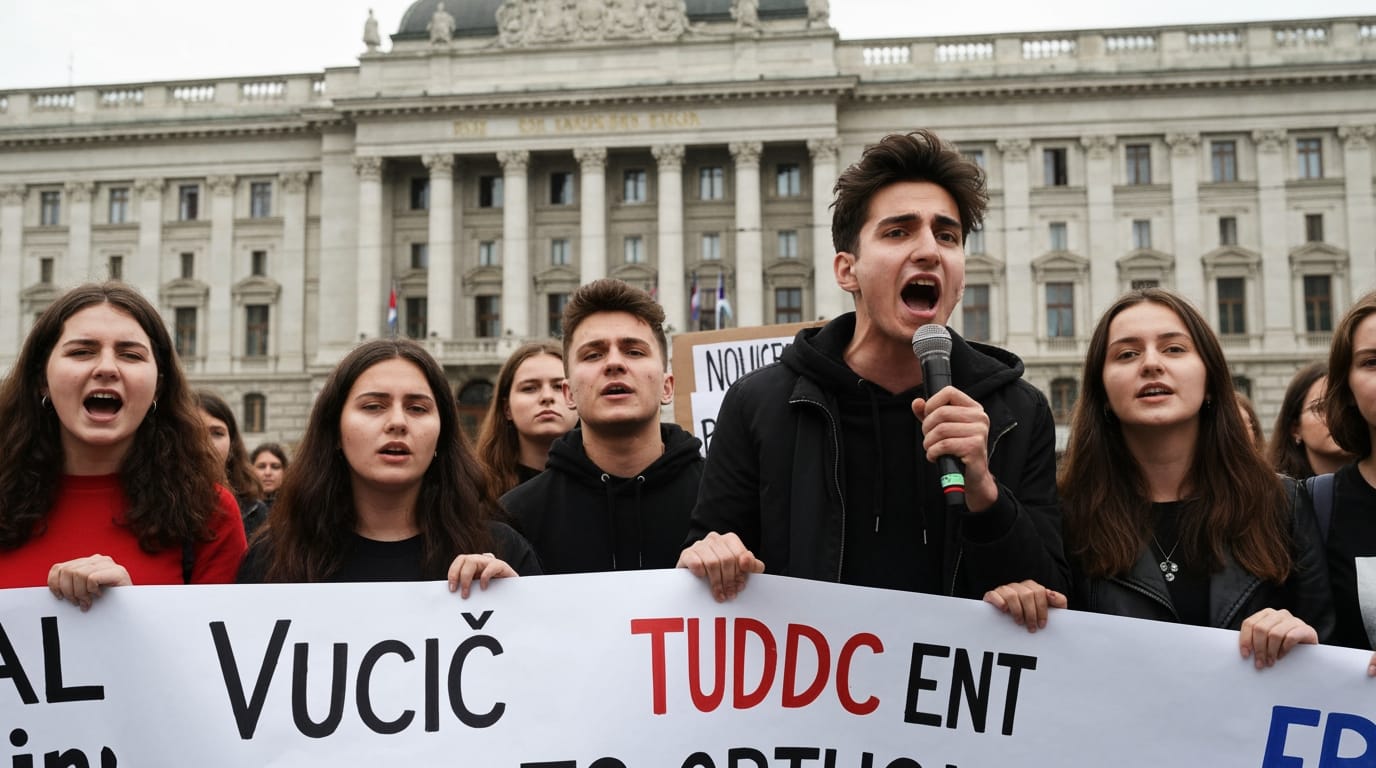
BELGRADE, Serbia — Serbia is gripped by a sustained wave of student-led protests, marking the most significant challenge to President Aleksandar Vučić's decade-long rule. What began as a solemn response to a devastating infrastructure collapse has rapidly evolved into a nationwide movement demanding accountability, an end to systemic corruption, and increasingly, calls for snap parliamentary elections. The widespread discontent, fueled by allegations of electoral fraud in recent polls, has created a volatile political landscape where President Vučić faces mounting pressure to address the public's grievances.
The student movement, initially catalyzed by the tragic Novi Sad railway station canopy collapse, has broadened its scope to encompass fundamental issues of governance and democracy. Their persistent demonstrations, drawing tens of thousands onto the streets across Serbia, signal a deep-seated frustration with the status quo and pose a considerable test for the ruling Serbian Progressive Party (SNS).
The Spark of Discontent: A Tragedy Unveils Systemic Failures
The genesis of the current unrest lies in a catastrophic event on November 1, 2024, when the newly renovated canopy of the Novi Sad railway station collapsed, claiming the lives of 16 individuals, including two children. This tragedy quickly became a potent symbol of perceived government negligence and deep-seated corruption, with the rallying cry "We are all under the canopy" encapsulating widespread public frustration with what many see as a failure of state institutions.
In the immediate aftermath, students initiated candlelit vigils and moments of silence. However, these peaceful commemorations were reportedly met with intimidation, surveillance, and even physical attacks by individuals allegedly linked to the ruling party, leading to arrests. This heavy-handed response served to further galvanize the student body, transforming grief into resistance. Blockades of educational institutions, starting at the Faculty of Dramatic Arts in Belgrade on November 22, quickly spread across the country. By March 2025, the protests had expanded to over 400 cities and towns, attracting not only students but also farmers, veterans, lawyers, and artists, underscoring the broad societal resonance of their grievances.
Escalating Demands and a Call for "A Better Future"
The initial focus of the protests was a demand for justice for the victims of the Novi Sad tragedy and accountability from government officials deemed responsible for negligence. Specific early demands included the resignation of figures like Goran Vesić. As the movement gained momentum, its demands became more formalized and comprehensive. Students called for the publication of all documentation related to the Novi Sad railway station's reconstruction, the dismissal of criminal charges against arrested students, prosecution of those who assaulted protesters, and a 20% increase in the budget for higher education.
Beyond these specific points, the protests began to articulate a broader vision for Serbia: one characterized by independent institutions, media freedom, and an end to political influence and corrupt practices. A significant escalation in their political objectives came in May 2025, when student groups explicitly added snap parliamentary elections to their list of demands. Some student activists have even begun to explore the creation of an electoral list composed of individuals from outside the entrenched party system, signaling a desire for fundamental political reform. The sheer scale of the demonstrations, with turnouts often exceeding 100,000 people in Belgrade, and symbolic actions like the "Serbia, stand still" traffic blockades at the exact time of the Novi Sad collapse, underscore the depth of commitment to these objectives.
A President Under Pressure: Vučić's Response to the Unrest
President Vučić and his government have adopted a multifaceted approach to the protests, initially dismissing them before acknowledging the "enormous negative energy and anger" directed at authorities. He has frequently characterized the student movement as a "color revolution" orchestrated by foreign powers, particularly Western governments, and aimed at destabilizing Serbia. Such claims have been made without concrete evidence.
The government's response has also included threats of severe action against protesters. President Vučić has warned of a "state reaction unlike any other time" and promised arrests for those involved in what he termed "violent actions," stating that "we will restore order in any way we can." He has also publicly called on citizens to "oppose the terror carried out by students," and pro-government media have been accused of doxing protesters and threatening to cut student scholarships. In an attempt to counter the student movement's narrative and demonstrate continued public support, the government has organized counter-rallies, portraying them as "national assemblies."
Despite the confrontational rhetoric, the government has made some concessions. These include announcing the release of documents related to the Novi Sad disaster, promising a 20% increase in higher education funding, a cabinet reshuffle, and pardons for some students and teachers who faced charges. However, Vučić has also maintained a defiant stance regarding elections, suggesting that if snap elections were held, his ruling coalition would achieve an even more decisive victory.
Electoral Integrity and the Shadow of Past Irregularities
The backdrop to the current student-led protests is a pervasive concern over electoral integrity, particularly following the December 2023 parliamentary and local elections. Numerous reports from domestic and international observers, including Members of the European Parliament (MEPs), identified "severe irregularities" and "unjust conditions." These included allegations of vote buying, ballot stuffing, group voting, unlawful manipulation of voter registries, and systematic pressure and intimidation against voters and candidates.
MEPs concluded that the elections fell "below the expected standards for an EU candidate country" and called for an independent investigation into the reported fraud. The opposition "Serbia Against Violence" (SPN) coalition protested the results, demanding their annulment, especially for the Belgrade City Assembly. While a new election for the Belgrade City Assembly was eventually called for June 2024, the opposition ultimately lost, and the ruling SNS regained its majority. These documented electoral shortcomings provide significant context for the student movement's demand for early parliamentary elections, indicating a belief that the current electoral system is compromised and cannot accurately reflect the will of the people.
Conclusion: A Generation's Demand for Change
The ongoing student protests in Serbia represent a powerful and enduring force for change, directly challenging President Aleksandar Vučić's long-held grip on power. What began as a focused demand for justice following a tragic event has expanded into a broader movement advocating for accountability, democratic reforms, and fair elections. The government's mixed response, oscillating between harsh rhetoric and limited concessions, underscores the pressure it faces.
With a history of alleged electoral irregularities and a populace increasingly vocal about corruption and state capture, the student movement's call for snap parliamentary elections resonates deeply within a society yearning for transparent governance. As young Serbians continue to demonstrate their resolve, marching, organizing, and demanding "a better future," the implications for the country's political trajectory and President Vučić's future remain significant. The unfolding events indicate a critical juncture for Serbian democracy, where a galvanized generation is determined to redefine the nation's political landscape.


