South Africa Deploys Army to Combat Mounting Crime Crisis
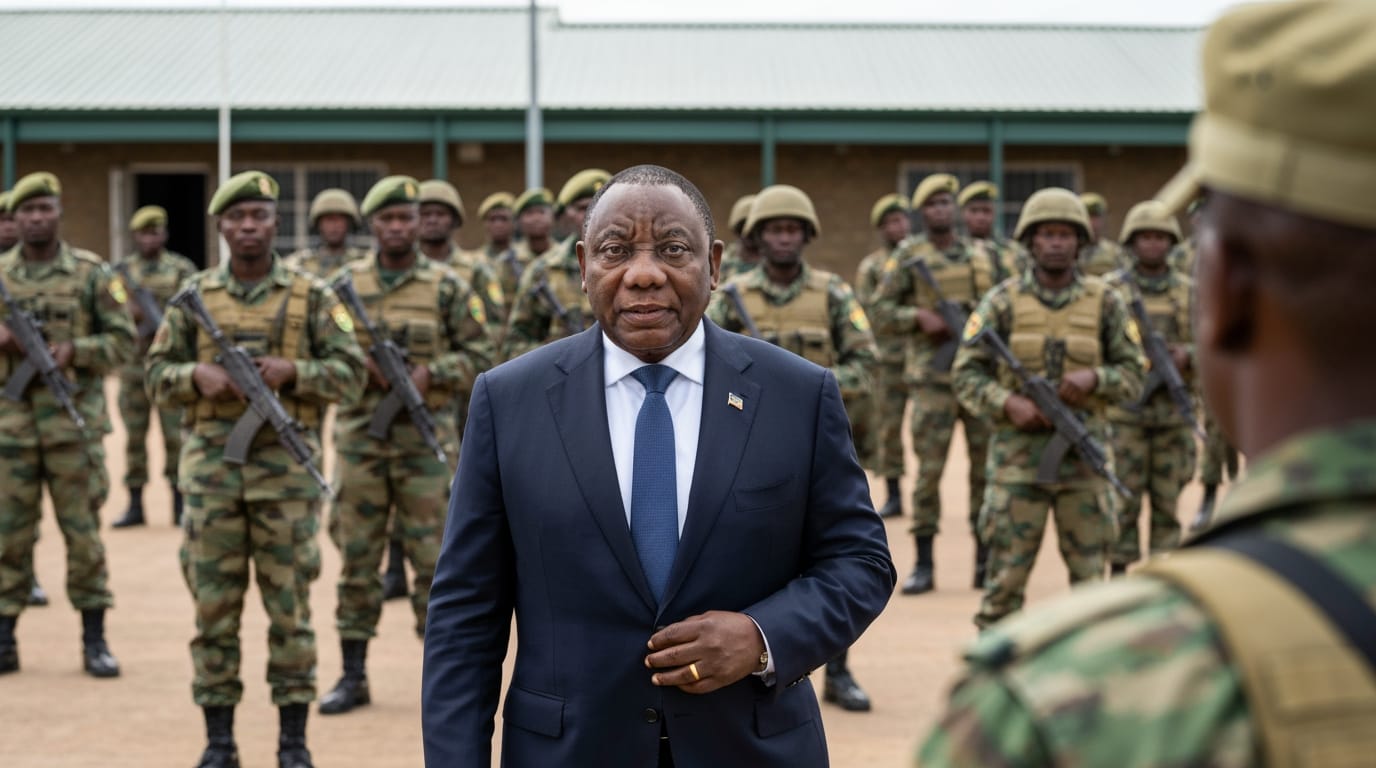
Pretoria, South Africa – In a significant escalation of efforts to reclaim public safety, President Cyril Ramaphosa announced the immediate deployment of the South African National Defence Force (SANDF) to assist police in combating rampant organized crime across the nation. The directive, delivered during his State of the Nation Address on Thursday, February 12, 2026, signals a decisive turn in the government's battle against criminal syndicates that Ramaphosa declared the "most immediate threat" to South Africa's democracy and economic stability. Soldiers will specifically target hotbeds of gang violence, construction mafias, and illegal mining operations, initially focusing on the Western Cape and Gauteng provinces.
Escalating Crisis Prompts Drastic Action
The deployment comes amid growing public outcry and staggering statistics that underscore the pervasive nature of crime in South Africa. Organized crime, in particular, has inflicted a severe toll on the nation's economy and social fabric. A World Bank report estimated that the cost of crime in South Africa amounts to approximately 9.6% of the country's Gross Domestic Product (GDP), representing billions in direct losses, security expenditures, and lost economic opportunities. Furthermore, organized crime syndicates are reportedly draining the national economy of an estimated R155 billion annually, impacting vital sectors from construction to illicit mining and state infrastructure.
The human cost is equally dire. South Africa grapples with one of the world's highest homicide rates, averaging around 63 killings per day in 2025. In 2022, the murder rate stood at 45.53 per 100,000 people. President Ramaphosa highlighted the heartbreaking realities faced by citizens, citing instances of children caught in the crossfire of gang violence in the Western Cape and communities terrorized and displaced by illegal miners in Gauteng. These alarming trends have created an environment of fear and instability, prompting urgent calls for robust intervention.
The Military's Role: Support, Not Substitution
President Ramaphosa clarified that the SANDF's deployment is intended to support the South African Police Service (SAPS) and not to replace their core functions. The strategy emphasizes a coordinated national crackdown, leveraging improved intelligence, technology, and multi-agency cooperation to dismantle criminal networks. The President announced that the Minister of Police and the SANDF have been tasked with developing a technical plan to outline the precise timing, locations, and operational parameters of the deployment. As constitutionally required, Parliament will be formally informed of these details, including the estimated costs.
The specific areas of focus—gang violence in the Western Cape, construction mafias, and illegal mining in Gauteng—reflect critical challenges undermining governance and economic activity. For example, illegal mining, often controlled by armed syndicates, led to an estimated loss of over $3 billion in gold alone in 2024. These operations frequently involve undocumented foreign nationals and often contribute to broader criminal activities. The deployment aims to disrupt these entrenched illicit economies and restore law and order in affected communities.
Balancing Security and Rights: Historical Context and Concerns
While the deployment has been met with a mix of relief and apprehension, it is not without precedent or potential pitfalls. The SANDF has been called upon for internal operations previously, notably during the COVID-19 lockdown to enforce restrictions and in response to the widespread civil unrest in 2021. During the 2021 unrest, over 25,000 troops were deployed, marking the largest single deployment since 1994.
However, the use of military forces in civilian policing roles raises significant concerns. Soldiers are primarily trained to neutralize threats, often with a "shoot to kill" mentality, which differs fundamentally from the police's mandate of crime investigation and apprehension with respect for civil rights. This fundamental difference in training and approach has historically led to legal questions and accusations of heavy-handedness during previous domestic deployments. Critics argue that military deployments in civilian areas can be perceived as an "occupying force" and may alienate communities, undermining trust rather than building it. The South African Constitution stipulates that internal deployment of the SANDF should be limited to "exceptional circumstances" and subject to parliamentary approval and safeguards.
Furthermore, the SANDF itself faces internal challenges, including funding shortages, outdated equipment, and an aging personnel base, which could strain its capacity for prolonged domestic operations. Military experts caution that relying on the army for policing functions risks weakening both the SANDF and the SAPS in the long run.
Beyond Boots on the Ground: Long-Term Strategy
Recognizing that military deployment is a short-term intervention, the government's strategy includes broader, long-term reforms. President Ramaphosa announced plans to recruit an additional 5,500 police officers, supplementing previous recruitment drives. This aims to bolster the capacity of the SAPS, addressing the acknowledged shortage of police personnel.
The government also intends to streamline and strengthen legislation and regulations concerning firearms to combat gun violence, a significant contributor to the nation's high murder rates. An illicit economy disruption program will be established, utilizing data analytics and artificial intelligence to tackle illegal trade. Critically, the President acknowledged the "rampant" corruption within the SAPS and other law enforcement agencies, underscoring the necessity for ethical, responsive, and community-rooted policing to uphold the rule of law.
Conclusion
President Ramaphosa's decision to deploy the South African military marks a pivotal moment in the nation's struggle against an entrenched and economically damaging crime wave. This bold move reflects the gravity of the challenge, as organized crime increasingly threatens South Africa's democratic institutions and economic prosperity. While the deployment offers a formidable show of force and a potential short-term reprieve for beleaguered communities, its success will ultimately depend on careful execution, strict adherence to human rights, and the simultaneous implementation of comprehensive, long-term strategies that address the systemic issues plaguing law enforcement and fostering criminal activity. The path to a safer, more secure South Africa is complex, requiring not just military might, but also sustained political will, institutional reform, and the rebuilding of trust between citizens and their protectors.


