South Africa Deploys Military to Frontline in Escalating War Against Organized Crime

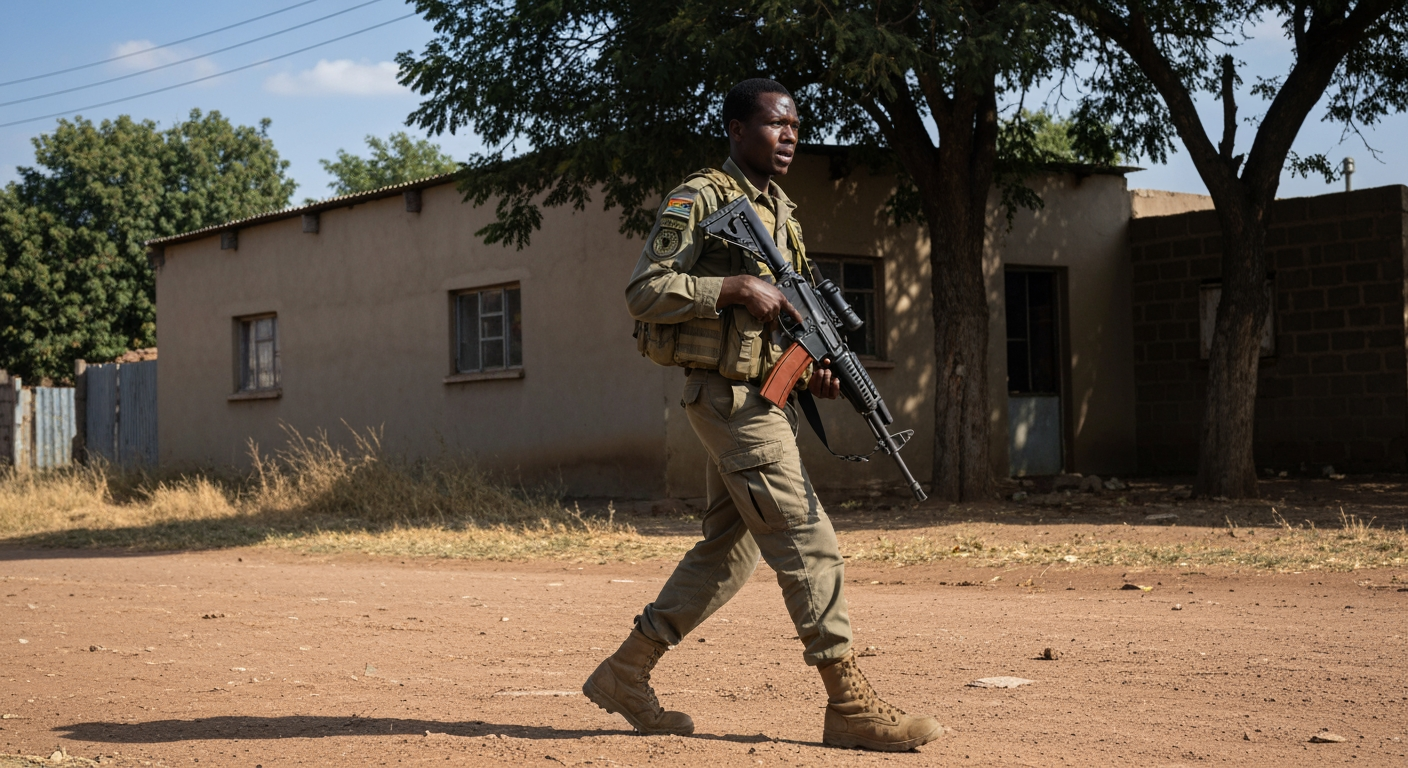
PRETORIA, South Africa – In a dramatic escalation of efforts to reclaim communities and economic stability from the grips of criminal syndicates, South African President Cyril Ramaphosa has authorized the deployment of the South African National Defence Force (SANDF) to support police operations across key provinces. The presidential directive comes as the nation grapples with what Ramaphosa has termed the "most immediate threat" to its democracy, society, and economic development, signalling a critical juncture in the country's ongoing battle against sophisticated criminal networks.
The military intervention, targeting areas plagued by rampant gang violence in the Western Cape and widespread illegal mining in Gauteng, marks a significant shift in the government's strategy. This move aims to bolster an overstretched police force in a nation confronting one of the world's highest murder rates, averaging between 60 and 72 killings daily.
The Economic and Societal Toll of Criminal Enterprises
Organized crime in South Africa has evolved into a formidable adversary, deeply embedding itself within the nation's economic fabric and societal structures. The financial impact is staggering, with a World Bank report estimating the cost of crime to be approximately 9.6% of the country's Gross Domestic Product (GDP). This figure encompasses direct losses, substantial expenditures on security and insurance, and significant opportunity costs that, if productively invested, could elevate South Africa's economic growth rate by at least a percentage point. Furthermore, organized crime syndicates are conservatively estimated to drain the national economy of R155 billion annually.
These criminal groups are diverse and destructive, ranging from the so-called "Eskom mafia" and illegal mining networks to wildlife syndicates, public infrastructure stripping operations, and the pervasive "construction mafia." Their activities have led to the shutdown of building sites, directly undermining economic activity and democratic stability. Globally, South Africa's criminal landscape is alarmingly prominent, ranking 19th worldwide for criminality on the 2021 Global Organized Crime Index.
The forms of organized crime are varied and impact communities severely. Illegal mining, primarily carried out by armed, often undocumented foreign nationals known as "zama zamas," has created zones of lawlessness, forcing residents from their homes in areas like Gauteng's former gold fields. Gang violence, particularly virulent in the Western Cape's Cape Flats, fuels deadly turf wars, with innocent children frequently caught in the crossfire. Extortion and protection racketeering have rapidly expanded, affecting sectors from construction and mining to transport, retail, and even essential public services.
Human trafficking and smuggling also persist, with South Africa serving as a source, transit point, and destination country for victims subjected to sex trafficking, child labor, and debt bondage. Corrupt elements within law enforcement have been implicated in facilitating these operations and in the illicit arms trade, exacerbating the problem. Over 26,000 police firearms were reported lost or stolen between 2002 and 2019, with evidence suggesting many were sold to criminal gangs. This pervasive corruption at various levels of governance makes state institutions vulnerable to criminal infiltration.
The South African National Defence Force Steps In
The decision to deploy the SANDF reflects a growing recognition of the South African Police Service's (SAPS) challenges in confronting the scale and sophistication of organized crime. While the SANDF's primary constitutional mandate is to defend against external threats, it is empowered to support internal security during periods of crisis. This is not the first instance of military involvement in domestic law enforcement; the SANDF was deployed during the 2021 riots in KwaZulu-Natal and Gauteng under "Operation Prosper" to restore order and protect critical infrastructure. The same operation code name was used for a previous deployment to the Cape Flats in 2019 to combat gang violence.
President Ramaphosa's recent announcement, made during his State of the Nation Address, directs the Minister of Police and the SANDF to formulate a tactical deployment plan within days, focusing initially on the Western Cape and Gauteng, with potential extension to the Eastern Cape. This comprehensive strategy includes a coordinated national crackdown, leveraging improved intelligence, technology, and multi-agency cooperation. Complementing the military's presence, the government plans to recruit an additional 5,500 police officers, tighten gun laws, and intensify efforts to eradicate corruption within state institutions, including police departments.
Previous iterations of Operation Prosper have involved significant deployments, such as the 3,300 SANDF members authorized for illegal mining operations between October 2023 and April 2024, at a cost exceeding R492 million. The military has also been deployed since 2023 to safeguard critical Eskom infrastructure from sabotage and criminal activity.
Challenges and Concerns Surrounding Military Deployment
Despite the urgency of the crisis, the deployment of the military to address domestic crime is not without its critics and inherent challenges. Past interventions, such as the 2019 deployment in the Cape Flats, showed an initial decline in murder rates but failed to demonstrate a sustained, long-term impact on crime compared to areas without military presence. Concerns persist that criminal elements merely retreat during military operations, only to re-emerge once troops withdraw.
A primary point of contention is the fundamental difference in training and mandate between soldiers and police officers. Soldiers are trained for combat and the application of lethal force, a skillset not inherently suited for the nuanced requirements of civilian law enforcement, which demands minimum force, negotiation, and intelligence gathering. This mismatch can lead to a "hard policing" approach that may alienate communities and lacks the non-lethal tools typically available to police. Public perception can also be a hurdle, with some communities viewing soldiers as "occupying forces" rather than protectors.
Critics argue that the repeated reliance on the SANDF is a tacit admission of the police's failure to effectively combat violent crime and a sign of the government's lack of faith in the SAPS. Such deployments risk easing pressure on the police to address systemic issues like corruption and to rebuild trust with the communities they serve. Many security experts and opposition parties contend that military intervention provides only a temporary "Band-Aid" solution, failing to address the deep-seated social and structural root causes of violence, including inequality, poverty, and weak governance. The military, it is argued, is ill-equipped to dismantle complex criminal syndicates, trace illicit financial flows, or secure lasting convictions against organized crime leaders.
Furthermore, the SANDF itself faces significant internal challenges, including chronic underfunding, inadequate resources, maintenance failures, and internal discipline issues, which collectively threaten its operational effectiveness. Domestic deployments divert already strained resources from the military's primary defense mandate, and the costs associated with these operations are frequently unfunded. A 2015 United Nations report also raised concerns about accountability, identifying SANDF soldiers among those involved in misconduct cases.
A Quest for Lasting Security
South Africa's intensified approach to organized crime, spearheaded by the deployment of its armed forces, underscores the severity of the threat facing the nation. While the military's presence may offer immediate respite in certain hotspots, the long-term effectiveness hinges on addressing the multifaceted challenges that fuel criminal enterprises. Experts emphasize the critical need for comprehensive police reforms, enhanced intelligence capabilities, and robust community engagement initiatives as foundational elements for sustainable change.
The debate over whether soldiers are the appropriate solution for civilian policing continues, with some suggesting the need for a specialized internal security force, similar to the United States National Guard, specifically trained for non-lethal crowd control and community engagement. As the SANDF prepares for its deployment, the government's broader strategy—encompassing increased police recruitment, stricter gun laws, and a dedicated fight against corruption—will be crucial in complementing the military's efforts. The ultimate success of this intensified crackdown will be measured not only by immediate reductions in crime statistics but by the government's ability to foster lasting security and address the underlying socio-economic vulnerabilities that organized crime relentlessly exploits.
Related Articles

Mounting Frustration Grips Russia as Economic Hardship and War's Toll Deepen
Moscow, Russia – A palpable shift in public sentiment is emerging across Russia, with growing frustration among citizens fueled by a confluence of economic pressures, increasing internet restrictions, and the undeniable...


Germany's Strategic Calculus: Ukraine Aid is an Investment in European Security, Not Charity
Berlin – The ongoing provision of substantial aid to Ukraine by Germany and its allies is increasingly being framed not as an act of altruism, but as a crucial investment in European security and stability. This...