South Korea Faces Uncertain Future After President Yoon's Ouster
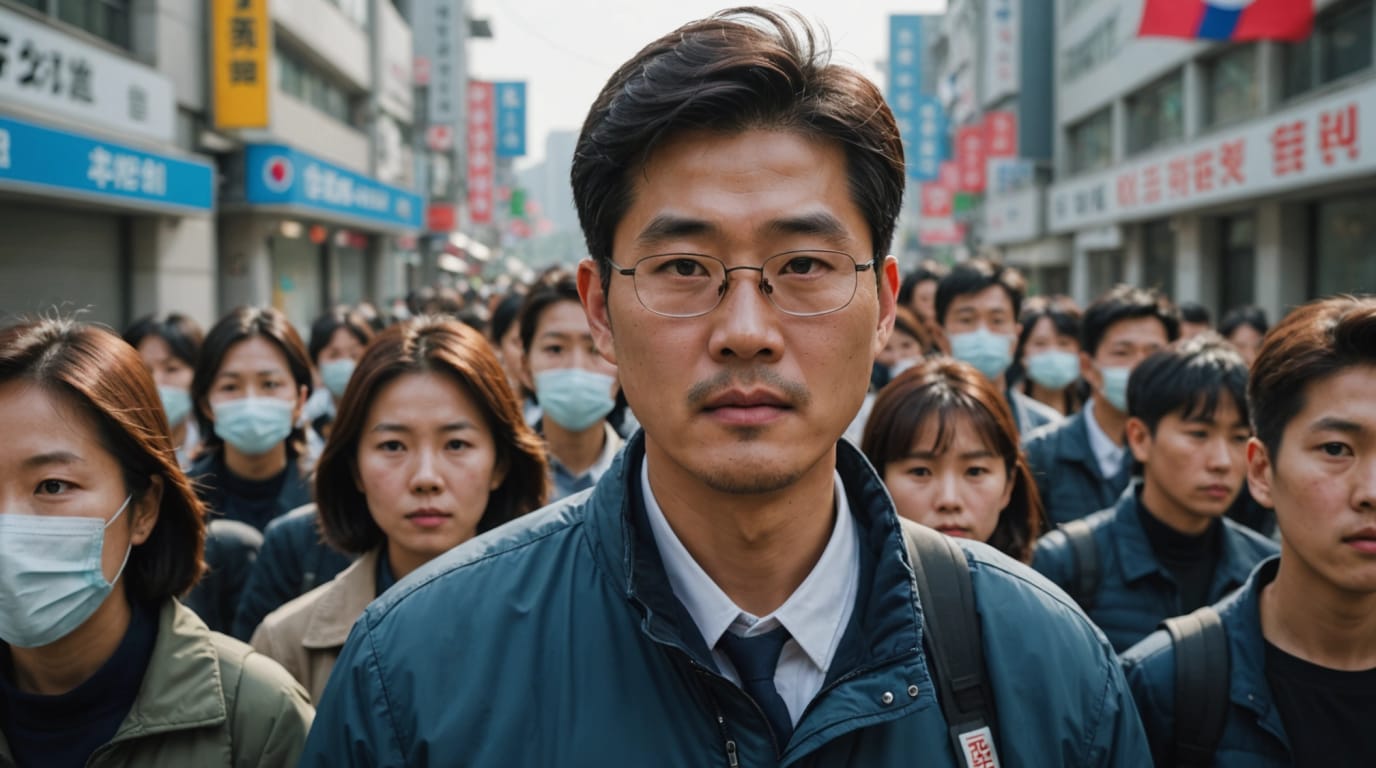
SEOUL – South Korea is grappling with a period of intense political upheaval following the Constitutional Court's unanimous decision on Friday to remove President Yoon Suk Yeol from office. The ruling, which stems from Yoon's controversial declaration of martial law in December 2024, has triggered a snap presidential election within 60 days and leaves the nation deeply divided.
Impeachment and Its Aftermath
The political crisis began when Yoon declared martial law on Dec. 3, 2024, deploying troops to the National Assembly in what he claimed was an effort to address "anti-state forces" and legislative gridlock. This action was swiftly condemned by the opposition-controlled National Assembly, which voted to lift martial law within hours. On Dec. 14, the Assembly impeached Yoon, suspending his presidential powers and accusing him of violating the constitution.
The Constitutional Court's decision to uphold the impeachment marks a significant moment in South Korean democracy. Acting Chief Justice Moon Hyung-bae stated that Yoon's actions had a "grave negative impact" on the constitutional order, and that the benefits of removing him from office outweighed the national costs.
The ruling People Power Party (PPP) has accepted the court's decision, with interim leader Kwon Young-se expressing regret for the party's failure to prevent "legislative overreach and political recklessness" by the opposition. Kwon urged the public to remain peaceful and avoid violence in the wake of the ruling.
Snap Election Looms
With Yoon's removal, South Korea must now hold a presidential election by June 3, 2025. Prime Minister Han Duck-soo will serve as acting president until a new leader is elected.
The upcoming election is expected to be highly contested, with several potential candidates vying for the presidency. Lee Jae-myung, leader of the main opposition Democratic Party (DPK), is considered the front-runner, having narrowly lost to Yoon in the 2022 election. However, Lee faces his own legal challenges, including trials related to bribery and a property development scandal.
Other potential candidates include Han Dong-hoon, the former leader of the PPP, who resigned amid friction over Yoon's martial law declaration; Kim Dong-yeon, the governor of Gyeonggi province; and Kim Moon-soo, the labor minister.
Deep Divisions and Political Polarization
Yoon's impeachment has exposed deep political and social divisions within South Korea. Public opinion has been sharply divided since the impeachment motion was passed, with supporters and opponents of Yoon taking to the streets in protest.
Political analysts warn that the impeachment could further entrench partisan divides that have evolved over decades. According to a 2022 Pew Research Center survey, South Koreans were the most likely among 19 countries to perceive strong partisan conflicts. The Economist Intelligence Unit's 2024 Democracy Index reclassified South Korea as a "flawed democracy," citing a drop in its score due to "institutional and behavioral weaknesses" exposed by Yoon's actions.
Economic Challenges
In addition to the political turmoil, South Korea faces significant economic challenges. The country's economic growth slowed throughout 2024, and the political crisis is expected to further dampen domestic demand.
The outlook for the export sector, particularly semiconductors, is uncertain due to potential trade policy changes by the new U.S. administration. South Korea also faces increasing competition from China, the European Union, and Japan in key industries.
The political instability threatens the implementation of long-planned structural reforms aimed at boosting industrial competitiveness. A new special semiconductor bill, designed to enhance the competitiveness of South Korea's industries, has been stalled in the divided National Assembly.
Foreign Policy Implications
The political crisis in South Korea also has implications for the country's foreign policy. With a snap election looming, it is difficult for South Korea to engage in earnest discussions with the U.S. regarding alliance issues, such as cost-sharing and defense spending.
The change in leadership could also lead to shifts in South Korea's approach to North Korea. Lee Jae-myung, the likely next President, is expected to adopt a pro-engagement approach, while conservative candidates favor a hardline stance.
The ongoing political turmoil and leadership vacuum could amplify the challenges South Korea faces in navigating complex geopolitical issues, including North Korea's provocations, China's expansion, and the unpredictability of the United States.
The Path Forward
South Korea's immediate future hinges on the outcome of the upcoming presidential election. The new leader will face the daunting task of restoring political stability, addressing economic challenges, and navigating complex foreign policy issues.
The country's deep political divisions will make it difficult to achieve consensus and implement effective policies. The next president will need to find ways to bridge the divide and unite the nation in order to address the challenges ahead.
The removal of President Yoon marks a turning point for South Korea. The country's ability to overcome the current crisis and move forward will depend on the leadership of its next president and the willingness of its citizens to work together for a better future.


