South Korea's 'Fake News' Law Ignites Press Freedom Debate Ahead of July Enforcement
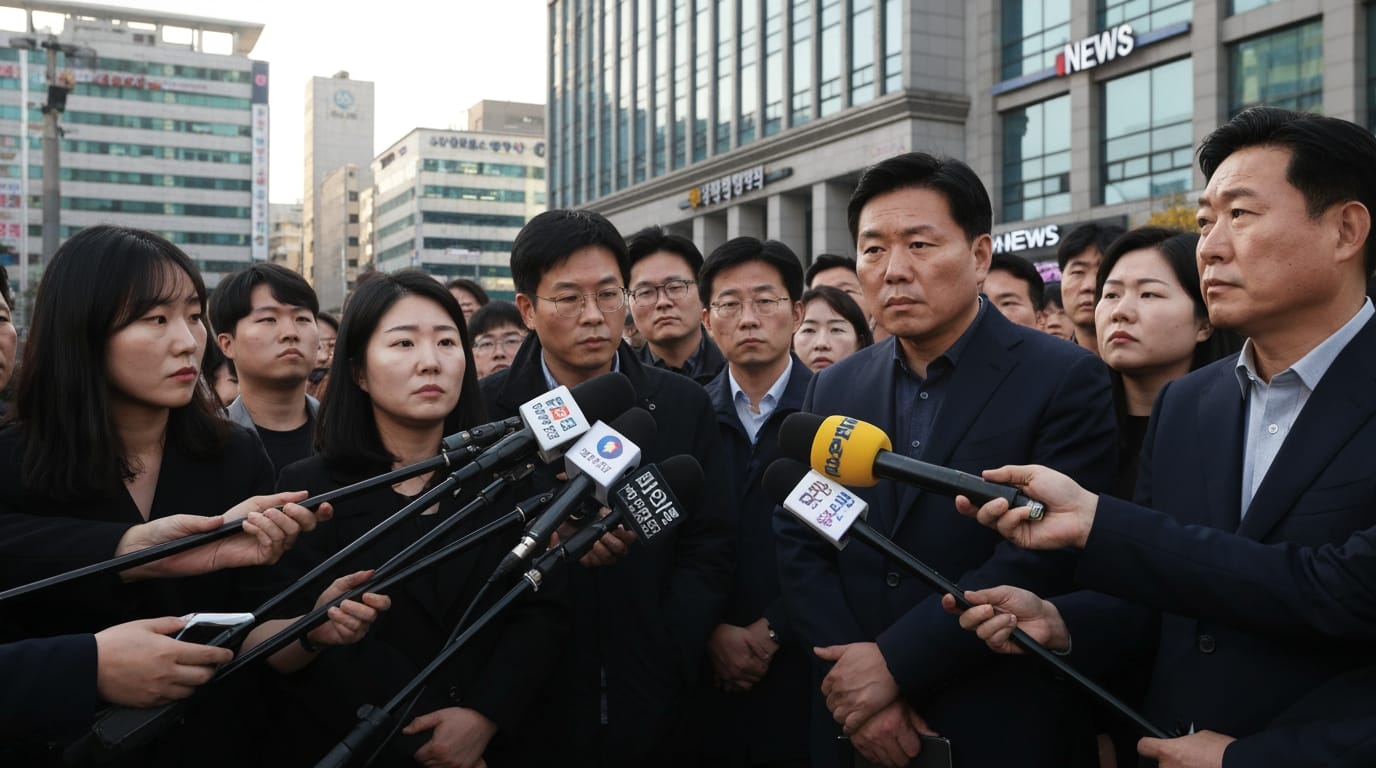
SEOUL – South Korea is bracing for the implementation of a controversial new "fake news" law in July 2026, a legislative measure designed to curb disinformation but which has ignited a fierce debate over press autonomy and freedom of expression. Passed by the liberal-led legislature in late 2025, the revised Information and Communications Network Act introduces stringent penalties for publishing "false or fabricated information," drawing criticism from journalists, academics, and international organizations who warn of a potential chilling effect on independent reporting. The law’s proponents argue it is a necessary bulwark against the rising tide of misinformation and hate speech that threatens democratic stability, while opponents fear it grants the state excessive power to control public discourse.
Legislative Push Amidst Digital Deluge
The genesis of South Korea's "anti-fake news" law, officially an amendment to the Information and Communications Network Act, lies in the government's stated intent to combat the proliferation of false and manipulated information online. The liberal-led National Assembly, spearheaded by the Democratic Party, passed the bill on December 24, 2025, following a heated legislative process that saw a filibuster by the Conservative Party ultimately conclude. Subsequently approved by the Cabinet on December 30 and signed into law by President Lee Jae Myung, the legislation is set to take effect in July 2026.
Proponents of the law argue that the digital age has brought an unprecedented surge in disinformation, capable of sowing social division, damaging reputations, and even inciting unrest. Democratic Party lawmakers emphasize the legislation is crucial to counter deliberate falsehoods that "undermine democracy by fueling divisions and hate speech." They contend that the law specifically targets "malicious actors who intentionally spread false information to cause harm or reap profits," not legitimate critics or ordinary citizens. The new regulations expand the scope of sanctions to address defamation, incitement to discrimination, and the dissemination of false information.
Punitive Measures and Platform Obligations
Central to the new law are its punitive provisions, which allow for substantial civil damages against media outlets, online platforms, and even individual YouTubers found responsible for spreading false or fabricated information. Courts can impose damages up to five times the proven losses incurred by the affected party, particularly if the disinformation was spread for illicit gain or with malicious intent. This punitive damage framework is a significant escalation from existing measures, signaling a firm stance against perceived media transgressions.
Furthermore, the law retains and reinforces South Korea's already stringent criminal defamation statutes. Under these existing laws, defamation, even if based on factual information, can lead to imprisonment for up to three years or substantial fines if it is not deemed to be in the "public interest." The dissemination of "openly false facts" can carry a sentence of up to seven years in prison or fines reaching 50 million won (approximately $44,577 USD). This dual approach, combining hefty civil penalties with existing criminal provisions, creates a formidable legal landscape for those reporting or publishing content in South Korea.
Beyond individual actors and traditional media, the law also places considerable responsibility on large internet platforms. These platforms are now mandated, and effectively encouraged, to take proactive measures against false content. Such measures include removing or limiting access to problematic posts, suspending or deleting accounts of repeat offenders, demonetizing misleading content, and in severe cases, halting services altogether. The legislation also empowers the Korea Communications Commission (KCC), an entity with significant ties to the ruling party, to impose fines of up to 1 billion won if information already designated as "false or fabricated" is shared multiple times. These platform obligations are partly inspired by the European Union's Digital Services Act (DSA), which similarly compels major tech companies to address illegal and false information.
A Chilling Effect on Independent Journalism?
Despite the government's assertions about combating malicious disinformation, the law has been met with significant apprehension from a broad spectrum of stakeholders concerned about its implications for press freedom and journalistic independence. Organizations such as the International Press Institute (IPI), UNESCO, and the US State Department have voiced "grave concern" regarding the legislation.
A primary criticism centers on the vague and broad definitions of "false or fabricated information" and "public harm" within the law. Critics argue that this ambiguity creates an environment of uncertainty for journalists, potentially leading to increased censorship pressures and undermining investigative reporting. The fear is that such vague language could allow government officials, corporations, or powerful individuals to weaponize the law, filing lawsuits against media outlets simply for reporting on sensitive issues or holding power accountable.
Journalist groups and civil liberties advocates warn of a significant "chilling effect" on media. The threat of substantial financial penalties, coupled with the existing criminal defamation laws that allow for imprisonment, may encourage self-censorship, particularly on stories critical of political or economic elites. This concern is exacerbated by South Korea's perceived lack of robust safeguards against Strategic Lawsuits Against Public Participation (SLAPPs), which can be used to silence media through costly and protracted legal battles.
Moreover, the power granted to regulatory bodies like the KCC, which is influenced by the ruling party, to determine what constitutes "false or fabricated information" further amplifies these concerns. Critics suggest this shifts the authority to define truth away from independent courts and towards entities potentially susceptible to political influence, increasing the likelihood of content removal and prior restraint. The US State Department explicitly warned that by requiring platforms to "proactively censor content to avoid penalties," South Korea "risks abetting a global trend of regulations that censors and threaten free expression beyond its borders."
Adding to these anxieties is a separate proposed bill aimed at creating a "right to request the blocking of news articles." This measure would allow individuals claiming harm from online reporting to demand the effective removal of specific articles from news sites and search engines, even if the content has not been legally proven false. Such proposals, critics contend, further erode the principles of a free press by enabling the suppression of information.
An Unstable Media Landscape
The adoption of this law comes during a period of heightened political polarization in South Korea, following events such as the impeachment of a former president in 2024 and ongoing indictments of prominent ex-leaders. The online media landscape has become increasingly fragmented, with a surge in hate speech and conspiracy theories. While the government views the law as a necessary tool to restore order and trust, critics argue that punitive measures alone fail to address deeper, structural issues within the media ecosystem, such as reporting practices that sometimes prioritize speed over thorough verification.
The International Press Institute has called for the South Korean government to suspend the law's implementation, slated for July, to allow for a comprehensive human rights impact assessment in consultation with civil society and media stakeholders. This plea underscores the international community's profound concern that while the intention to combat disinformation may be valid, the chosen methods could inadvertently stifle legitimate journalism and undermine the democratic principles of transparency and accountability.
As July approaches, the eyes of both domestic and international observers remain fixed on South Korea. The new "fake news" law represents a critical test for the nation's commitment to press freedom and its ability to balance the imperative of combating disinformation with the fundamental right to free expression. The unfolding implementation of this legislation will undoubtedly shape the future of South Korea's media landscape and its standing as a vibrant democracy.


