Southeast Asia Navigates Complex Path Toward Rethinking Capital Punishment
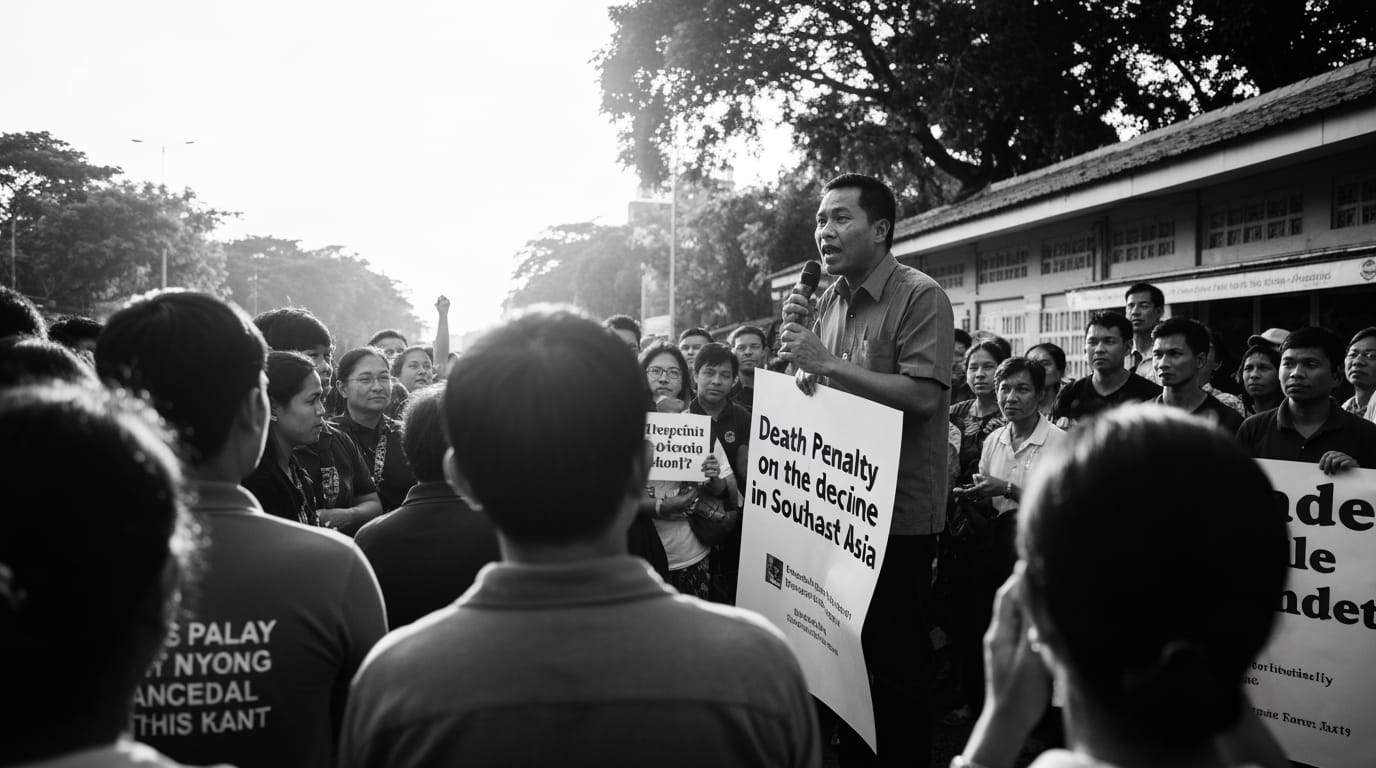
Southeast Asia presents a nuanced and at times contradictory landscape regarding the death penalty, with some nations moving toward abolition or significant reform while others maintain or even intensify their use of capital punishment. Amid a global trend of declining executions and death sentences, the region exhibits a complex interplay of legislative changes, humanitarian advocacy, and persistent challenges, particularly concerning drug-related offenses. While countries like Malaysia have taken notable steps towards reform, others, including Singapore and Vietnam, continue to employ the death penalty, often shrouding its application in secrecy and raising concerns among human rights organizations.
Shifting Sands: Abolition and Reform Gains Momentum
A discernible, albeit slow, shift away from capital punishment has been observed in parts of Southeast Asia. Cambodia and the Philippines stand out as fully abolitionist states, having removed the death penalty from their legal frameworks. East Timor, though not an ASEAN member, has also abolished capital punishment. Other nations, such as Brunei Darussalam, Laos, and Myanmar (prior to recent events), are considered abolitionist in practice, meaning they have not carried out executions for many years despite retaining the death penalty in law.
Significant legislative reforms have also emerged from some retentionist countries. In March and April 2023, Malaysia's parliament passed bills to abolish the mandatory death penalty for a range of offenses, including murder and drug trafficking. This pivotal move grants judges the discretion to impose lengthy prison sentences of 30 to 40 years and caning, instead of automatically mandating death by hanging. This reform has been widely lauded by human rights groups as an "important step" that could influence other nations in the region. Malaysia has also maintained a de facto moratorium on executions since 2018, even as courts continued to hand down death sentences.
Similarly, Indonesia has seen some reforms, including a crucial step in 2023 when President Joko Widodo granted an unprecedented pardon to Merri Utami, a grandmother on death row for a drug-related offense, after more than 20 years. Indonesia's new penal code, while not abolishing the death penalty, introduces a ten-year probationary period before a death sentence is confirmed or commuted, a limited but positive step. These changes suggest a growing recognition of the need for a more humane approach to criminal justice in some parts of the region.
Persistent Resistance: The Enduring Grip of Capital Punishment
Despite these progressive developments, the death penalty remains firmly entrenched in several Southeast Asian countries, often for offenses that do not meet the international threshold of "most serious crimes." Indonesia, Singapore, and Vietnam continue to utilize capital punishment, frequently justifying it as a deterrent against crime, particularly drug trafficking. The focus on drug offenses is a significant concern for human rights advocates, as international law generally limits the death penalty to crimes involving intentional killing.
Singapore, a prosperous city-state, has particularly drawn criticism for its continued reliance on capital punishment and an "execution spree" in recent years, including 11 executions in 2022, all for drug offenses, after a hiatus from 2020 to 2021. Myanmar also controversially resumed executions in 2022, ending a 34-year de facto moratorium by executing four individuals, including two high-profile opposition politicians, following what were described as unfair and secretive trials. Vietnam's statistics on the death penalty remain classified as "state secrets," making it difficult to ascertain the true extent of its application. This lack of transparency, common in many Southeast Asian countries, hinders effective monitoring and advocacy efforts.
The notion of deterrence, often cited by governments to justify the death penalty, faces scrutiny. Experts argue there is no definitive evidence demonstrating that capital punishment effectively reduces crime rates, a discrepancy particularly striking in countries like Indonesia and Singapore, where drug offenses have not seen significant declines despite executions.
The Malleable Nature of Public Opinion
Public support is frequently invoked by governments to defend the retention of the death penalty. However, research suggests that public opinion on capital punishment in several Asian countries, including Malaysia, the Philippines, Singapore, Thailand, and Indonesia, is often based on a faulty understanding of key facts. Surveys indicate that while majoritarian support for the death penalty exists, it is frequently driven by beliefs in its deterrent effect and "perfect justice," both of which are often disproven.
More rigorous polling exercises reveal that support tends to be "instinctive, abstract, elastic, and contextual". For instance, support for capital punishment decreases significantly when expressed with reference to real-life cases or when alternatives like life imprisonment without parole are presented. Furthermore, public interest and knowledge about the death penalty are often limited, and an increase in knowledge correlates with a decrease in support. In Indonesia, for example, a study found that when respondents learned that the death penalty is not always carried out fairly and proportionately, support diminished. This suggests that what appears to be strong public endorsement may not be an insurmountable barrier to abolition, particularly if public discourse is facilitated and education provided.
Human Rights Advocacy and the Road Ahead
Human rights organizations, such as Amnesty International, the International Federation for Human Rights (FIDH), and ASEAN Parliamentarians for Human Rights (APHR), continue to be vocal advocates for the universal abolition of the death penalty in Southeast Asia. They consistently urge governments to implement immediate moratoriums on executions, review existing death row cases to ensure due process, and foster public dialogue on the death penalty and its alternatives. The argument is frequently made that the death penalty is an "outdated and inhumane practice" that violates fundamental human rights, including the right to life and freedom from cruel, inhuman, and degrading punishment.
The focus of advocacy efforts also includes challenging the use of the death penalty for drug-related offenses, which contravenes international standards restricting capital punishment to only the "most serious crimes". Organizations also highlight the disproportionate impact of capital punishment on vulnerable populations and the potential for miscarriages of justice.
Despite the challenges, the ongoing reforms in Malaysia and Indonesia, coupled with the consistent advocacy of human rights groups, offer a glimmer of hope. The call for Southeast Asian nations to demonstrate leadership by moving away from retributive justice towards fairer systems that address the root causes of crime continues to resonate.
Conclusion
Southeast Asia stands at a crossroads in its approach to capital punishment. While the regional picture is characterized by a mix of progress and significant setbacks, the trajectory for some nations indicates a gradual, albeit fragile, movement towards less punitive forms of justice. The abolition of mandatory death sentences in Malaysia, coupled with sustained moratoriums and a growing understanding of the nuanced nature of public opinion, suggests that further reforms are possible. However, the continued reliance on the death penalty for drug offenses and the lack of transparency in several countries underscore the persistent challenges. The vision of a death penalty-free Southeast Asia remains a distant goal, yet the collective efforts of reformers, legal professionals, and human rights advocates continue to push the region towards a future founded on universal human rights and a more humane approach to justice.


