SpaceX Acquires xAI, Forging a Trillion-Dollar Nexus of AI and Space
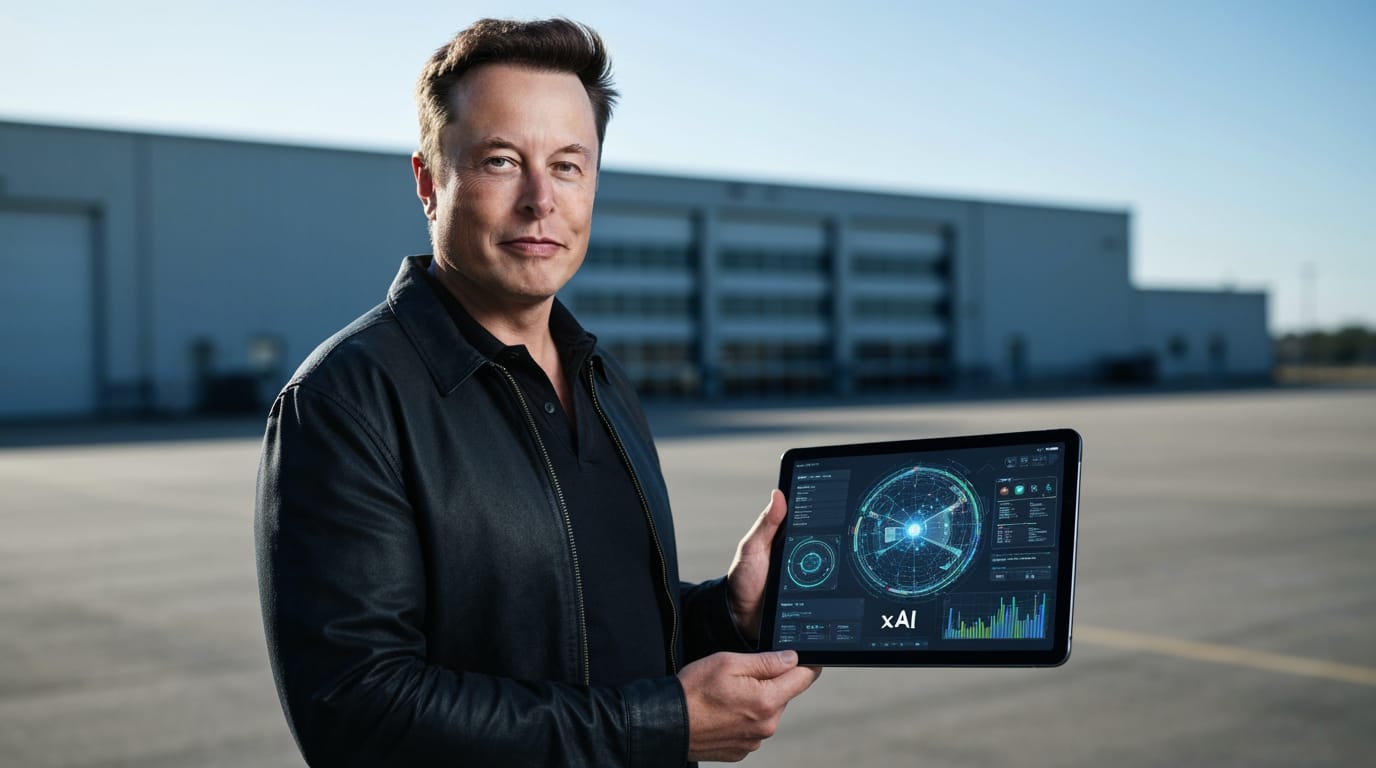
AUSTIN, Texas – In a move poised to fundamentally reshape the future of artificial intelligence and space exploration, Elon Musk's rocket and satellite company, SpaceX, has officially acquired his AI venture, xAI. The monumental deal, announced on February 2, 2026, consolidates two of Musk's ambitious enterprises under a single banner, aiming to create what SpaceX described as "one of the most ambitious, vertically integrated innovation engines on (and off) Earth". This merger not only signals a significant strategic pivot for both companies but also establishes what some analysts are calling the most valuable private company globally, with a combined valuation reportedly reaching $1.25 trillion.
The acquisition brings together xAI's cutting-edge artificial intelligence capabilities, including its Grok chatbot and extensive training infrastructure, with SpaceX's formidable aerospace technology, its expansive Starlink satellite constellation, and its overarching objectives in space exploration. The integration is touted as a critical step in addressing the escalating demands of next-generation AI models and accelerating humanity's multiplanetary future.
A Unified Vision for Cosmic Compute
The strategic rationale behind this high-stakes acquisition is deeply rooted in Elon Musk's long-term vision for technological advancement. At its core, the merger seeks to tackle one of the most significant bottlenecks facing advanced artificial intelligence: the immense energy and infrastructure requirements for next-gen models. Musk has articulated a future where AI compute transcends terrestrial limitations, advocating for space-based AI and orbital data centers to harness vast energy resources and physical space.
In a statement following the announcement, Musk underscored the expansive ambitions of the newly combined entity, envisioning a mission to "scale to make a sentient sun to understand the Universe and extend the light of consciousness to the stars". This philosophical aspiration translates into practical applications, where the synergy between advanced AI and space infrastructure could unlock unprecedented possibilities for data processing, scientific discovery, and autonomous systems both on Earth and beyond. The deal is a direct response to the escalating costs faced by SpaceX in pursuing its multiplanetary goals, while xAI has been in a competitive race to scale its AI compute capabilities against industry giants like OpenAI, Google, and Meta.
Synergies Beyond the Stratosphere
The immediate operational implications of this merger are profound. xAI, which was valued at approximately $230 billion as of late 2025, will now operate as a wholly owned subsidiary of SpaceX, a company valued at around $800 billion in December. This integration means that xAI's advanced AI models, like Grok, could leverage Starlink's global internet coverage for distributed processing and enhanced data collection. Conversely, AI could play a crucial role in optimizing SpaceX's rocket launches, satellite deployments, and ultimately, its ambitious plans for Mars colonization.
The convergence extends to the development of highly efficient, autonomous systems for space operations, ranging from robotic exploration to complex orbital maneuvers. By relocating energy-intensive AI processing to space, where solar power is abundant and cooling is more efficient, the combined entity aims to overcome the environmental and logistical challenges that constrain AI development on Earth. This vertical integration is designed to create a self-reinforcing ecosystem where advancements in one domain directly fuel progress in another, pushing the boundaries of what is technologically feasible.
The Expanding 'Muskonomy'
This acquisition is the latest chapter in Elon Musk's ongoing strategy of consolidating his diverse portfolio of companies into a more cohesive and mutually reinforcing ecosystem, often termed the "Muskonomy". It follows previous significant integrations, such as xAI's acquisition of the social media platform X (formerly Twitter) in March 2025, which provided xAI with vast datasets for training its AI models. Furthermore, SpaceX itself had previously invested $2 billion in xAI in July 2025, foreshadowing this deeper integration.
The financial implications of forming this $1.25 trillion combined entity are substantial. While specific terms of the latest deal, including price and valuation, were not fully disclosed in SpaceX's official statement, reports suggest the combined company could price shares at approximately $527 each. This valuation positions the merged SpaceX-xAI as a dominant force in the private sector, attracting immense investor interest. SpaceX is also reportedly planning a blockbuster initial public offering (IPO) later in 2026, which could potentially raise as much as $50 billion, indicating a further expansion of its capital base and public market presence. This consolidation is seen as a strategic move to streamline resources, reduce redundancies, and accelerate innovation across Musk's varied technological frontiers.
A New Era of Innovation
The acquisition of xAI by SpaceX marks a pivotal moment in the convergence of artificial intelligence and space technology. It embodies a bold vision to break traditional barriers between industries, creating a powerful entity uniquely positioned to drive advancements that could redefine human interaction with technology and the cosmos. From orbital data centers powering advanced AI to AI-driven space exploration, the combined company is poised to embark on a path of unprecedented innovation. This strategic alignment underscores a belief that humanity's future in the universe will be inextricably linked with the development of sophisticated intelligence, making the "Muskonomy" a central player in shaping that destiny.


