SpaceX Blazes Trail to Public Market with Historic IPO Filing
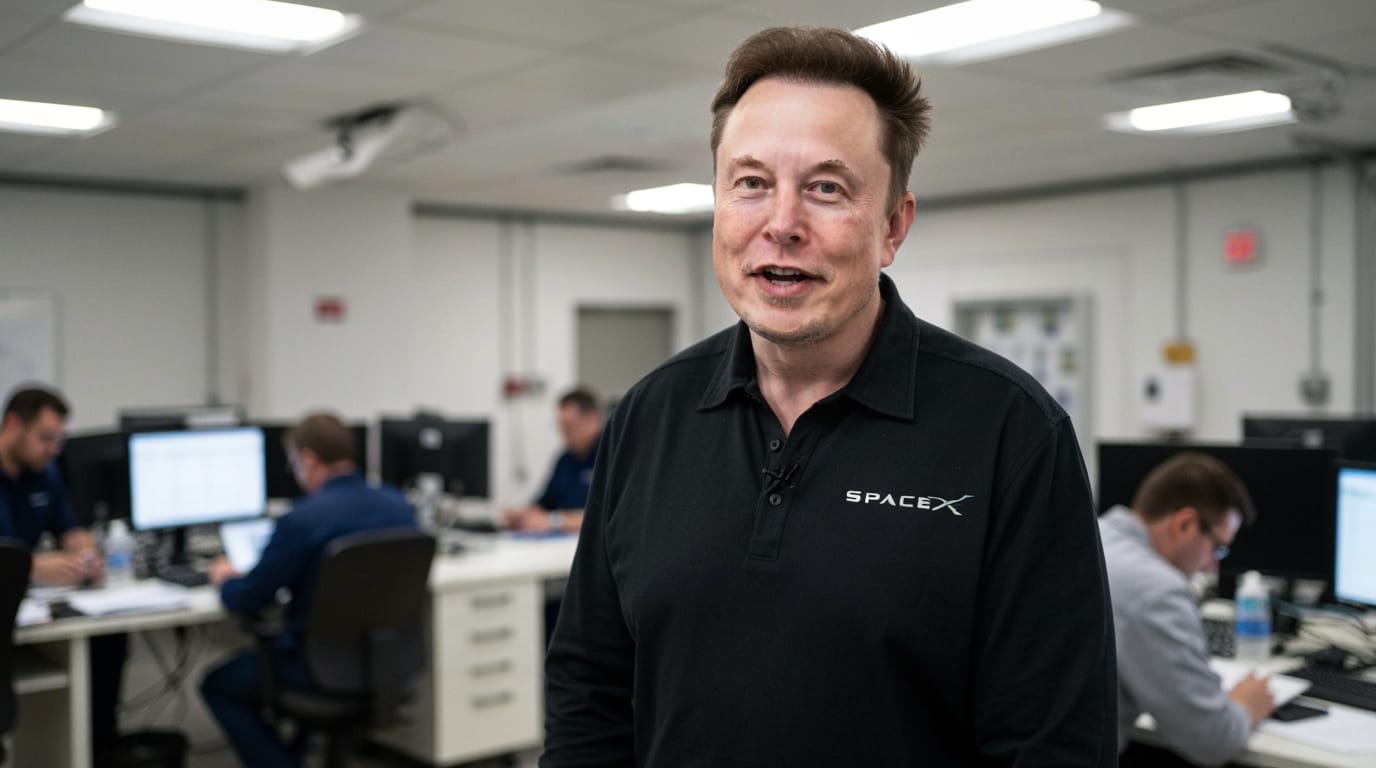
SpaceX, the groundbreaking aerospace company founded by Elon Musk, has officially initiated its path to becoming a publicly traded entity, unveiling its S-1 regulatory filing on Wednesday, May 20, 2026. This highly anticipated move sets the stage for what could be the largest initial public offering (IPO) in history, aiming for a colossal valuation of up to $2 trillion and targeting a capital raise of as much as $80 billion. The public debut is slated for as early as June 11 or 12 on the Nasdaq exchange under the ticker symbol SPCX, promising to dramatically reshape the global financial and aerospace landscapes.
The Dawn of a Trillion-Dollar Public Offering
The journey to the public market began with a confidential filing to the Securities and Exchange Commission (SEC) on April 1, 2026, culminating in this week's public disclosure of the S-1 prospectus. This financial roadmap reveals SpaceX's ambitious trajectory, outlining its multi-faceted business, significant financial performance, and future aspirations that stretch from Earth's orbit to Mars and beyond. Should the offering materialize at its projected valuation of $1.75 trillion to $2 trillion, it would eclipse Saudi Aramco's 2019 record as the world's largest IPO. The unprecedented scale of this offering highlights growing investor appetite for disruptive technology and the commercialization of space.
The capital sought, estimated between $75 billion and $80 billion, is expected to fuel SpaceX's aggressively expanding ventures, particularly its next-generation Starship program and burgeoning artificial intelligence initiatives. This influx of capital could also provide liquidity for early investors and employees who have supported the company's audacious vision for over two decades. The IPO's sheer magnitude is already drawing comparisons to, and potentially setting the stage for, other major tech public offerings, including AI giants OpenAI and Anthropic, signaling a potential revitalization of the broader IPO market.
Diversified Empire: From Orbit to Internet
SpaceX's financial health, as detailed in its S-1 filing, paints a picture of rapid growth alongside substantial investment in future technologies. The company reported a robust revenue of $18.67 billion in 2025, but also a net loss of $4.9 billion for the same year. In the first quarter of 2026 alone, revenue reached $4.7 billion, though it recorded a net loss of approximately $4.3 billion. Projections for 2026 anticipate total revenue between $22 billion and $30 billion, largely propelled by the satellite internet division.
A primary driver of SpaceX's impressive revenue growth is its Starlink satellite internet service. Starlink has rapidly expanded its global footprint, boasting 10.3 million paid subscriptions in the first quarter of 2026, more than double the 5 million subscribers it had a year prior. In 2025, Starlink alone generated $11.3 billion in revenue, accounting for roughly 60% to 70% of SpaceX's total income, solidifying its role as the financial backbone of the company. Beyond consumer services, Starlink's diverse revenue streams include government, maritime, and enterprise sectors, with 2026 revenue for Starlink projected to hit $20 billion.
The company's core launch services, utilizing its Falcon 9 and Falcon Heavy reusable rockets, continue to provide consistent revenue and serve as critical infrastructure for both commercial and governmental payloads. SpaceX has invested over $15 billion in the development of its fully reusable Starship system, designed for deep-space missions to the Moon and Mars. This monumental undertaking, which has largely been self-funded by SpaceX, represents a long-term bet on humanity's expansion into the cosmos and a key component of its long-term strategy, including a crucial role in NASA's lunar ambitions.
Pioneering the AI Frontier in Space
SpaceX's ambitions extend far beyond traditional aerospace, venturing deep into the burgeoning field of artificial intelligence. In February 2026, SpaceX merged with Elon Musk's AI startup, xAI, integrating its artificial intelligence capabilities into the broader company structure. A cornerstone of this strategy involves the development of orbital data centers, a visionary project aimed at leveraging space-based infrastructure for advanced AI computations.
The pursuit of AI dominance comes with significant financial outlay. While the AI division is seen as a future growth engine, it currently operates at a loss. In the first quarter of 2026, the AI segment incurred nearly $2.5 billion in losses, contributing to the overall company's unprofitability. This substantial investment underscores the capital-intensive nature of advanced AI development and the company's commitment to becoming a leader in this domain. A notable recent development is a multi-year contract with AI firm Anthropic, valued at $1.25 billion per month, for AI compute capacity from SpaceX's Colossus data centers, indicating a move to monetize its expanding AI infrastructure.
Scrutiny, Control, and Future Horizons
Despite the groundbreaking nature of the IPO and the company's innovative ventures, SpaceX's public offering is not without its challenges and areas of scrutiny. The lofty valuation, ranging from $1.75 trillion to $2 trillion, sets high expectations for future performance and sustained growth. Potential risks for investors include the inherent uncertainties of rocket launches, intense competition in the aerospace and satellite internet sectors, and a complex regulatory environment.
A significant point of contention revolves around governance, particularly Elon Musk's retained control. The S-1 filing indicates that Musk will maintain 85.1% of the combined voting power, a structure that has drawn concern from a coalition of institutional investors. Groups like the Investor Coalition for Equal Votes (ICEV), comprising pension funds and asset managers, have voiced "serious concerns" about the unequal voting rights, arguing that such structures can weaken accountability and lead to a decline in firm value over time. These concerns highlight a broader debate in public markets regarding founder control versus shareholder democracy.
The IPO is expected to have far-reaching effects, potentially altering investment flows into commodity-dependent technologies as the space economy expands. For Texas, where SpaceX has significant operations including Starbase and testing facilities, the public listing could translate into increased jobs, startup activity, and tax revenues. As SpaceX prepares to open its books to the public, it offers investors a unique opportunity to participate in a company that is not only revolutionizing space travel and global connectivity but also aggressively positioning itself at the forefront of artificial intelligence. The success of this historic IPO will undoubtedly be a defining moment for both SpaceX and the future of market-driven innovation.


