SpaceX Poised for Historic $75 Billion IPO, Targeting Trillion-Dollar Valuation
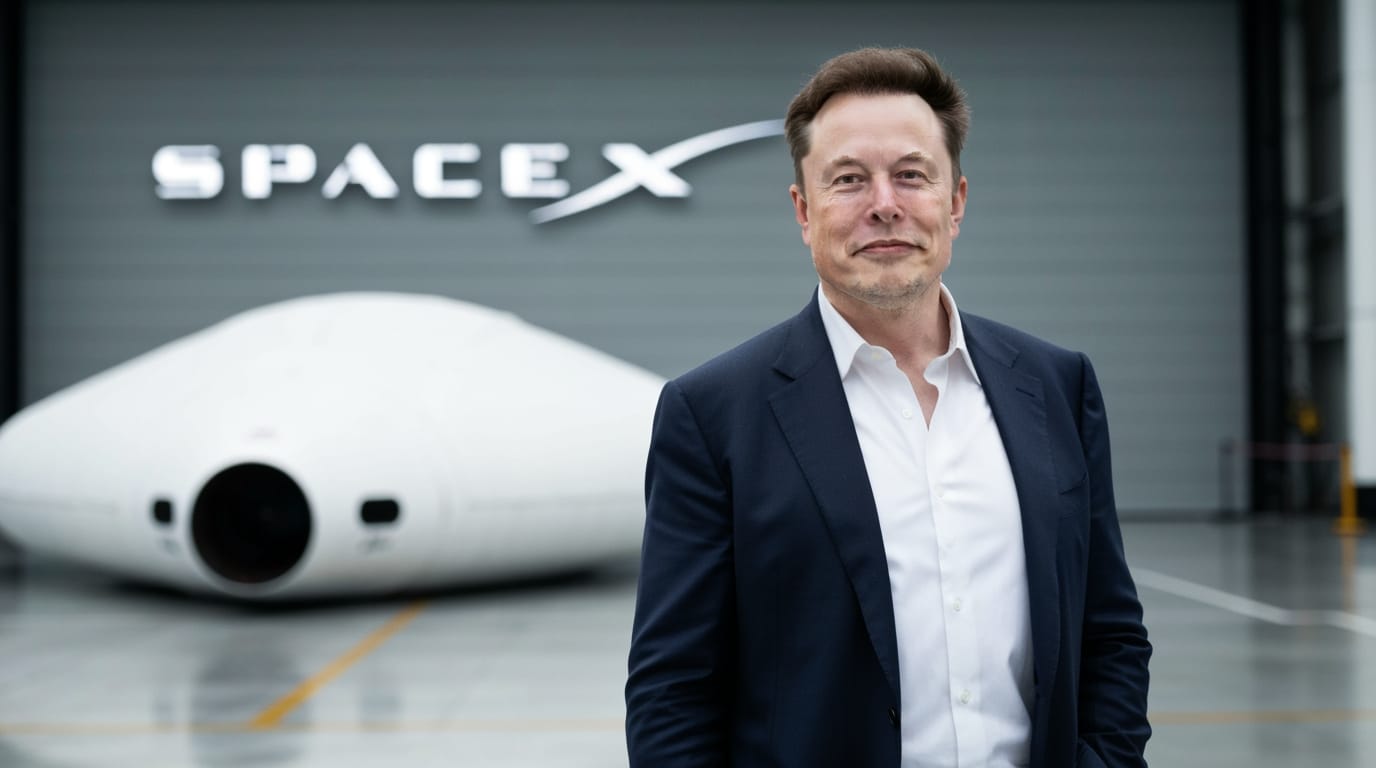
NEW YORK – Space Exploration Technologies Corp. (SpaceX), the trailblazing aerospace and satellite internet company founded by Elon Musk, is preparing for an initial public offering (IPO) this month that aims to raise an unprecedented $75 billion. This monumental public debut, expected to list on Nasdaq under the ticker symbol SPCX, would shatter previous records and establish SpaceX with a market valuation potentially exceeding $1.75 trillion, positioning it among the world's most valuable enterprises.
The highly anticipated offering comes as SpaceX embarks on an aggressive expansion across its diverse portfolio, from next-generation reusable rockets and the burgeoning Starlink satellite constellation to a recently integrated artificial intelligence division. The colossal sum targeted for the raise underscores the company's ambition and the immense capital required to fuel its audacious long-term visions, including establishing human colonies on Mars and deploying orbital AI data centers. Financial markets are bracing for an event that promises to redefine the landscape of both public listings and the future of space commercialization.
The Sky-High Ambition Goes Public
SpaceX plans to sell 555.6 million shares at a price of $135 apiece, a move that would far eclipse the $26 billion raised by Saudi Aramco in its 2019 IPO, making it the largest stock market debut in history. The offering is expected to commence with trading as early as June 12, 2026. This record-breaking capital infusion is earmarked to accelerate crucial research and development, bolster its AI infrastructure, and significantly expand the global reach of its Starlink satellite internet service. The sheer scale of the IPO reflects the growing investor confidence in SpaceX's technological prowess and its capacity to disrupt multiple industries.
The journey to this valuation has been nothing short of meteoric. From a valuation of approximately $33.3 billion in 2019, SpaceX's private market worth surged to over $100 billion by October 2021, and reached $137 billion in 2023. By late 2024, the company was valued at $350 billion, a figure that nearly doubled its valuation from just six months prior. A 2025 offer to buy internal shares reportedly valued SpaceX at an astounding $800 billion, cementing its status as the world's most valuable private company before its public offering. This rapid ascent highlights the extraordinary growth trajectory fueled by its successful launch services and the rapid deployment of Starlink.
A Trillion-Dollar Vision: Unpacking SpaceX's Empire
At the core of SpaceX's valuation lies a multi-faceted business empire spanning rocketry, satellite internet, and increasingly, artificial intelligence. The company's launch services, driven by the reusable Falcon 9 and the development of the gargantuan Starship, have dramatically lowered the cost of access to space, fundamentally reshaping the global space industry. SpaceX achieved 134 Falcon launches in 2024, a significant increase from 96 in 2023, showcasing its operational dominance.
Starlink, SpaceX's satellite internet division, has emerged as a powerhouse revenue generator. In 2024, Starlink alone generated $8.2 billion in revenue from 4.6 million subscribers, becoming the company's primary cash flow contributor. Analysts project Starlink's revenue to continue its rapid growth, potentially reaching $11.4 billion in 2025 and driving a substantial portion of SpaceX's overall revenue, which was estimated to be $18.7 billion in 2025. The integration of Starlink's global connectivity with SpaceX's launch capabilities provides a unique competitive advantage, as it is the only satellite communications company with its own fully vertically integrated launch infrastructure.
Adding another ambitious layer to its portfolio, SpaceX recently acquired Elon Musk's artificial intelligence startup, xAI, in early 2026. This strategic merger positions AI as a critical component of SpaceX's future, with the IPO prospectus outlining potential AI revenue of up to $26.5 trillion. The proceeds from the IPO are explicitly intended to fund the expansion of AI computing resources, demonstrating a clear pivot towards leveraging AI for both terrestrial and space-based applications, including futuristic orbital data centers.
The Musk Factor and an Unconventional Offering
Elon Musk's indelible influence is a central theme of this IPO. As CEO, Chief Technical Officer, and Chairman, Musk will maintain a commanding 82.4% of the voting power in SpaceX, primarily through his ownership of Class B shares, which grant ten votes per share. This dual-class share structure is designed to ensure founder control, a common trait in Musk's other ventures, and aims to provide stability for the company's long-term, capital-intensive projects.
In an unusual move that deviates from traditional Wall Street practices, SpaceX plans to allocate as much as 30% of the offering to individual retail investors. This significantly larger-than-average retail tranche is seen as an attempt to harness Musk's devoted following and broaden the company's ownership base, potentially fostering a more stable investor ecosystem post-listing. This approach, coupled with fixing the IPO price at $135 per share ahead of the typical investor roadshow, highlights Musk's determination to rewrite the conventional IPO playbook.
However, some analysts caution about the "Elon Musk effect." Finance professors and market watchers suggest that stocks associated with Musk tend to exhibit higher volatility, and SpaceX's public trading could follow a similar pattern. The visionary yet sometimes unpredictable nature of Musk's leadership and ambitious goals could introduce both significant demand and potential for dramatic price swings in the public market.
Navigating the Financial Frontier: Hopes and Hurdles
The $75 billion in proceeds from the IPO will serve as critical capital for SpaceX's ambitious undertakings. Beyond enhancing its existing launch and Starlink operations, the funds are earmarked for developing and demonstrating novel revenue streams. These include the previously mentioned orbital AI data centers and the monumental effort to establish a permanent human colony on Mars. These long-term projects, while inspiring, also present significant technological and financial hurdles.
While the market buzz around SpaceX's IPO is overwhelmingly positive, some financial analysts offer more conservative perspectives. Morningstar, for instance, placed a fair value on SpaceX at $780 billion, nearly 50% below some of the higher market valuation estimates. Their analysis points to the ambitious nature of certain growth opportunities, particularly the unproven viability and timelines of novel revenue streams like orbital computing. Despite these cautions, Morningstar acknowledges Starlink's robust potential as the primary profit driver in the medium term, given its established launch infrastructure and market dominance.
The financial health of SpaceX has shown considerable strength, with revenue projections for 2026 ranging between $22 billion and $24 billion, primarily propelled by its connectivity services. This strong financial footing, combined with strategic government contracts and robust subscriber growth for Starlink, has created an environment ripe for securing capital at premium valuations.
Beyond Earth's Atmosphere
SpaceX's impending $75 billion IPO represents more than just a financial milestone; it signifies a profound shift in the commercialization of space and the integration of cutting-edge technology. The public offering will provide the immense capital needed to propel humanity's reach further into the cosmos, while simultaneously shaping the future of global communication and artificial intelligence.
As the company prepares to make its debut on the Nasdaq, the world watches to see if SpaceX, under the unwavering vision of Elon Musk, can translate its private market success and ambitious dreams into sustained public market performance. The IPO is not just about raising capital; it's about validating a new era of space exploration and technological innovation that aims to transcend Earth's atmosphere and expand the very definition of human potential.


