Sri Lanka Police Face Outrage After Man Dies in Custody
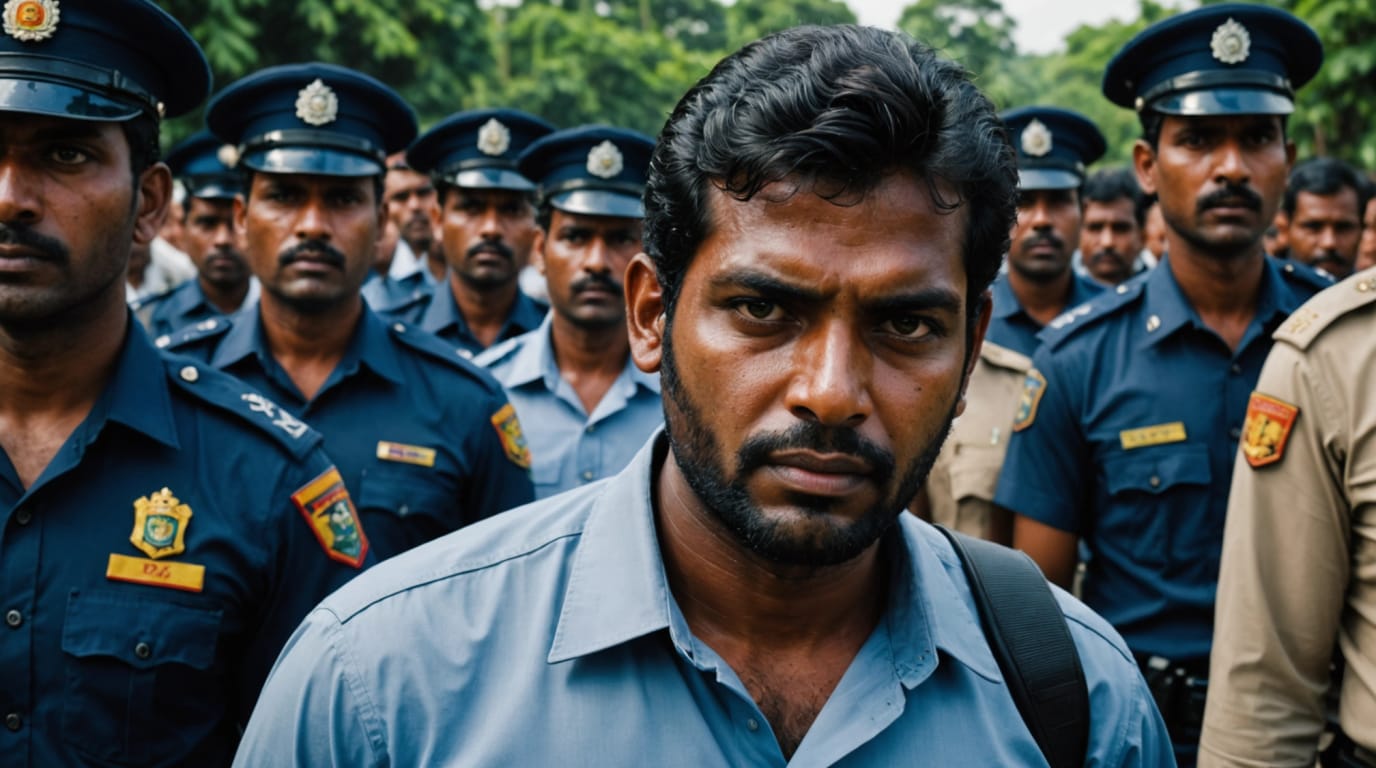
COLOMBO, Sri Lanka – The death of a 26-year-old man while in police custody has ignited widespread protests and demands for police reform in Sri Lanka. Sathsara Nimesh died in the custody of the Welikada Police Station, sparking public anger and raising concerns about police brutality and accountability.
The incident has brought renewed scrutiny to the Sri Lankan police force and its handling of detainees, with activists and rights groups calling for immediate and comprehensive reforms to prevent future tragedies. The Bar Association of Sri Lanka (BASL) has also voiced its concern, emphasizing that repeated custodial deaths severely damage public confidence in law enforcement.
Details of the Incident
Sathsara Nimesh, a resident of Meegahakiwula in Badulla, was arrested on April 1 on suspicion of entering a house in Nawala without permission. Police reports indicate that Nimesh appeared to be mentally distressed at the time of his arrest, leading officers to detain him for his own safety.
While in custody, Nimesh reportedly exhibited erratic behavior, allegedly banging his body against the walls of his cell. He was subsequently transferred to the Mulleriyawa Mental Hospital, where he died on April 2 while receiving treatment.
Public Reaction and Protests
Nimesh's death has been met with skepticism and outrage, with many suspecting police brutality. On April 6, a candlelit protest drew approximately 120 people outside the Welikada Police Station in Colombo. Demonstrators, including students, activists, and concerned citizens, expressed their anger and grief, calling for justice and accountability.
The protesters highlighted broader concerns about the pattern of custodial deaths in Sri Lanka's police system. They demanded immediate reforms, stressing that the issue has gone unchecked for too long.
Conflicting Accounts and Investigations
Adding to the controversy, Nimesh's mother, Samanthi, reported that when she visited the police station on April 2, her son's clothing had been removed, and his trousers were found discarded in a trash bin. She claims that police informed her that Nimesh had attempted suicide, a claim that has been met with skepticism by human rights organizations and legal experts.
Public Security Minister Wijepala stated that a Criminal Investigation Department (CID) investigation is underway. Preliminary findings suggest no direct police assault. SSP Manatunga claimed that Nimesh, allegedly under the influence of drugs, repeatedly slammed his head against the cell wall and on the floor, leading to fatal injuries. Wijepala also stated that two police officers on duty at the time had been interdicted, and a recommendation had been presented to the National Police Commission for the removal of the station's Officer-in-Charge (OIC), framed solely as responses to negligence rather than any acknowledgment of assault.
Colombo Additional Magistrate Kemintha Perera ordered the exhumation of Nimesh's body to enable a three-member panel of medical experts to conduct a fresh post-mortem and submit a report to the court.
Calls for Reform and Accountability
The Committee for Protecting the Rights of Prisoners (CPRP) and other civil society organizations have joined Nimesh's family in calling for long-overdue reforms within the police force. The BASL has also issued a statement expressing deep concern over the allegations of custodial abuse, calling for an urgent investigation.
In response to the public outcry, SSP Manatunga announced plans to equip all police stations with CCTV cameras in detention areas. The police plan to utilize their own funds to implement CCTV coverage in all 604 police stations around the country. The Human Rights Commission of Sri Lanka (HRCSL) has launched an independent inquiry, with a comprehensive report expected within a month.
A Pattern of Custodial Deaths
Nimesh's death is not an isolated incident. It follows a disturbing pattern of custodial deaths in Sri Lanka over the past decade. These incidents often involve police claims of suicide or pre-existing medical conditions, followed by delayed or inconclusive post-mortem reports.
In November 2023, the custodial death of a Tamil youth, Nagarasa Alex, sparked similar outrage. Alex's family claimed they heard his screams at the police station and were threatened when they demanded to see him. A video of Alex detailing the torture he endured went viral, intensifying demands for justice.
In December 2023, demonstrations erupted in northern Sri Lanka following the custodial death of a teenager accused of stealing. Protesters accused the police of torture and harassment.
These cases highlight a systemic issue within Sri Lanka's law enforcement practices, prompting calls for a holistic reevaluation of these practices.
Conclusion
The death of Sathsara Nimesh has become a focal point for broader concerns about police brutality and accountability in Sri Lanka. The public outcry, coupled with investigations and calls for reform, underscores the urgent need for systemic changes within the police force. The implementation of CCTV cameras in detention areas and the HRCSL's independent inquiry represent steps toward addressing the issue, but lasting change will require a commitment to transparency, accountability, and respect for human rights within Sri Lanka's law enforcement agencies. The nation awaits the findings of the investigations and hopes for meaningful reforms that will prevent future tragedies and restore public trust in the police.


