Starmer's Premiership on the Brink as Ally Calls for Resignation Amid Epstein Scandal Fallout
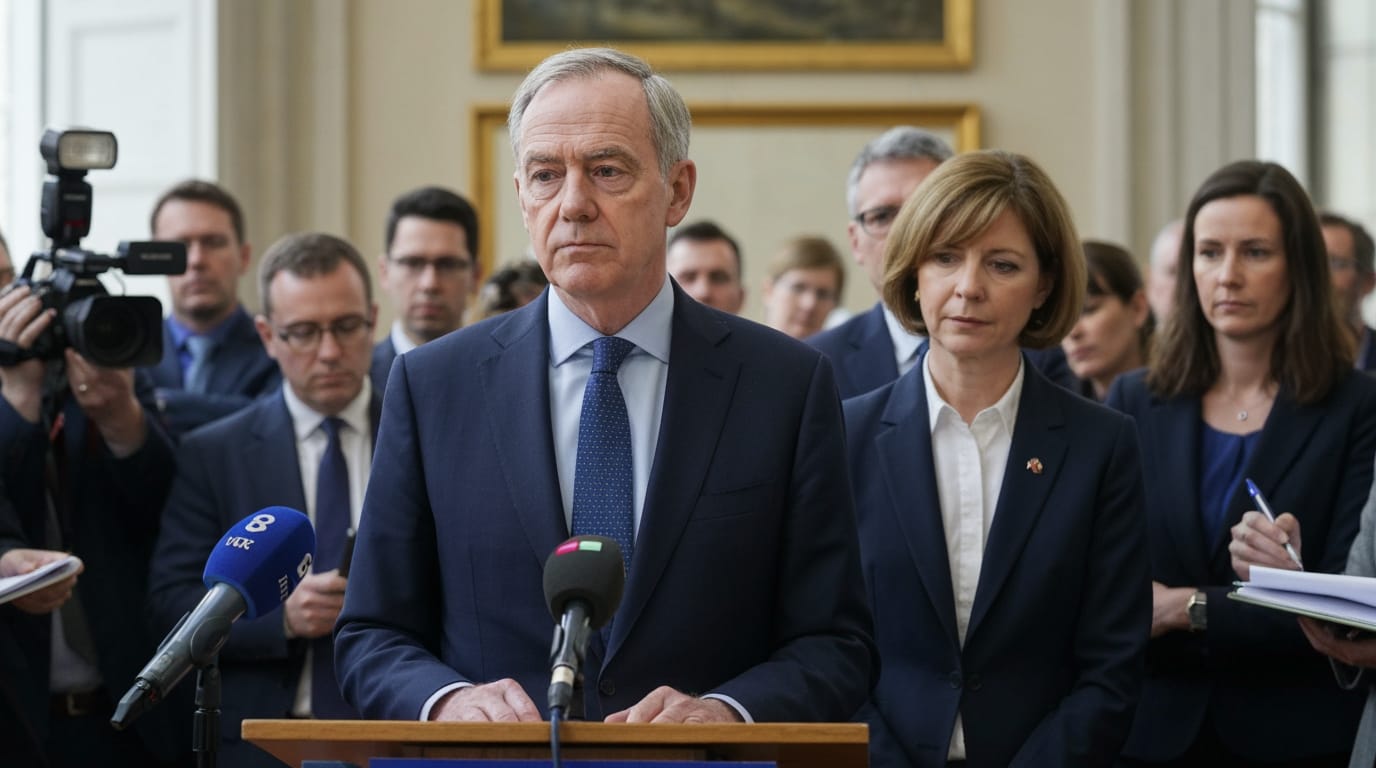
LONDON, UK – Prime Minister Keir Starmer's leadership of the Labour Party faces its gravest challenge yet, with Scottish Labour leader Anas Sarwar publicly calling for his resignation on Monday, February 9, 2026. The extraordinary demand from a prominent party ally comes as Starmer grapples with the escalating fallout from the Lord Peter Mandelson scandal, which has seen two of his top aides depart Downing Street and triggered a police investigation into the former ambassador. The crisis casts a long shadow over Starmer's government, barely a year and a half into his premiership, intensifying questions about his judgment and the stability of the Labour administration.
Mandelson Appointment Ignites Political Firestorm
The immediate catalyst for the current turmoil is the controversial appointment of Lord Peter Mandelson as the UK's ambassador to the United States in 2024. Revelations have emerged detailing Mandelson's continued friendship with convicted sex offender Jeffrey Epstein, even after Epstein's 2008 conviction for sex offenses involving a minor. Crucially, Prime Minister Starmer admitted last week during Prime Minister's Questions that he was aware of this ongoing association when he made the high-profile diplomatic appointment. Starmer later expressed regret for "having believed Mandelson's lies."
The decision to appoint Mandelson, a contentious figure whose career has been punctuated by ethical questions, has been a persistent source of criticism. The situation worsened significantly when emails detailing Mandelson's relationship with Epstein became public, leading to Mandelson's dismissal from the ambassadorial post in September 2025. Adding another layer of gravity to the scandal, police are now investigating claims that Mandelson may have passed sensitive government information to Epstein, an offense that carries a maximum sentence of life imprisonment. These developments have deepened the crisis, transforming a lapse in judgment into a full-blown integrity issue at the heart of government.
Exodus from Downing Street and Broadened Calls for Resignation
The political tremors from the Mandelson scandal have swiftly reached the highest echelons of Starmer's team. On Sunday, February 8, 2026, Morgan McSweeney, Starmer's influential Chief of Staff and a key architect of his rise to power, resigned. McSweeney publicly took "full responsibility" for advising the Mandelson appointment, acknowledging that the scandal had undermined public trust in both the Labour Party and politics in general. The following day, Tim Allan, the Prime Minister's Director of Communications, also announced his departure, stating his intention to allow "a new No 10 team to be built."
These high-profile resignations have signaled a crisis of confidence within Starmer's inner circle, leaving the Prime Minister significantly exposed. The loss of such close and vital aides has fueled speculation about his capacity to navigate the ongoing storm. The pressure extended beyond internal party circles when Conservative leader Kemi Badenoch publicly called for Starmer's resignation, asserting that he lacked a "grip on his Government" and was "blowing around like a plastic bag in the wind." This bipartisan criticism underscores the severity of the situation, suggesting that the integrity of Starmer's government is now under scrutiny from across the political spectrum.
A Leader Under Siege: Starmer's Precarious Position
Keir Starmer assumed the premiership in July 2024, leading the Labour Party to almost double its seats in the House of Commons. However, the initial mandate appears to have significantly eroded. After just 14 months in office, his approval ratings have plummeted to the lowest of any prime minister in the past 50 years, with only 18% of Britons holding a favorable opinion of him as of December 2025. Recent polling indicates a dramatic decline in public support for the Labour Party, with only 22% of voters expressing an intention to vote Labour, and a mere 13% believing Starmer is performing well as prime minister.
The Labour Party now consistently trails the hard-right Reform UK party in opinion polls, a stark reversal from their position at the last general election. A January 2026 MRP poll projected Reform UK potentially winning a majority of 381 seats, while Labour's projected seat count could fall to a dismal 85.
Adding to Starmer's woes are the looming May 2026 local elections, which political analysts predict could result in heavy losses for Labour. A veteran Labour MP, Graham Stringer, warned in December 2025 that a poor performance in these elections could easily trigger a leadership challenge, indicating that Starmer would have failed to "put the show on the road." The upcoming Gorton and Denton by-election, scheduled for February 26, 2026, serves as an immediate litmus test. Starmer's controversial intervention to block the popular Mayor of Manchester, Andy Burnham, from standing in the seat—an apparent move to avert a potential leadership rival—has drawn criticism. Polls suggest Labour could finish a humiliating third in the by-election, behind the Green Party and Reform UK, potentially making Starmer's decision a significant misstep.
Internal dissent within the Labour Party is also a growing concern. While 51% of Labour members still support Starmer amid the Mandelson scandal, 34% want him to resign. Observers note Starmer's "crackdown on dissent" as a troubling feature of his leadership, with some interpreting it as a focus on obedience over genuine policy consensus.
The Wider Political Ramifications
The crisis engulfing Keir Starmer has profound implications for the future of the Labour Party and the broader political landscape of the UK. Sarwar's call for Starmer to resign, made from a position of friendship and shared political goals, highlights the depth of concern within the party about the current trajectory. Sarwar expressed that "the distraction needs to end and the leadership in Downing Street has to change," citing "too many mistakes" that could damage Scottish Labour's prospects in the crucial May elections for Scotland's semi-autonomous Parliament.
Should Starmer be forced to resign or face a leadership challenge, it would trigger an election for the Labour leadership, with the winner becoming Prime Minister under the current parliamentary system. This scenario, reminiscent of the Conservative Party's recent rapid turnover of leaders, underscores the fragility of the current political moment. The ongoing investigations into Mandelson, coupled with Starmer's declining public image and the party's poor polling, create a volatile environment ripe for further upheaval. The events unfolding at the heart of government are not merely a leadership test for Starmer but a critical juncture for the Labour Party's credibility and its ability to govern effectively.
A Pivotal Moment for Labour's Future
As Keir Starmer clings to power, his premiership faces an unprecedented confluence of internal dissent, plummeting public approval, and a major scandal involving a trusted appointee. The calls for his resignation from within his own party, coupled with the departures of key aides and a challenging electoral outlook, paint a picture of a leader under immense pressure. While Starmer's office insists he is focused on the job at hand and not planning to step down, the coming weeks, particularly with the Gorton and Denton by-election and the looming May local elections, will be crucial in determining whether he can regain control of his party and steer his government through this turbulent period. The future of the Labour Party, and indeed the direction of British politics, appears to hang in a delicate balance.


