U.S. Intercepts Sanctioned Oil Tanker in Indian Ocean After Extensive Pursuit
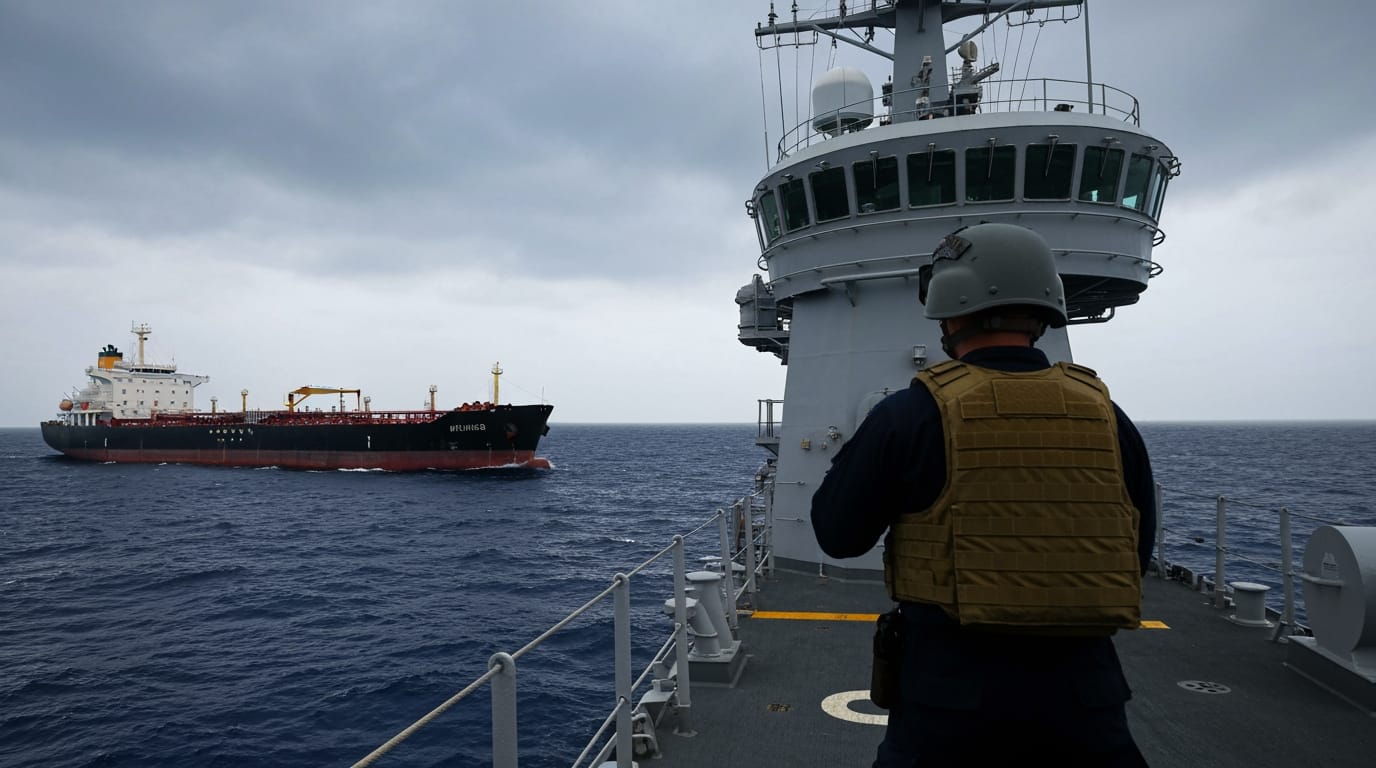
In a dramatic display of global maritime enforcement, U.S. forces have successfully intercepted and boarded the sanctioned crude oil tanker Aquila II in the Indian Ocean. The seizure, which concluded a weeks-long pursuit spanning over 10,000 nautical miles from the Caribbean, underscores an escalating international effort to disrupt "shadow fleets" facilitating illicit oil trade for sanctioned nations. This bold operation, executed overnight within the U.S. Indo-Pacific Command's area of responsibility on Monday, February 9, 2026, marks a significant moment in the ongoing geopolitical struggle over energy exports.
The interdiction of the Aquila II is the latest in a series of aggressive actions by the United States to enforce a tightening net of sanctions against entities attempting to circumvent international restrictions. The Pentagon described the operation as a "right-of-visit, maritime interdiction," emphasizing its role in upholding established international law and order against those who seek to profit from illicit trade. This move sends a clear message that the U.S. is prepared to track and interdict vessels engaged in such activities across vast distances, regardless of their attempts to evade detection.
The Pursuit of the Aquila II
The saga of the Aquila II began in the Caribbean, where it was initially identified operating in defiance of a quarantine established by President Trump on sanctioned vessels in the region. The Panamanian-flagged tanker, with International Maritime Organization (IMO) number 9281152, had been designated by the U.S. Treasury Department's Office of Foreign Assets Control (OFAC) on January 10, 2025, as blocked property linked to Russia's energy sector under Executive Order 14024. Owned by Sunne Co Limited, a company itself sanctioned, the vessel was tracked after departing waters near Venezuela on January 3, partially laden with crude oil and operating under the alias Cape Balder.
Throughout its extensive journey, the Aquila II reportedly employed tactics common to the "shadow fleet," including operating with its radio transponder turned off, a practice known as "running dark," to conceal its location and movements. U.S. officials assert that networks like Sunne Co Limited repeatedly alter vessel names, flags, and ownership structures in an elaborate effort to evade enforcement. Despite these sophisticated evasion techniques, U.S. military forces meticulously tracked the tanker across multiple ocean basins, culminating in its interception thousands of miles from its point of origin. At the time of the boarding, however, data transmitted from the ship indicated it was not currently laden with crude oil.
Crackdown on the Shadow Fleet
The seizure of the Aquila II is not an isolated incident but rather a prominent example of a concerted and intensified U.S. campaign against what is known as the "shadow fleet." This clandestine network consists of aging tankers that transport illicit oil, primarily from Iran, Russia, and Venezuela, enabling these nations to circumvent international sanctions. Financial intelligence firm S&P Global estimates that a staggering one in five oil tankers globally may be involved in smuggling oil from sanctioned countries, highlighting the scale of the challenge.
U.S. enforcement efforts have significantly accelerated since mid-December, following President Trump's announcement of a "complete blockade" on sanctioned oil tankers operating in and out of Venezuela. This push is part of a broader strategy to exert control over Venezuela's oil production and supply chains, particularly after the U.S.-led removal of Nicolás Maduro on January 3. The stated aims include generating revenue to rebuild Venezuela's oil industry and economy, as well as restricting oil supplies to Cuba, which relies heavily on imports from sanctioned partners.
In recent weeks, the Aquila II marks at least the eighth such tanker seized by U.S. forces, with others including the Sagitta, Veronica, Olina, M Sophia, Marinera, Skipper, and Centuries. These operations reflect Washington's determination to cut off revenue streams derived from sanctioned oil exports and to elevate the risks for insurers, traders, and service providers who continue to support these shadow fleet activities.
Geopolitical Tensions and Legal Implications
The aggressive interdiction strategy has drawn sharp criticism from some nations. Russia, for instance, has publicly condemned these seizures as illegal and has issued warnings of potential retaliatory actions against U.S.-flagged vessels. However, the U.S. Southern Command, which has coordinated several of the operations in the Caribbean, defends these actions as legitimate enforcement of U.S. sanctions policy, bolstered by a significant military presence in the regions of operation.
The Department of War, through social media posts, has unequivocally stated the U.S. position: "No other nation on planet Earth has the capability to enforce its will through any domain. By land, air, or sea, our Armed Forces will find you and deliver justice. You will run out of fuel long before you will outrun us." This rhetoric underscores a firm commitment to maritime interdiction as a tool of foreign policy.
While the current seizure of the Aquila II is primarily linked to Russian sanctions, the shadow fleet's involvement with Iranian oil has also been a long-standing point of contention. Previous U.S. seizures of Iranian oil, such as the widely reported case of the Suez Rajan (later renamed St Nikolas), have triggered retaliatory actions from Iran, including the detention of other tankers. Such incidents highlight the delicate balance and potential for escalation inherent in these maritime operations, posing risks to international trade and the safety of seafarers. Moreover, managing a seized tanker, including its transport, storage, and maintenance, presents considerable logistical and financial challenges for authorities.
Conclusion
The successful interdiction of the Aquila II in the Indian Ocean, following a pursuit that spanned continents, serves as a powerful testament to the expanding reach and resolve of U.S. sanctions enforcement. It reinforces the message that the United States is committed to disrupting illicit oil trade, regardless of the complexity or distance involved. As the "shadow fleet" continues to adapt and evolve its tactics, this latest seizure signals a heightened level of vigilance and operational capability from U.S. forces. The ongoing cat-and-mouse game on the high seas is set to continue, with significant implications for global energy markets, international diplomacy, and the enforcement of economic sanctions worldwide.


