US Vice President Vance in Armenia to Push Landmark Peace Accord and Economic Integration
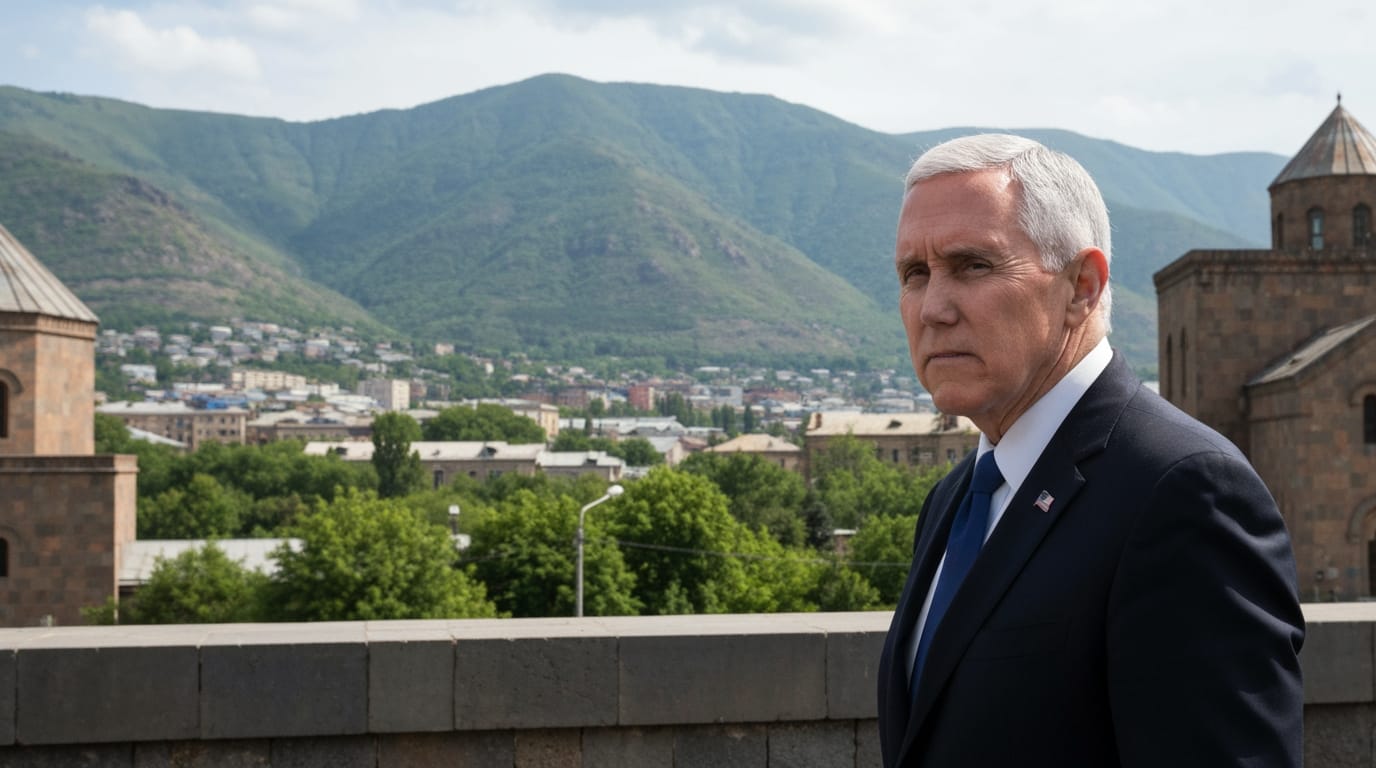
YEREVAN, ARMENIA – United States Vice President JD Vance arrived in Armenia on Monday, marking a historic first for a sitting American Vice President or President, to advance a crucial U.S.-brokered peace agreement between Armenia and Azerbaijan. The visit underscores Washington's concerted effort to stabilize the volatile South Caucasus region through diplomatic engagement, economic incentives, and strategic infrastructure development, aiming to resolve a decades-long conflict that has reshaped geopolitical landscapes.
Vance's arrival in Yerevan, greeted with full ceremonial honors, signals a pivotal moment in bilateral relations and regional peace efforts. His agenda includes high-level discussions with Armenian Prime Minister Nikol Pashinyan, focusing on the implementation of a peace treaty initialed by both Armenia and Azerbaijan last August at the White House. This agreement seeks to end the protracted dispute over the Karabakh region, a conflict that has resulted in significant human displacement and persistent instability.
Diplomatic Push for Lasting Peace
The central thrust of Vice President Vance's visit revolves around solidifying the peace process between Armenia and Azerbaijan. The August 2025 agreement, brokered by U.S. President Donald Trump, laid the groundwork for normalizing relations, renouncing territorial claims, and reopening vital transportation routes. While foreign ministers have initialed the treaty, its full signing by leaders and subsequent ratification by parliaments remain critical steps. Vance emphasized the forward-looking nature required for such a monumental task, stating, "Peace is not made by cautious people... Peace is made by people who are focused on the future."
This diplomatic initiative follows years of intense conflict, particularly the six-week war in 2020, which saw Azerbaijan regain significant control over territories, and a swift offensive in September 2023 that led to the capitulation of separatist authorities and the exodus of nearly all 120,000 ethnic Armenian residents from Karabakh to Armenia. The U.S. role as mediator has become increasingly prominent amidst shifting regional dynamics, particularly as Russia's influence in the South Caucasus has waned following its 2022 offensive in Ukraine.
Economic Corridor and Strategic Partnerships
Beyond the peace treaty, a cornerstone of the U.S. strategy is the promotion of significant economic opportunities, envisioned as a powerful catalyst for building trust and ensuring the longevity of any peace agreement. A key component of this plan is the proposed "Trump Route for International Peace and Prosperity" (TRIPP). This major transit corridor aims to connect mainland Azerbaijan with its autonomous Nakhchivan exclave, traversing a 32-kilometer-wide (20-mile-wide) strip of Armenian territory. Historically, this land bridge has been a major point of contention, but its realization could establish a crucial East-West trade artery, bypassing both Russia and Iran, and fostering regional economic integration.
During his discussions in Yerevan, Vice President Vance and Prime Minister Pashinyan signed an agreement to advance negotiations on a civil nuclear energy deal, indicating a deepening of technological cooperation. Furthermore, Vance affirmed the U.S.'s readiness to export advanced computer chips and surveillance drones to Armenia, alongside pledges of investment in the country's infrastructure. These commitments highlight a broader U.S. interest in enhancing Armenia's technological capabilities and economic resilience, seeing the nation as a potential "important instrument for economic development in this region of the world."
A New Chapter in U.S.-Armenian Relations
Vice President Vance's visit holds profound symbolic and practical significance for U.S.-Armenian relations. Prime Minister Pashinyan lauded the visit as "of truly historic and symbolic importance," emphasizing its reflection of the "depth of the strong and strategic partnership forged between the Republic of Armenia and the United States of America." This burgeoning partnership is occurring at a time when Armenia, traditionally a close ally of Russia, has increasingly sought to diversify its foreign policy and security alliances.
The Vice President also offered an endorsement of Prime Minister Pashinyan in upcoming elections and underscored Armenia's historical Christian identity, resonating with a demographic often aligned with American conservative values. The discussions extended to Armenia's potential participation in broader international frameworks, with Pashinyan accepting an invitation to join President Trump's Board of Peace, a body initially formed to oversee the Gaza ceasefire plan but since expanded in scope and ambition. Vance is scheduled to travel to Azerbaijan on Tuesday, extending the diplomatic mission to Baku and reinforcing the U.S. commitment to a comprehensive regional peace.
Regional Implications and Future Outlook
The U.S.'s intensified engagement in the South Caucasus, epitomized by Vance's unprecedented visit, signals a strategic reorientation in the region. By championing economic development and a peace corridor, Washington aims not only to resolve a long-standing conflict but also to reshape trade routes and influence away from traditional regional powers. The proposed TRIPP project, in particular, could significantly alter geopolitical dynamics, creating new avenues for commerce and connectivity that reduce reliance on existing, often politically fraught, corridors.
While the peace agreement has made substantial progress, with foreign ministers initialing the text, the final ratification by both Armenian and Azerbaijani parliaments remains a critical hurdle. The successful implementation of the TRIPP and other economic initiatives will hinge on sustained political will and the ability of both nations to overcome historical grievances. The Vice President's visit serves as a powerful affirmation of the U.S.'s commitment to this complex process, laying the groundwork for a potentially transformative era of peace and prosperity in a region long marred by conflict. The coming months will reveal whether this high-level diplomatic push can translate into a durable peace that benefits all peoples of the South Caucasus.