State Polls Unfold as Critical Barometer for Modi's Political Standing
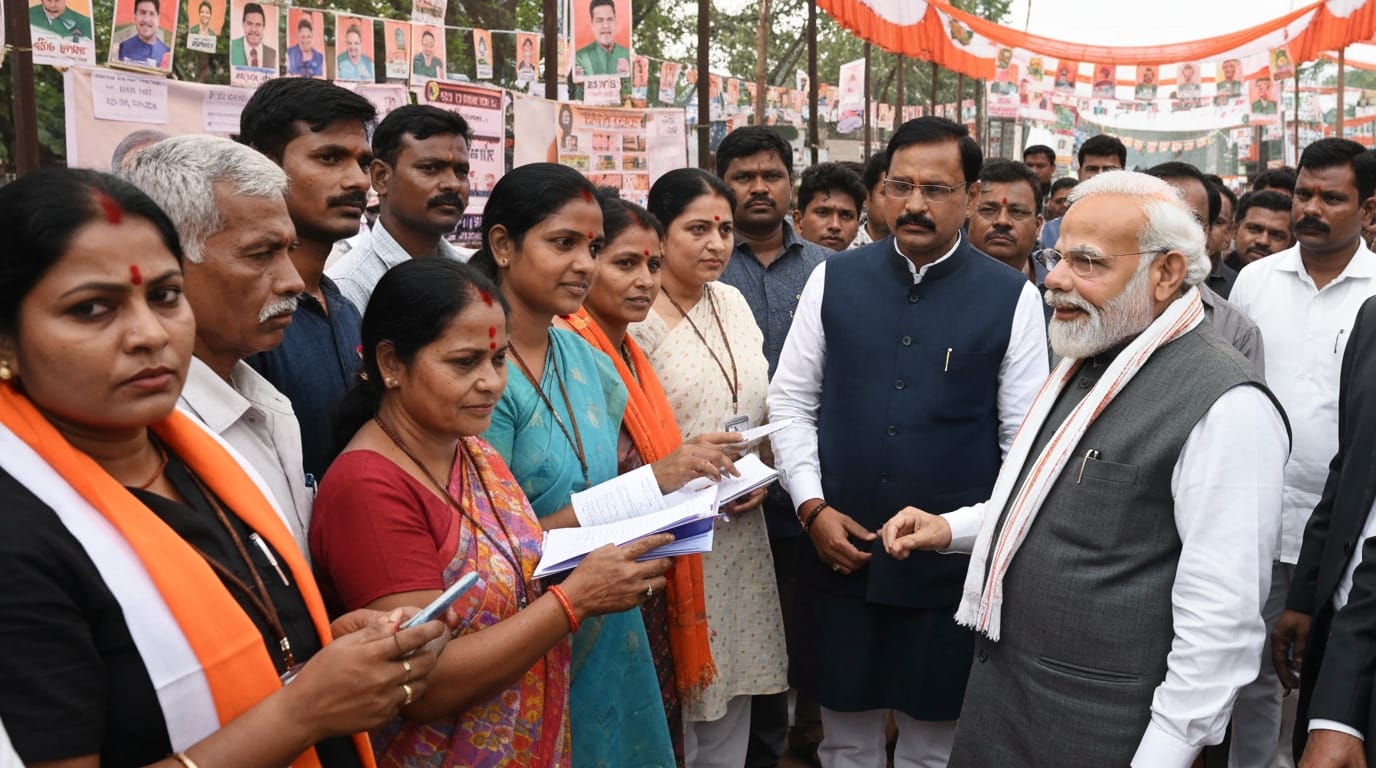
As India's latest round of state assembly elections draw to a close and votes are tallied on May 4, 2026, the results are poised to offer fresh insights into the evolving political landscape following the pivotal 2024 national general elections. These state polls, particularly in West Bengal, Tamil Nadu, Assam, Kerala, and Puducherry, represent a crucial test for Prime Minister Narendra Modi and the ruling Bharatiya Janata Party (BJP) as they navigate a post-2024 environment marked by a tempered national mandate and a reinvigorated opposition. The outcomes will not only shape regional governance but also serve as a vital indicator of public sentiment and the trajectory of India's political future.
A Shifting National Landscape: The 2024 Backdrop
The 2024 Lok Sabha elections delivered a significant, albeit nuanced, verdict. While Prime Minister Modi secured an unprecedented third consecutive term, leading the National Democratic Alliance (NDA) to form the government, the BJP itself fell short of a simple majority, securing 240 seats out of 543. This marked the first time in Modi's 23-year political career that his party failed to win a majority on its own, compelling the BJP to rely on its coalition partners. This outcome was widely seen as a setback, piercing the "aura of invincibility" that had surrounded the dominant Indian politician for over a decade.
The surprising resurgence of the opposition Indian National Developmental Inclusive Alliance (INDIA), which collectively garnered 234 seats, further altered the political dynamic. The Congress party, a key constituent of the INDIA bloc, defied predictions of decline by winning 99 seats and making inroads into traditional BJP strongholds, notably in Uttar Pradesh. This national result underscored a more competitive political environment and set the stage for subsequent state elections to be closely watched as barometers of public mood and party strategies.
Eastern Frontlines: West Bengal and Assam Present Mixed Fortunes
The ongoing assembly elections in states like West Bengal and Assam are offering immediate insights into regional power dynamics. In West Bengal, early trends from vote counting on May 4, 2026, suggest a significant shift. The BJP appears to be making substantial new gains, leading in numerous seats and, according to some reports, even crossing the majority mark in early projections. This development indicates a potential challenge to the long-standing dominance of Chief Minister Mamata Banerjee's Trinamool Congress (TMC). The campaign in West Bengal highlighted issues such as local governance, allegations of corruption, and identity politics, with the BJP actively positioning itself as an alternative to the incumbent TMC. Voter turnout remained robust, with West Bengal recording over 92 percent participation, reflecting intense political engagement.
Concurrently, in Assam, the National Democratic Alliance (NDA), led by the BJP, has established a lead in approximately 69 constituencies, indicating a strong performance in the northeastern state. These results, if they solidify, would reinforce the BJP's regional presence and its strategic expansion into the East.
Southern Stirrings: Tamil Nadu and Kerala's Distinct Narratives
The southern states of Tamil Nadu and Kerala are presenting distinct and complex electoral narratives. In Tamil Nadu, the political landscape is witnessing the dramatic emergence of actor Vijay's new party, Tamilaga Vettri Kazhagam (TVK). Early trends on May 4, 2026, show TVK leading in a significant number of seats, positioning it as a potential single largest party and disrupting the established duopoly of the DMK and AIADMK. This highlights the continued influence of charismatic personalities and regional political shifts in the South, where national parties often face unique challenges.
In Kerala, exit polls suggested a closely fought contest. Predictions indicated a slight edge for the Congress-led United Democratic Front (UDF) over the ruling Left Democratic Front (LDF). The BJP remains a minor player in Kerala's politics, struggling to make significant inroads despite its national footprint. High voter participation, over 78 percent, underscores the competitive nature of the state's elections. Similarly, in the Union Territory of Puducherry, the All India N.R. Congress, an ally of the BJP, is projected to secure a win.
The 2023 Precedent: Wins and Losses Before the National Test
Prior to the 2024 national elections, a series of state assembly elections in late 2023 were widely considered a "semifinal" to gauge voter sentiment. In December 2023, the BJP achieved significant victories, returning to power in Madhya Pradesh, Rajasthan, and Chhattisgarh, while the Congress party secured a win in Telangana. These results demonstrated the varying political dynamics at the state level. In states won by the BJP, Modi's popularity and the party's focus on "good governance and development" were cited as key factors, often overriding anti-incumbency sentiments against state governments. Conversely, the Congress's victory in Telangana was attributed to its local strategies and welfare promises. These mixed outcomes underscored that while Modi remained a popular national figure, state elections were increasingly influenced by local issues and the performance of regional leadership.
Underlying Currents: Issues Driving Voter Sentiment
Across these diverse state elections, several recurring themes and issues continue to shape voter sentiment. Economic concerns, particularly unemployment and inflation, remain paramount for the electorate. Parties frequently campaign on promises of job creation, subsidies, and loan waivers. Social welfare schemes, often targeted at women, farmers, students, and marginalized communities, also play a crucial role in influencing electoral outcomes.
Governance and corruption are consistently highlighted, with voters demanding accountability and efficient public service delivery, especially in health and education. Identity politics, including communal rhetoric and caste dynamics, continues to be a factor, particularly in demographically mixed regions. Furthermore, local leadership, regional aspirations, and the efficacy of law and order policies significantly impact how constituents cast their votes, often outweighing national narratives in state-level contests.
Conclusion: A Muted Mandate, a Continued Contest
The collective results from recent and ongoing state assembly elections paint a picture of India's democracy in constant flux. While Prime Minister Narendra Modi and the BJP remain a formidable force, their era of unchallenged dominance appears to be giving way to a more complex and competitive political landscape. The 2024 national elections demonstrated that the BJP's ability to win an outright majority on its own is no longer guaranteed, leading to increased reliance on coalition partners.
Subsequent state polls further underscore this reality. The BJP's strong performance in West Bengal and Assam demonstrates its continued expansionist agenda and organizational strength, yet the rise of new regional entities like TVK in Tamil Nadu and the resilience of established regional players signal a robust and diverse electoral map. The setbacks experienced by the BJP in certain states, and its unexpected struggles in the 2024 national elections, suggest that voter behavior is increasingly nuanced, driven by a combination of national leadership appeal, local issues, economic realities, and a resurgent opposition. The "test of Modi's political might" is not a singular event but an ongoing evaluation, revealing a dynamic political contest that promises to keep India's electoral scene vibrant and unpredictable.