Swiss Authorities Grapple with Arduous Task of Identifying Crans-Montana Fire Victims Amidst National Mourning
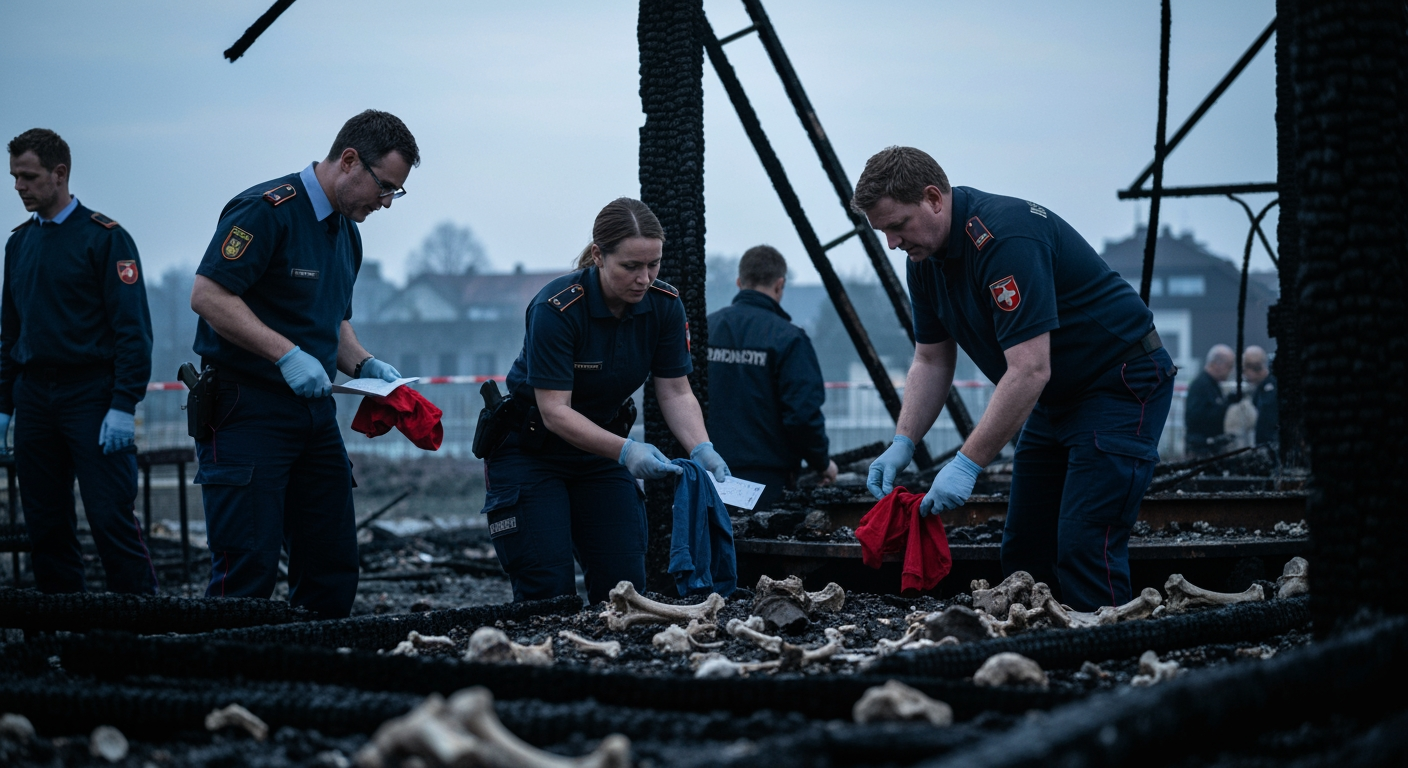
CRANS-MONTANA, Switzerland – Swiss officials are facing the grim and painstaking task of identifying dozens of victims following a catastrophic fire that engulfed Le Constellation bar in the upscale ski resort of Crans-Montana during New Year's Eve celebrations. The blaze, which erupted in the early hours of January 1, 2026, claimed the lives of at least 47 people and left more than 115 others severely injured, turning a night of festivity into one of Switzerland's most profound tragedies. The severity of the burns sustained by many of the young revelers means that a definitive identification process could take days, or even weeks, leaving families in an agonizing wait for confirmation.
The Devastating Toll and Complex Identification Efforts
The incident has resulted in a staggering loss of life and a significant number of critical injuries, overwhelming local medical facilities. Authorities confirmed at least 47 fatalities, though a precise final count remains elusive due to the condition of the remains. Over 115 individuals were injured, many suffering severe burns, necessitating their transfer to hospitals across Switzerland and even a specialized burn unit in Milan, Italy, as intensive care units in Valais reached full capacity. The sheer scale of the injuries and the devastating impact of the fire have rendered immediate visual identification impossible for many victims.
Valais cantonal police commander Frédéric Gisler emphasized that identifying the victims and informing their families is the immediate priority, a process described as "painful" and "arduous" by investigators. Crans-Montana's mayor, Nicolas Feraud, stated that assigning names to all the bodies is the primary objective, acknowledging it could take days. Experts are meticulously employing dental and DNA samples to ensure 100 percent certainty before notifying grieving families, a sensitive and time-consuming undertaking. The international nature of Crans-Montana, a popular tourist destination, suggests that victims are likely of various nationalities, with foreign embassies actively scrambling to determine if their citizens are among the casualties. France reported eight of its nationals missing, while Italy confirmed sixteen missing and several others injured.
A Celebration Turned Calamity: Eyewitness Accounts and Rapid Inferno
The inferno ignited around 1:30 AM CET on January 1, when Le Constellation bar was packed with New Year's Eve revelers. Eyewitness accounts suggest a horrific scene of joy abruptly transforming into chaos. Several witnesses reported seeing a waitress or bartender carrying champagne bottles topped with sparklers or flares near the ceiling, which allegedly caused the flames to spread rapidly. One witness described the fire engulfing the nightclub "within about 10 seconds."
The fire was exacerbated by a phenomenon known as a flashover, where a blaze releases and ignites combustible vapors, leading to rapid and intense spread, and potentially "one or multiple explosions." Survivors recounted scenes of panic, a crowd surge towards narrow exits, and desperate attempts to break windows to escape the smoke and flames. "We were trapped, a lot of people were trapped. We couldn't see because of the smoke," one survivor reported. Many described people "burning from head to foot," highlighting the fire's devastating intensity. Emergency services, including 13 helicopters, 42 ambulances, and 150 responders, were immediately dispatched to the scene, and a no-fly zone was imposed over the area to facilitate rescue operations.
Investigation Underway and a Community in Shock
The precise cause of the fire remains under investigation. While eyewitness accounts point towards pyrotechnics on champagne bottles, Valais Canton Attorney General Beatrice Pilloud urged the public to "refrain from making assumptions," stating that it is too early to definitively determine the cause. However, authorities have consistently ruled out terrorism or an attack, classifying the event as an accident. The investigation will also scrutinize whether the bar met safety standards and had adequate emergency exits. Le Constellation, a popular establishment with a younger clientele and international tourists, had a capacity for up to 300 people, with additional terrace seating. Some online reviews had reportedly raised concerns about security deficiencies prior to the incident.
The tragedy has plunged Crans-Montana, a renowned ski and golf resort, and indeed the entire nation, into profound grief. Swiss President Guy Parmelin, who took office on the day of the fire, described it as "one of the worst tragedies that our country has experienced" and a "calamity of unprecedented, terrifying proportions." The country has declared five days of national mourning, with flags flying at half-mast, a gesture of solemn remembrance for the many "young lives that were lost and interrupted." Hundreds gathered in silence near the cordoned-off scene, laying flowers and lighting candles, many knowing victims or having narrowly avoided the disaster themselves. The community grapples with collective shock, as one 18-year-old local observed, "You think you're safe here but this can happen anywhere. They were people like us."
A Long Road to Healing and Understanding
As investigators meticulously piece together the events of that fateful night, the emotional and practical aftermath will continue to unfold. The protracted process of victim identification underscores the horrific nature of the fire and the challenges faced by forensic teams. For the families, the wait for definitive news is an agonizing ordeal, compounded by the sheer scale of the disaster. The investigation's findings will be crucial in understanding how such a tragedy could occur in a modern, well-regulated country like Switzerland and may lead to important revisions in safety protocols for public venues. The collective grief of a nation united in sorrow for the victims of Crans-Montana marks a somber beginning to the new year.
Related Articles


Ratko Mladić, "Butcher of Bosnia" and Convicted War Criminal, Dies at 84
THE HAGUE, Netherlands – Ratko Mladić, the former Bosnian Serb military commander known as the "Butcher of Bosnia" and convicted of genocide, war crimes, and crimes against humanity, has died at the age of 84. Serbian...


Long-Awaited 9/11 Mastermind Trial Set for 2028, Decades After Attacks
GUANTANAMO BAY, Cuba – Nearly a quarter-century after the devastating terror attacks of September 11, 2001, a military judge has finally set a trial date for Khalid Sheikh Mohammed, the alleged mastermind behind the...