Syrian Army Deepens Presence in Northeast Syria Amid New Integration Deal with Kurdish Forces
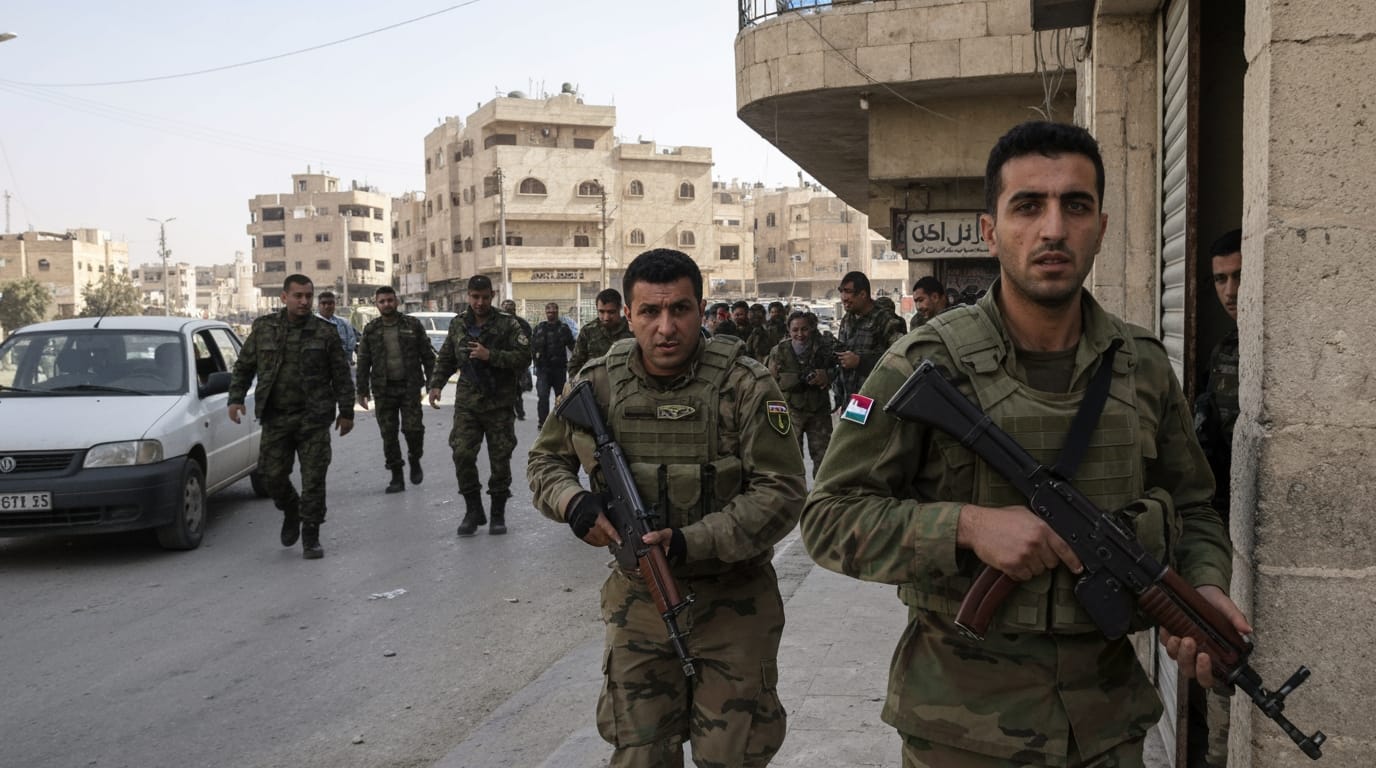
DAMASCUS, Syria – In a significant shift in the complex landscape of northeastern Syria, forces loyal to the Syrian government have solidified their presence in key areas of al-Hassakeh province, including taking control of critical facilities, under the terms of a new, comprehensive security and administrative agreement with the Kurdish-led Syrian Democratic Forces (SDF). This latest accord, finalized in late January 2026, represents the most far-reaching effort yet to integrate the SDF into Syrian state institutions, following years of tentative alliances and shifting battle lines. The move has profound implications for regional stability, the future of Kurdish autonomy, and the ongoing international involvement in Syria's protracted conflict.
The New Accord: A Path Towards Integration
The comprehensive agreement, announced on Friday, January 30, 2026, outlines a phased integration of military and administrative bodies between the Syrian government and the Syrian Democratic Forces. Under the terms of the deal, security forces from the Interior Ministry are slated to deploy to the centers of Hasakah and Qamishli, cities that have long been under SDF control. Local security forces are also expected to be merged. A crucial aspect of the military integration involves the formation of a new military division incorporating three SDF brigades, along with an additional brigade for forces in Kobani (Ain Al-Arab), which will be affiliated with the governorate of Aleppo.
As part of the immediate implementation, Syrian army forces began vacating their trenches and strategic positions surrounding Hasakah province on Friday, January 30, redeploying towards the Shaddadi area. Concurrently, SDF units established positions at Mount Qazwan, a strategic high point southwest of Hasakah, enhancing their control over the city's southern approaches. One of the most tangible outcomes of the recent agreement saw the Syrian army take control of the vast Al-Hol detention camp in al-Hassakeh province on January 21, a facility housing thousands of relatives of suspected Islamic State militants, following the withdrawal of Kurdish forces. This was followed by the Syrian government's prisons authority assuming charge of al-Aqtan prison, north of Raqqa, on January 23, with files of detainees being reviewed. The agreement also outlines the handover of the governorates of Raqqa and Deir ez-Zor to the government, including the administration of prisoner-of-war camps for Islamic State members, all border crossings, and oil fields.
Syrian officials have hailed the deal as a "historic milestone" and a "victory for all Syrians," emphasizing its potential to unify Syrian territory and strengthen cooperation towards rebuilding the country. While regular Syrian army forces are expected to remain outside major city centers like Hasakah and Qamishli, with local internal security forces coordinating with the SDF, the arrangement signals a new chapter in the relationship between Damascus and the Kurdish-led administration.
From Crisis to Pragmatism: The 2019 Precedent
This recent pact builds upon a history of intermittent cooperation, largely forged out of necessity. A pivotal moment occurred in October 2019 when Turkey, along with allied Syrian rebel groups, launched "Operation Peace Spring," a military offensive aimed at eliminating Kurdish forces in northern Syria, which Ankara views as a terrorist threat, and establishing a "safe zone" along its border. This offensive was significantly enabled by the withdrawal of U.S. troops from Kurdish-controlled areas in northeastern Syria, ordered by then-President Donald Trump on October 6, 2019, a move widely criticized as a betrayal of Kurdish allies who had been instrumental in the fight against ISIS.
Facing a dire threat from the Turkish advance and abandoned by their primary international ally, the Syrian Democratic Forces turned to the Syrian government and its Russian backers for protection. On October 14, 2019, the Syrian army began deploying troops towards Kurdish-controlled border areas, including between al-Hassakeh and Ras al-Ain, following an agreement between the Kurds and Damascus to confront the Turkish incursion. This deployment marked the return of Syrian government forces to parts of the northeast for the first time in years, positioning them around six kilometers from the Turkish border. Russian military police also played a role in facilitating the removal of YPG forces from a 30-kilometer depth from the border as part of a subsequent deal between Turkey and Russia on October 22, 2019. This pragmatic alliance, born from shared adversity against a common foe, set a precedent for future negotiations between the Syrian government and the SDF.
Geopolitical Realignments and Regional Implications
The evolving relationship between Damascus and the SDF is reshaping the geopolitical landscape of northeastern Syria. The initial 2019 agreement underscored the changing allegiances and the willingness of actors to form temporary partnerships in the face of existential threats. The more recent 2026 deal, however, suggests a move towards a more structured and enduring integration.
Russia, a key international powerbroker in Syria, has consistently advocated for the return of Syrian government authority across the entire country, including Kurdish-held areas. The integration agreement aligns with Moscow's objectives for a unified Syrian state. Turkey, which views the People's Protection Units (YPG) – a core component of the SDF – as an extension of the Kurdistan Workers' Party (PKK), a designated terrorist organization, will be closely watching these developments. The Turkish incursions in 2019 aimed to push these forces away from its border and create a "safe zone," with plans to resettle Syrian refugees there. The current agreement's success in stabilizing the border region could influence future Turkish actions.
The United States, having largely withdrawn its support for the SDF in the face of Turkish pressure in 2019, has seen its influence diminish in northeastern Syria, although US troops reportedly remain in eastern Syria, reinforcing their presence in Al-Hasakah and Deir ez-Zor governorates, particularly to secure oil and gas infrastructure. The recent deal, brokered in part by US envoy Tom Barrack, suggests a shift in US policy towards supporting integration efforts with the Syrian transitional government, as a step towards national reconciliation.
Humanitarian and Security Challenges
The integration process faces significant humanitarian and security challenges. The transfer of control over detention camps holding ISIS fighters and their families, such as Al-Hol, is a critical concern. These camps have been plagued by overcrowding, radicalization, and security incidents. While the Syrian defense ministry has stated its readiness to take responsibility for Al-Hol camp and all ISIS prisoners, the logistical and security implications of such a transfer are immense. The potential for ISIS resurgence, a fear that arose during the instability of the 2019 Turkish offensive, remains a persistent threat.
Furthermore, the long-term impact on the diverse populations of northeastern Syria, particularly the Kurdish community, is uncertain. The SDF, led primarily by Syrian Kurds, expanded its recruitment to include Arabs, Turkmen, Yezidis, Christians, and Assyrians. Concerns persist regarding the protection of Kurdish rights and equal citizenship within a system that some observers fear may favor the majority. The ability of the agreement to withstand political pressures and unresolved mistrust will be crucial for establishing durable stability and ensuring the well-being of the region's inhabitants.
Conclusion
The Syrian army's re-entry into Kurdish-held al-Hassakeh under the recent integration deal marks a pivotal moment in the Syrian conflict. While rooted in the pragmatic alliances forged during the 2019 Turkish offensive and subsequent U.S. withdrawal, the new comprehensive agreement signals a more deliberate effort towards unifying Syria's fragmented territories under government control. The success of this ambitious integration plan will depend on navigating complex geopolitical interests, addressing deep-seated grievances, and ensuring the protection of all communities in a region scarred by over a decade of war. The coming months will reveal whether this accord can pave the way for genuine national reconciliation or if it will simply rearrange the pieces on Syria's enduring chessboard of conflict.