Syria's Christians Grapple with Uncertain Future Amidst Shifting Power Dynamics
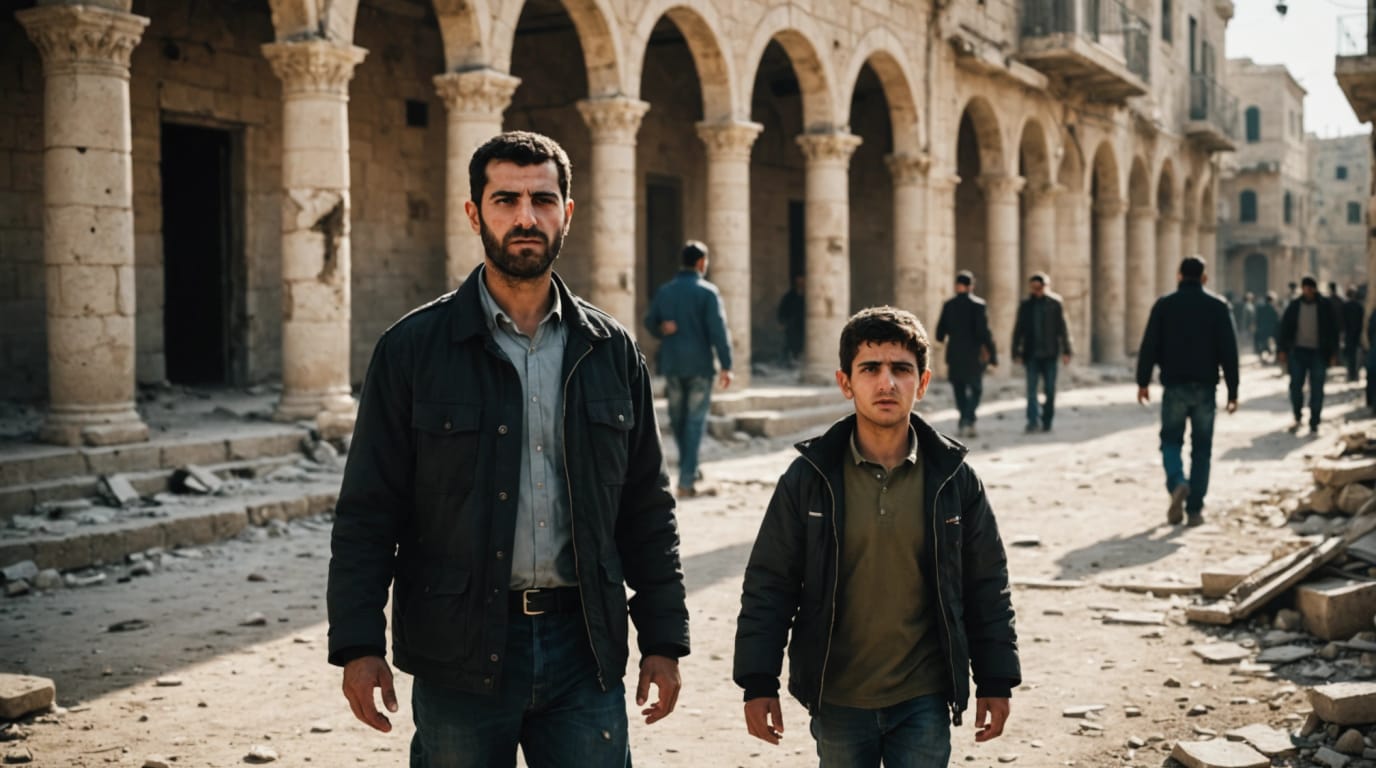
Syria's Christian community, once a vibrant and integral part of the nation's diverse tapestry, faces an increasingly precarious future as the country navigates a complex transition of power following years of conflict and upheaval. Caught between the hope for a more inclusive society and the deep-seated fear of renewed persecution, Christians in Syria are struggling to reconcile their past experiences with the uncertain realities of a post-Assad era.
A Dwindling Community
Before the Syrian civil war erupted in 2011, Christians constituted approximately 10% of the country's population, numbering around 1.5 million. Today, that number has dwindled dramatically, with estimates suggesting that only about 300,000 remain. This mass exodus is attributed to the violence, instability, and economic hardship that have plagued Syria for over a decade. The rise of extremist groups and the targeting of Christian communities have further fueled the emigration, leaving behind a community grappling with immense challenges.
The Rise of Hayat Tahrir al-Sham (HTS)
The recent toppling of the Assad regime by Hayat Tahrir al-Sham (HTS), a group with past ties to Al-Qaeda, has injected a new layer of uncertainty into the lives of Syrian Christians. While HTS leaders have attempted to present a more moderate image, promising inclusivity and religious freedom, many Christians remain skeptical, given the group's history and the potential for a return to extremist governance.
Michel Hanna, a 35-year-old Christian in Syria, voiced the anxieties of many, stating, "It's the apocalypse." He emphasized the desire for a secular, civil state where all ethnicities and religions can coexist peacefully, a sentiment echoed by many Syrians who yearn for a future free from corruption, injustice, and favoritism.
Sectarian Violence and Targeted Attacks
Even with HTS's promises of protection, incidents of violence and targeted attacks against Christian communities continue to occur. Recent sectarian clashes in the coastal region resulted in the deaths of seven Christian civilians, according to local and church sources. Metropolitan Ephrem Maalouli, Archbishop of Aleppo and Alexandretta for the Greek Orthodox Church, described the situation as "deeply concerning," highlighting the real fears among Christians about their future in Syria, especially after the mass emigration of recent years.
Reports have also emerged of Christian neighborhoods and villages being targeted by jihadist groups, further exacerbating the sense of insecurity and vulnerability within the community. While some Christians initially viewed these incidents as isolated, the situation has worsened over time, leading to increased fear and a desire for greater protection.
A Divided Community and Uncertain Alliances
The Syrian Christian community is not monolithic, and its members hold diverse views on the country's political landscape. While many Christians remained neutral throughout the conflict, some groups, like the forces of Nayel Al-Abdullah in Sqeilbiyah, aligned themselves with the Syrian regime, receiving support from Russia. Al-Abdullah, who leads an armed militia claiming to defend Christians, has also faced accusations of targeting civilians and recruiting children, further complicating the already complex dynamics within the community.
In the northeastern region of Syria, the Autonomous Administration of North and East Syria (AANES) has presented itself as a model of coexistence, offering protection to Christian villages against attacks by the Syrian National Army (SNA) and ISIS. However, even in this region, many Christians have fled, leaving behind only a small number who remain hopeful for continued protection under the Syrian Democratic Forces (SDF) or any future political settlement.
The Struggle for Survival and the Hope for Reconciliation
Despite the immense challenges they face, Syrian Christians continue to persevere, holding onto their faith and offering support to their communities. However, the ongoing instability, economic hardship, and the threat of violence have created a sense of uncertainty and fear about the future.
A report from a Syrian Christian, whose name was withheld for security reasons, lamented that the government is more focused on "whitewashing its brutal history in the eyes of the international community" rather than addressing the dire realities faced by Syrians within the country. The report highlighted issues such as crumbling infrastructure, inadequate healthcare, power outages, water shortages, and a lack of security, all of which contribute to the daily struggles of Syrian Christians.
Church leaders have called for national reconciliation and urged the international community to pay attention to the plight of Christians in Syria. They emphasize the need for a peaceful resolution to the conflict, the protection of religious minorities, and the establishment of a just and inclusive society where all Syrians can live in dignity and security.
A Crossroads for Syria's Christians
As Syria stands at a crossroads, the future of its Christian community hangs in the balance. The promises of inclusivity and religious freedom offered by the new leadership provide a glimmer of hope, but the shadow of past conflicts and ongoing incidents of violence leave many questioning whether these assurances will translate into lasting protection.
The resilience and faith of Syrian Christians in the face of adversity are a testament to their enduring spirit. However, the challenges they face are immense, and the need for a comprehensive and sustainable solution to the Syrian conflict is more urgent than ever. Only through genuine reconciliation, the establishment of a just and inclusive government, and the protection of religious minorities can Syria's Christians hope to secure a future in their ancestral homeland.


