Syria's Endless Impasse: Kurds and Central Government Locked in Protracted Conflict
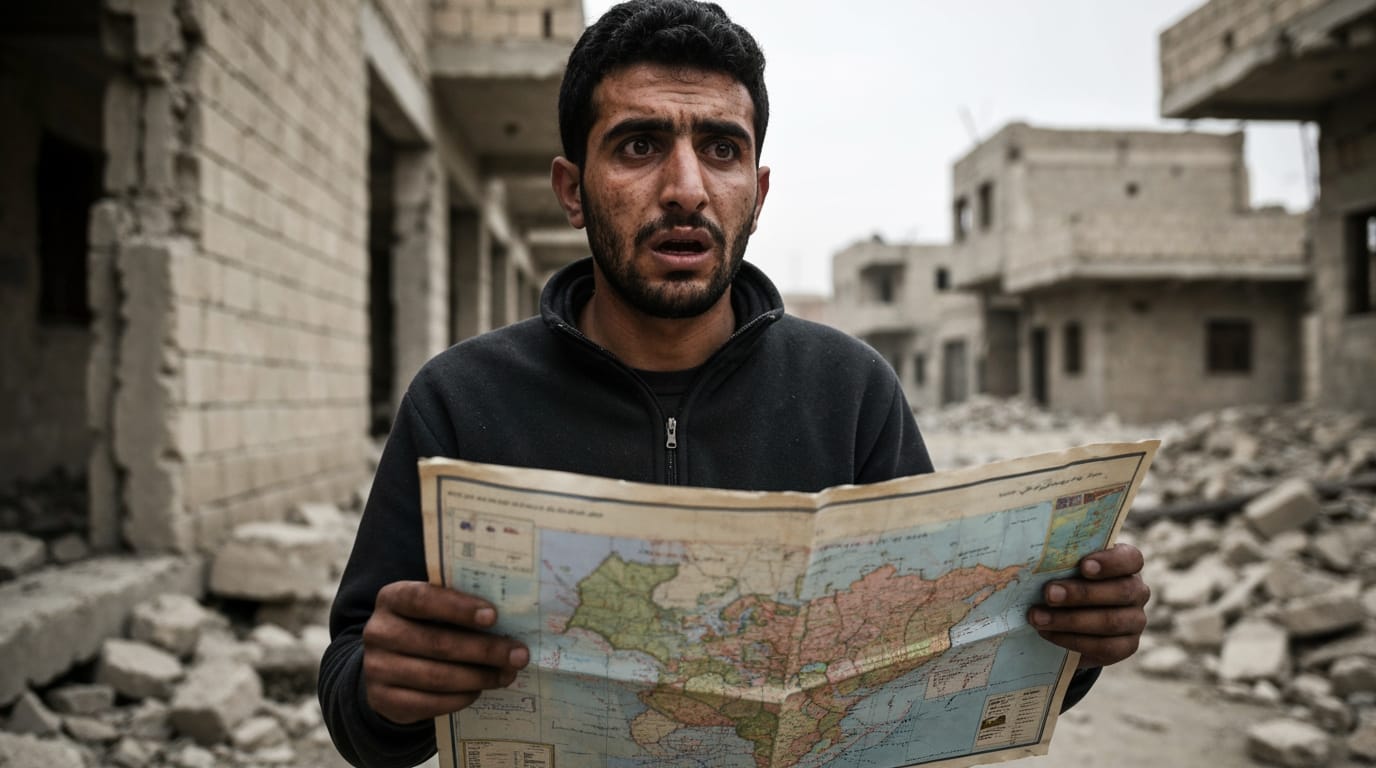
Northern Syria's delicate equilibrium remains shattered as recent clashes in Aleppo underscore the enduring and deeply rooted conflict between Kurdish-led forces and the central Syrian government. Despite intermittent attempts at de-escalation and integration, fundamental disagreements over autonomy, governance, and external influence continue to fuel instability, perpetuating a humanitarian crisis and dimming prospects for a unified Syrian future.
The Syrian civil war, now in its second decade, has morphed into a complex tapestry of overlapping conflicts, with the struggle for control over the country's northeast emerging as a critical, unresolved front. The Autonomous Administration of North and East Syria (AANES), also known as Rojava, established its de facto autonomy in 2012 amidst the broader Syrian conflict, spearheaded by its military wing, the Syrian Democratic Forces (SDF). This self-governing region, with its multi-ethnic population, has carved out a significant swathe of territory, but its existence remains unrecognized by Damascus and faces persistent threats from external powers.
The Roots of a Fractured Nation
The current standoff is deeply embedded in Syria's pre-war history, marked by decades of state-sponsored marginalization of its Kurdish population. The Syrian government had a long-standing policy of denying Kurdish identity and citizenship rights, a legacy that continues to fuel distrust and shape current demands for self-governance. The Syrian civil war provided an unexpected opportunity for Kurdish groups to assert control in the power vacuum left by the withdrawing Syrian army. The People's Protection Units (YPG), a prominent component of the SDF, played a pivotal role in the fight against ISIS, often with international backing, further solidifying their hold on significant territories, including areas rich in oil and agricultural resources. This period saw the AANES establish a unique, decentralized governance model, a stark contrast to the centralist approach historically favored by Damascus.
A Precarious Autonomy and Failed Overtures
The AANES, representing a multi-ethnic coalition of Kurds, Arabs, and Assyrians, seeks a decentralized federal system within a unified Syria. However, the central Syrian government has consistently rejected the notion of Kurdish autonomy, advocating for the full reintegration of all Syrian territories under its authority. This fundamental divergence has been a primary obstacle to any lasting political settlement.
Efforts to bridge this divide have been made, albeit with limited success. A landmark agreement signed in March 2025 between the SDF and the Syrian government, facilitated in part by the United States, aimed to integrate the SDF and AANES institutions into the national framework by the end of the year. However, this agreement ultimately faltered. The SDF insisted on its forces integrating as distinct units rather than individuals, seeking to preserve a degree of their operational autonomy, while Damascus pushed for full absorption. Concerns from AANES leadership regarding the central government's ability and willingness to protect minority rights, particularly in light of past incidents, further hampered progress. The recent deadly clashes in Aleppo in early January 2026, which saw Syrian government forces attempting to dislodge SDF fighters from Kurdish-majority neighborhoods, exemplify the deep mistrust and the fragility of any ceasefires.
The Geopolitical Chessboard and External Pressures
The conflict in northeastern Syria is further complicated by the significant involvement of regional and international powers. The United States has been a crucial ally to the SDF, providing security support and partnering in the ongoing fight against ISIS. U.S. forces remain deployed in eastern Syria, partly to prevent an ISIS resurgence and to secure SDF-controlled oil and gas infrastructure. Washington has also played a mediating role in discussions between the SDF and the Syrian government, emphasizing the need for a political transition that ensures non-sectarian governance.
Conversely, Turkey views the YPG, the dominant force within the SDF, as an extension of the Kurdistan Workers' Party (PKK), a group designated as a terrorist organization by Turkey, the U.S., and the European Union. Ankara perceives the presence of Kurdish self-rule on its southern border as a significant national security threat and has launched multiple military operations into Syrian territory targeting Kurdish forces, aiming to create a buffer zone free of armed Kurdish groups. Turkey has also exerted pressure on the Syrian government to integrate or remove Kurdish forces, a factor that has influenced Damascus's actions, including the recent push in Aleppo.
The exclusion of the AANES from the Syrian constitutional committee further highlights the lack of consensus and the uphill battle for recognition. Despite the inclusion of some ethnic Kurds, AANES officials have vocally protested their lack of direct representation in a process intended to shape Syria's future. This exclusion underscores the deep-seated political divisions and the challenges of forging a truly inclusive national identity in post-conflict Syria.
A Bleak Humanitarian Outlook
Beyond the political and military complexities, the enduring conflict inflicts immense suffering on the civilian population. Northeast Syria faces a severe humanitarian crisis, characterized by widespread displacement, damaged infrastructure, and a critical lack of access to essential services. Years of conflict and underfunding have severely degraded the region's healthcare system, with many facilities damaged and lacking adequate supplies and qualified staff. Access to clean water is also a persistent challenge, contributing to waterborne diseases and food insecurity.
Recent escalations, such as the Aleppo clashes, have led to further displacement, with tens of thousands of people forced to flee their homes. Humanitarian organizations warn that these conditions are dire, exacerbated by overcrowding in displacement camps and the onset of harsh winter weather. The deliberate targeting of civilian infrastructure and humanitarian assets, along with disruptions to aid delivery, underscore the urgent need for all parties to respect international humanitarian law and ensure the protection of civilians.
As Syria grapples with the aftermath of decades of turmoil and attempts to forge a new national identity, the unresolved conflict between the central government and Kurdish-led forces remains a critical impediment to lasting peace and stability. The deep historical grievances, conflicting visions for Syria's future, and the intricate web of regional and international interests ensure that an end to this particular chapter of the Syrian crisis remains elusive, with the humanitarian toll continuing to mount.


