Syria's Volatile Transition: Fresh Fighting Erupts in Post-Assad Era
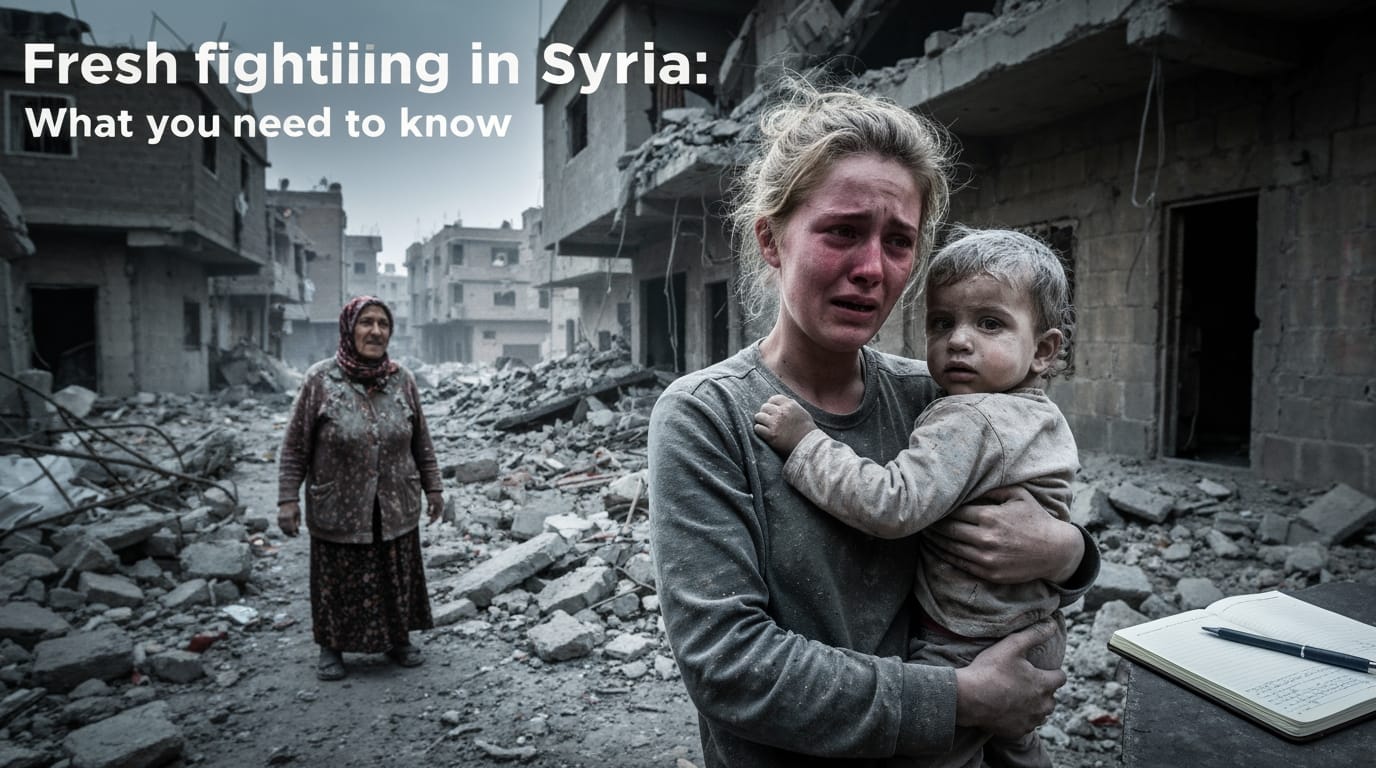
Syria is once again grappling with intensified conflict, as fresh fighting flares across key regions, marking a new, complex chapter following the ouster of President Bashar al-Assad in December 2024. The fall of the long-standing regime, which culminated in a major offensive by various opposition groups, has not brought the anticipated peace but rather ushered in a volatile transitional period dominated by the Syrian transitional government (STG) under Ahmed al-Sharaa, and ongoing clashes with other factions, notably the Kurdish-led Syrian Democratic Forces (SDF). The renewed violence in areas like Aleppo and Raqqa highlights the country's fragmented power dynamics and the formidable challenges to achieving lasting stability.
A New Conflict Landscape Emerges
The political and military landscape in Syria underwent a dramatic transformation in late 2024. After nearly 14 years of civil war, a coalition of opposition groups, spearheaded by Hayat Tahrir al-Sham (HTS), launched a decisive offensive that led to the collapse of the Assad regime. On December 8, 2024, rebels entered Damascus, and Bashar al-Assad reportedly resigned and sought asylum in Russia, ending over five decades of his family's rule. The leader of HTS, Ahmed al-Sharaa, emerged as the de facto head of the newly formed Syrian transitional government (STG). This transition was bolstered by weakened support for the Assad government, as Russia diverted resources to Ukraine and Iran faced setbacks from conflict with Israel. While many celebrated the end of Assad's rule, the establishment of the STG, with its roots in an Islamist organization, introduced new uncertainties and potential for renewed tensions both domestically and regionally.
Flashpoints and Key Players
The post-Assad era has been characterized by a complex interplay of internal and external actors, leading to fresh flashpoints across the country. Recent military escalation has been particularly pronounced in the eastern Aleppo countryside and Raqqa province. The Syrian Arab Army, now representing the STG, has redeployed forces and engaged in clashes, drone strikes, and artillery fire against the Syrian Democratic Forces (SDF). These confrontations have been reported in areas such as Deir Hafer, Umm al-Marra, and Zubaida village, with the SDF accusing "Damascus-affiliated factions" of initiating attacks and infiltration attempts. Syrian state media has reported the Syrian Arab Army dispatching military reinforcements from Latakia province towards the Deir Hafer front in eastern Aleppo, escalating the conflict.
The SDF, a Kurdish-dominated alliance that includes Arab fighters and has been a primary U.S. partner in the fight against ISIS, controls a significant swath of eastern Syria, east of the Euphrates River. The STG, by contrast, holds major cities like Damascus, Homs, Hama, and Aleppo. A March agreement aiming to integrate the SDF into the national army by the end of 2025 has been fraught with disagreements, contributing to the recent outbreaks of violence. Adding to the complexity, Turkish-backed factions, including elements of the Syrian National Army (SNA), have also been involved in offensives against Kurdish forces.
Beyond these primary actors, remnants of the Islamic State (ISIS) continue to exploit the fragmented security landscape to reestablish their foothold. Meanwhile, Assad loyalists and various Alawite groups are engaged in an insurgency against the STG. Southern Syria has also witnessed clashes between Druze and Bedouin armed groups, with the STG deploying forces to restore order amidst rising sectarian tensions. Regionally, Israel has maintained an active role, launching air and ground assaults into southern Syria following the fall of the Assad regime, aiming to counter perceived threats from the new Islamist government and target weapons caches.
Devastating Human Toll
The resurgence of conflict in Syria continues to exact a heavy toll on its civilian population, compounding an already dire humanitarian crisis. The recent fighting in northwest Syria alone is believed to have displaced an additional one million people, adding to the 7.1 million already internally displaced within the country. As of 2024, approximately 90% of the Syrian population relies on humanitarian aid, with 12.9 million people experiencing food insecurity and 3 million facing acute food insecurity. Acute malnutrition among children is a growing concern.
The legacy of years of warfare, particularly unexploded ordnance (UXO), poses a persistent and deadly threat to civilians. Recent clashes in Aleppo Governorate have added to this hazard, with an estimated 650 UXO incidents in the first nine months of 2025 resulting in over 570 deaths and 850 injuries. Vast areas, including Palmyra and Deir ez-Zor, remain contaminated with hundreds of thousands of landmines, impeding safe return and recovery efforts. Infrastructure across the country, including hospitals and schools, has suffered extensive damage, further hindering the provision of essential services and exacerbating the humanitarian emergency.
Regional Ripple Effects and International Concerns
The renewed fighting in Syria carries significant regional and international implications, threatening to destabilize an already fragile Middle East. The rise of the STG under Ahmed al-Sharaa, with its ties to an Islamist organization, has generated uncertainty and spurred geopolitical rivalries. Regional actors like Turkey, Israel, and Iran are actively seeking to expand their influence, creating a complex web of alliances and antagonisms. Turkey, a key backer of the STG and SNA, aims to prevent Kurdish groups from establishing a contiguous presence along its southern border. However, renewed large-scale operations against the SDF could derail ongoing talks between Ankara and the Kurdistan Workers' Party (PKK).
The actions of the STG, particularly against Kurdish forces, risk drawing Israel further into the conflict, a scenario Israeli officials have explicitly warned against. While the United States continues to support the SDF in counter-ISIS operations, Washington also seeks overall stability in Syria and has engaged with the new government, pushing for the implementation of integration agreements. The instability within Syria also has profound economic and social repercussions for neighboring countries such as Iraq, Jordan, and Lebanon, which have borne the brunt of refugee flows and economic disruptions since the initial civil war began in 2011.
The current situation highlights the fragility of any peace efforts and the potential for a broader regional confrontation. While a ceasefire between the STG and SDF was recently announced, its long-term viability remains uncertain amidst ongoing clashes and underlying tensions. International efforts are focused on preventing further humanitarian abuses and ensuring accountability, while navigating the complex political landscape to find a path toward a more stable and unified Syria.
Conclusion
The fresh fighting in Syria underscores the persistent instability in a nation still reeling from over a decade of conflict and a recent, dramatic regime change. The establishment of the Syrian transitional government has introduced a new dynamic, but competing interests among various internal and external actors, coupled with a devastating humanitarian crisis, continue to fuel violence. The fragile ceasefires and ongoing negotiations face immense challenges, as the country grapples with internal insurgencies, ethnic tensions, and the lingering threat of extremist groups. Achieving a lasting peace in Syria will require a comprehensive approach that addresses the deep-seated grievances, ensures the protection of all communities, and fosters genuine political reconciliation beyond military solutions.


