Taiwan on High Alert as China Concludes Extensive Military Drills
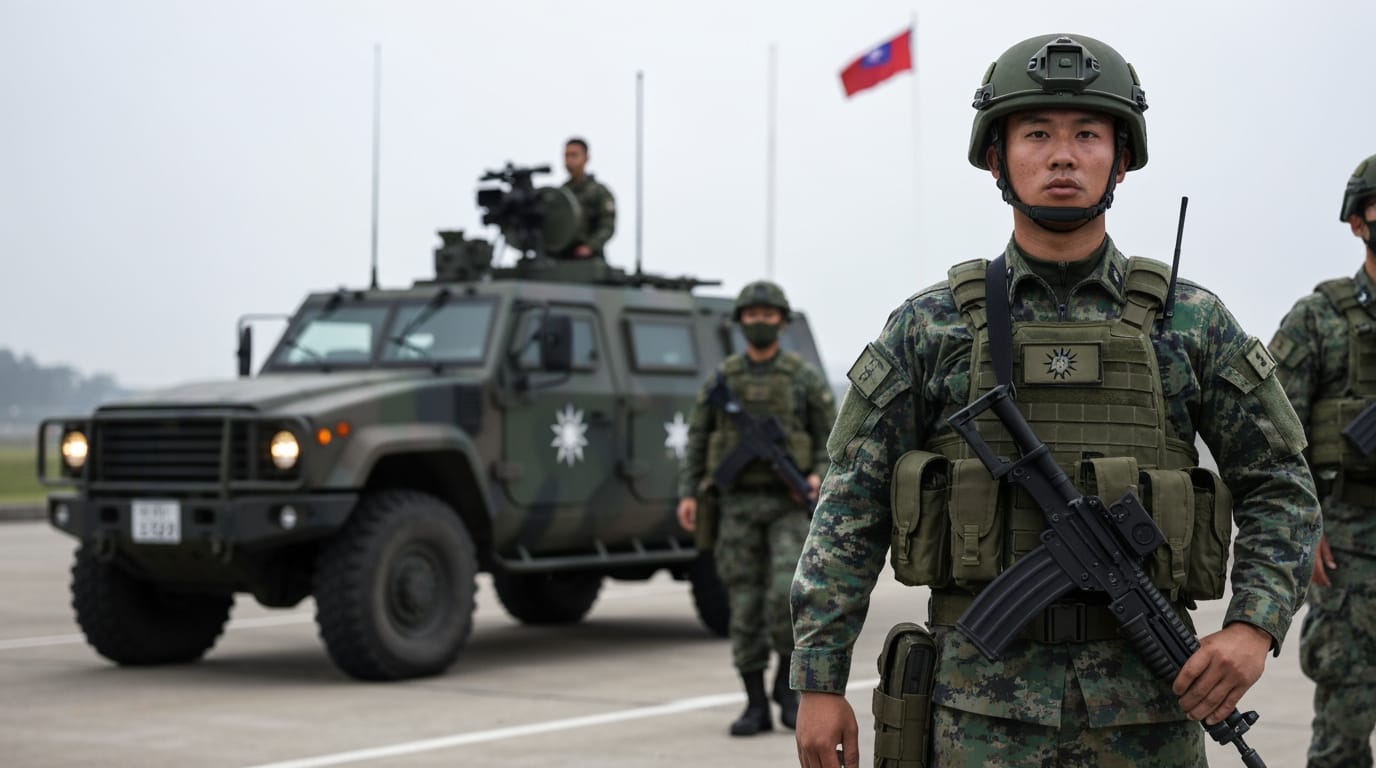
Taipei, Taiwan – Taiwan remains on heightened alert following the conclusion of China's "Justice Mission 2025" military drills, massive live-fire exercises that encircled the island and simulated a blockade. Beijing's powerful display of force, which spanned two days, prompted strong condemnation from Taipei and drew significant international concern, underscoring the persistent volatility in the Taiwan Strait. While Chinese naval vessels have begun to withdraw, Taiwan's emergency response centers remain operational, reflecting the enduring tension in one of the world's most critical geopolitical flashpoints.
Beijing's Show of Force: "Justice Mission 2025" Concludes
China's People's Liberation Army (PLA) concluded its "Justice Mission 2025" military drills around Taiwan on Tuesday, December 30, following two days of intense live-fire exercises involving a wide array of military assets. The drills, described as the most extensive war games by coverage area to date, deployed air, navy, and missile units, simulating a comprehensive blockade of the self-governed island's key ports and striking maritime targets.
Throughout the exercises, Taiwan's Ministry of National Defense detected significant Chinese military activity. On Tuesday morning alone, approximately 130 Chinese aircraft, 14 military ships, and eight official ships were observed operating near the island. Further reports indicated that on Wednesday, 77 Chinese military aircraft and 25 navy and coast guard vessels continued operations, with 35 military planes crossing the median line of the Taiwan Strait – an unofficial but historically respected buffer zone. Notable incursions included 90 PLA warplanes crossing the median line during the drills.
The exercises also involved live-fire rocket launches, with 27 rockets reportedly fired on the second day, 10 of which landed within Taiwan's 24-nautical mile contiguous zone, marking the closest Chinese live-fired armaments have come to the island. Destroyer, frigate, fighter, bomber, unmanned aerial vehicle, and long-range rocket units were deployed to the north, southwest, southeast, and east of Taiwan, establishing seven temporary "dangerous zones" that significantly impacted international air and sea traffic. More than 150 international and domestic flights were affected, leading to cancellations and diversions.
Beijing stated the drills served as a "stern warning" to "Taiwan independence" separatist forces and external interference. Chinese Defense Ministry spokesperson Zhang Xiaogang criticized the Lai administration for allegedly "pandering to external forces and pursuing independence," identifying this as the root cause of disrupting the status quo and escalating tensions. The exercises followed a record U.S. arms sale package to Taiwan and recent statements from Japan's Prime Minister, Sanae Takaichi, suggesting potential military involvement if China were to act against Taiwan.
Taiwan's Steadfast Defense and Public Resolve
In response to the unprecedented scale and proximity of the Chinese drills, Taiwan's armed forces were placed on high alert. President Lai Ching-te condemned the exercises as "highly provocative and reckless," calling Beijing the "biggest destroyer of peace" and stating that such conduct was "far from what would be expected of a responsible major power." However, he also emphasized Taiwan's commitment to acting responsibly, "neither escalating tensions nor provoking conflict."
Taiwanese forces actively monitored and responded to Chinese movements, deploying aircraft, naval ships, and coastal missile systems. In a demonstration of its preparedness, Taiwan's military conducted emergency combat readiness drills in New Taipei, including river blockade maneuvers at the mouth of the Tamsui River. This strategic location, only eight kilometers from Guandu Bridge and 22 kilometers from the Presidential Office, is considered a critical vulnerability, and the drills simulated obstructing enemy forces attempting to use the waterway to invade. Taiwan's Coast Guard also deployed 14 ships to monitor Chinese naval activity, employing a "one-on-one shadowing approach" to deter vessels.
Despite the grave nature of the exercises, many ordinary Taiwanese citizens reacted with a degree of stoicism, a sentiment reflecting decades of living under the shadow of potential conflict. Some residents noted that such drills have become a recurring feature of cross-strait relations, expressing a belief that direct military action would come at a significant cost to China. Nevertheless, the ongoing vigilance underscores the constant threat perceived by the island nation.
International Outcry and Regional Implications
The extensive Chinese military maneuvers triggered a wave of condemnation and calls for de-escalation from numerous international actors. The European Union, United Kingdom, Germany, France, Japan, South Korea, the Philippines, New Zealand, and Australia all voiced serious concerns. These nations reiterated the strategic importance of peace and stability in the Taiwan Strait for global security and prosperity.
The European External Action Service (EEAS), the EU's diplomatic arm, stated that China's actions "further increases cross-strait tensions and endangers international peace and stability," urging all sides to exercise restraint and resolve issues through dialogue. The United Kingdom, through its Foreign, Commonwealth & Development Office, explicitly stated it does not support "any unilateral attempts to change the status quo or any activity that risks destabilising it." Japan conveyed its "concerns" directly to China, advocating for a peaceful resolution through dialogue. Foreign Minister Lin Chia-lung expressed Taiwan's gratitude to its partners for their support and for highlighting China's "improper moves."
In stark contrast to the international consensus, U.S. President Donald Trump, when asked about the exercises, stated he was "not worried" and highlighted his "great relationship" with Chinese President Xi Jinping. This comment stood apart from the more cautious stance taken by other Western nations.
The Taiwan Strait is a vital global shipping lane, with an estimated $2.45 trillion USD in trade passing through it annually. The disruption caused by the drills, including flight cancellations and the designation of dangerous zones, highlighted the potential for severe economic repercussions from any escalation of tensions.
A Long Shadow: Historical Context and Future Uncertainties
The recent drills are the latest in a series of confrontations that have characterized relations across the Taiwan Strait since the Chinese Civil War in the mid-20th century. China views Taiwan as an integral part of its territory, to be reunified with the mainland, by force if necessary. Taiwan, officially the Republic of China, maintains that it is a sovereign, independent nation.
Past Taiwan Strait crises, such as those in the 1950s and the mid-1990s, involved military deployments and missile tests, often in response to perceived moves towards Taiwanese independence or increased U.S. engagement with Taiwan. The United States has historically played a complex role, acknowledging the "One China" policy while maintaining unofficial relations and providing defensive arms to Taiwan.
The scale and intensity of "Justice Mission 2025," coupled with Beijing's aggressive rhetoric, suggest a growing assertiveness from China. Analysts suggest that these drills serve multiple purposes: to deter Taiwan's perceived independence tendencies, to warn external powers like the U.S. and Japan against intervention, and to refine the PLA's capabilities for a potential future invasion or blockade. The focus on a simulated blockade demonstrates China's intent to develop methods of isolating the island should military action become an option.
Conclusion
As China formally concludes its large-scale military exercises around Taiwan, the immediate threat of direct confrontation may recede, but the underlying tensions in the Taiwan Strait remain as acute as ever. Taiwan's continued state of alert, coupled with international calls for de-escalation, underscores the precarious balance of power in the region. Beijing's "Justice Mission 2025" served as a potent reminder of its territorial claims and growing military might, forcing the world to once again confront the potential for conflict over the self-governed island. The incident reinforces the global community's focus on maintaining peace and stability in this economically and strategically vital waterway, even as the prospect of dialogue appears increasingly distant amidst escalating military posturing.


