Taiwan's President Defies Beijing, Vows Stronger Defense Amidst Rising Tensions
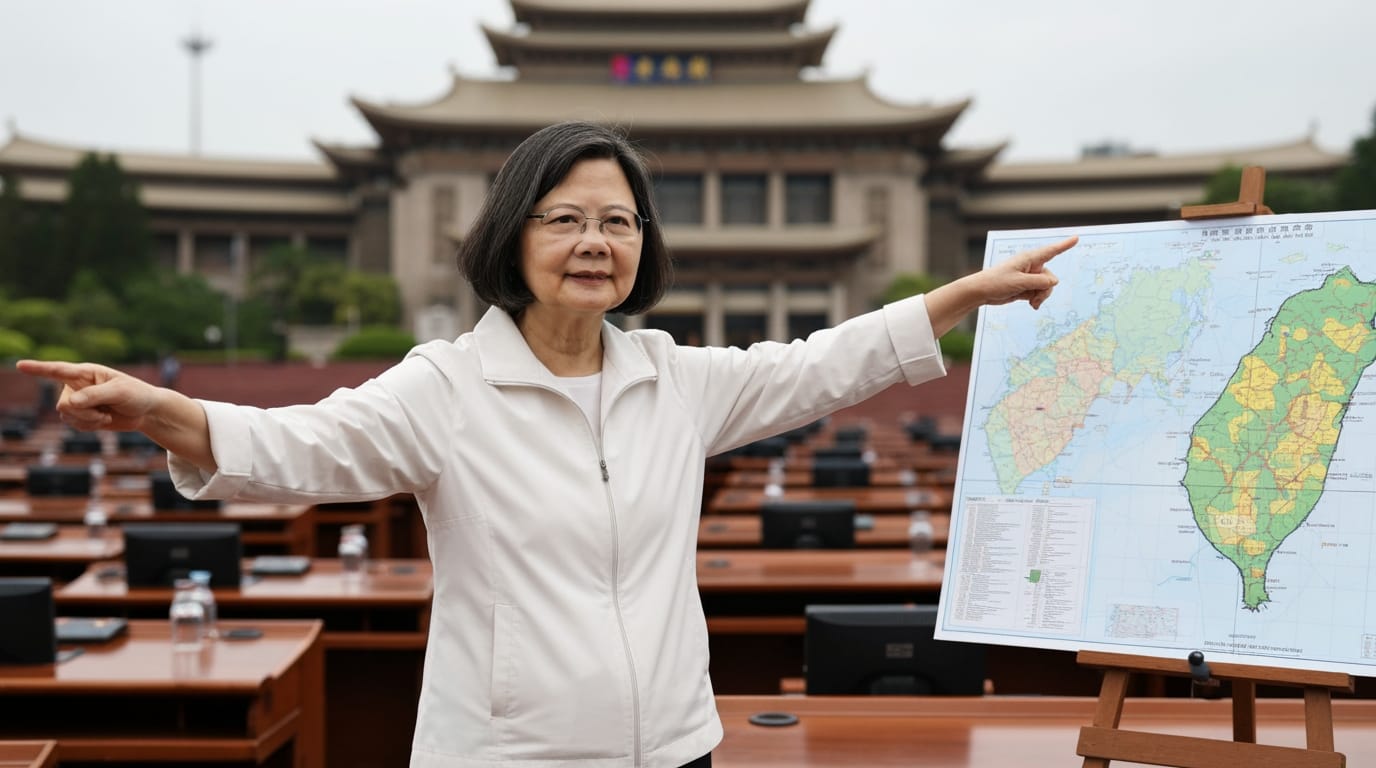
Taipei, Taiwan – In a resolute declaration that reverberated across the Taiwan Strait, Taiwan's newly inaugurated President Lai Ching-te has firmly rejected Beijing's "one country, two systems" proposal, pledging an unwavering commitment to safeguarding the island's freedom and democratic way of life. His statements, made shortly after assuming office, underscore a period of heightened regional tension and signal Taipei's determination to bolster its defense capabilities against increasing pressure from mainland China. This stance marks a continuation of Taiwan's policy of maintaining the status quo while simultaneously preparing for potential aggression.
President Lai's inauguration has been met with a sharp rebuke from Beijing, which views Taiwan as its own territory and has never renounced the use of force to bring the self-governing island under its control. The diplomatic and military maneuvers that followed Lai's swearing-in highlight the deepening chasm between Taipei and Beijing, with Taiwan emphasizing that its future must be decided by its own people, free from coercion. The international community, particularly the United States, continues to watch these developments closely, given the critical geopolitical importance of the Taiwan Strait.
Upholding Sovereignty Amidst Beijing's Demands
President Lai Ching-te has been unequivocal in his rejection of Beijing's "one country, two systems" framework, a model that offers limited autonomy under Chinese sovereignty and has been widely opposed in Taiwan. His inaugural address asserted that the Republic of China, Taiwan's formal name, is a "sovereign, independent, democratic country," and crucially, that the Republic of China and the People's Republic are "not subordinate to each other." This pronouncement directly challenges Beijing's claim of jurisdiction over the island and reinforces the prevailing consensus among Taiwan's populace that its sovereignty cannot be violated or annexed.
Lai's firm stance was immediately condemned by Beijing, which quickly labeled him a "separatist" and a "crisis maker." China's state media and officials described his inauguration speech as being full of "separatist context," signaling a harder line from Beijing during his presidential term. Despite Beijing's rebuffs, President Lai has repeatedly offered to engage in talks with China, emphasizing that Taiwan's people "love peace," but stressing that "peace must rely on strength." He underscored that "empty promises are not true peace," clearly indicating that Taiwan would not be swayed by mere rhetoric without a genuine commitment to dialogue and respect for its autonomy.
Beijing's Multi-faceted Coercion Campaign
Following President Lai's inauguration, Beijing swiftly escalated its pressure campaign against Taiwan. Immediately after his assumption of office, China launched two days of significant "war games" around the island, openly declaring them a "punishment" for Lai's inaugural address. These military exercises, involving fighter jets and naval vessels, are part of a broader strategy to intimidate Taiwan and demonstrate China's capability to annex the island. China's aggressive posture is not limited to military displays; it also employs what President Lai terms "non-traditional coercive measures."
These tactics include preventing Taiwan's participation in international bodies and events, imposing bans or heavy taxes on certain Taiwanese exports to China, and engaging in "grey zone" warfare. "Grey zone" tactics encompass actions like flying balloons over the island and deploying merchant ships and drones close to Taiwan's various islands, aiming to strain Taiwan's military resources and psychologically exhaust its population. China's national policy, according to Lai, is to annex Taiwan, and it utilizes a comprehensive array of methods to compel Taiwan to succumb without resorting to full-scale conflict. Despite these multifaceted pressures, President Lai has maintained that Taiwan "will not give in." He has also called China a "foreign hostile force" and pledged to crack down on espionage, including reviving martial law-era military courts to more swiftly punish those leaking national security secrets.
Fortifying the Island's Defenses
In response to the escalating threats, President Lai has made strengthening Taiwan's defense capabilities a cornerstone of his administration. His strategy is rooted in the belief that "avoiding war by preparing for war" is essential to achieve peace. Taiwan plans to significantly increase its defense spending, with goals reported to be 5% of its GDP by 2030 and 3% of GDP in the near term, a level not seen in over a decade. This financial commitment aims to fund the acquisition of advanced military hardware and enhance domestic defense production.
Taiwan is slated to receive U.S.-made M1A2T Abrams tanks to bolster its ground forces and recently received approval for a $360 million package of drones and missiles from the United States. While Taiwan relies heavily on the U.S. as its main international arms provider, Lai and his predecessor, Tsai Ing-wen, have prioritized boosting indigenous defense capabilities. The aim is to increase self-sufficiency in defense, ensuring Taiwan can produce a significant portion of its military needs. Taiwan's Defense Ministry has also outlined a security plan that emphasizes cooperation with the U.S. in reconnaissance, long-range precision strike capability, and military hardware, alongside efforts to improve the "interoperability" of the two countries' armed forces. Taiwan's military has also initiated "rapid-fire" exercises to practice mobilization in the event of a Chinese attack, further underscoring its commitment to readiness.
The International Dimension and U.S. Support
The United States plays a pivotal role in Taiwan's defense strategy. Bound by the Taiwan Relations Act, the U.S. is legally mandated to provide Taiwan with the means to defend itself, a commitment that consistently draws strong condemnation from Beijing. U.S. arms sales and security cooperation are considered "essential for maintaining peace in the Taiwan Strait" by President Lai. The Pentagon's Defense Security Cooperation Agency recently approved the sale of drones and missiles to Taiwan, a move Taiwan's defense ministry expressed gratitude for, particularly highlighting U.S. efforts to accelerate arms deliveries.
However, the dynamics of U.S.-China relations can introduce complexities. Concerns have arisen in Taiwan regarding the reliability of U.S. backing, particularly during high-level U.S.-China meetings. President Lai has firmly stated that Taiwan "will absolutely not be sacrificed or traded" as a bargaining chip in any deal between Washington and Beijing. He reiterated that long-term Taiwan-U.S. security cooperation and arms sales are based on law and are crucial for regional peace and stability. Maintaining peace and stability in the Taiwan Strait is viewed as a strong consensus and shared interest among Taiwan, the United States, and democratic nations globally.
A Path Forward with Determined Resolve
President Lai Ching-te's administration has clearly articulated Taiwan's resolve to navigate the complex geopolitical landscape with strength and dignity. His rejection of Beijing's demands and his pledges for a significantly reinforced defense signal a commitment to preserving Taiwan's democratic identity and way of life. By focusing on both military modernization and strategic partnerships, Taiwan aims to deter aggression and ensure its continued self-governance. While the path ahead is fraught with challenges posed by Beijing's persistent pressure and military posturing, Taiwan's leadership is demonstrating an unwavering determination to "maintain the status quo with dignity" and ensure that the island's future remains in the hands of its people. The delicate balance of peace through strength in the Taiwan Strait continues to be a central feature of Indo-Pacific security.


