Terrorism Charges Dismissed in UnitedHealthcare CEO Slaying, Murder Prosecution Continues
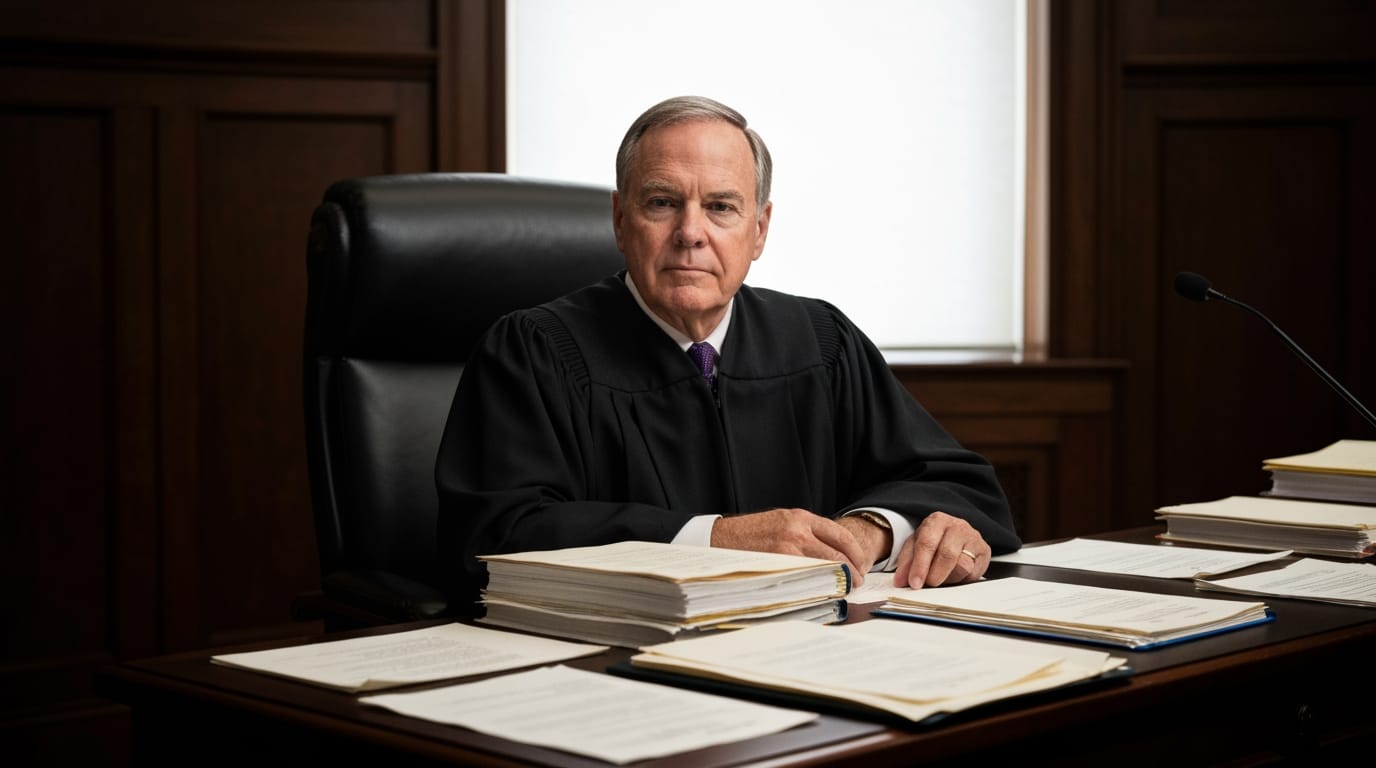
A New York state judge has significantly altered the legal landscape surrounding the killing of UnitedHealthcare CEO Brian Thompson, dismissing terrorism-related murder charges against Luigi Mangione. The ruling, issued by Judge Gregory Carro, narrows the prosecution's initial scope but ensures that Mangione will still face serious charges, including second-degree murder, in the high-profile case. This decision underscores the stringent legal definition of terrorism under state law, even in cases driven by ideological animus, and highlights the complexities of prosecuting politically motivated violence.
The Court's Precise Ruling and Rationale
In a crucial development this week, Judge Gregory Carro ruled that prosecutors lacked sufficient evidence to sustain two terrorism-related murder counts against Luigi Mangione. The dismissed charges included first-degree murder in furtherance of an act of terrorism and second-degree murder as a crime of terrorism. Judge Carro's written decision, made public during a state court appearance in Manhattan, specified that while Mangione expressed hostility toward UnitedHealthcare and the broader health care industry, there was no indication his actions aimed to "intimidate or coerce a civilian population," a key requirement under New York's terrorism statute.
The judge elaborated that the crime, while "heinous," was a "targeted and discrete killing of one person," distinguishing it from the broader goal of instilling widespread public fear or engaging in a campaign of violence typically associated with terrorism. This interpretation emphasizes the legal distinction between a murder potentially motivated by a specific grievance and one intended to serve a wider terrorist agenda. The court found no evidence of Mangione's desire to terrorize the public, inspire fear on a large scale, or conspire with organized terrorist groups.
The Context of a Shocking Assassination
The charges stem from the December 4, 2024, shooting of Brian Thompson, the CEO of UnitedHealthcare, outside the New York Hilton Midtown. Thompson was reportedly shot from behind as he arrived for an investor conference, an act described by U.S. Attorney General Pam Bondi as a "premeditated, cold-blooded assassination that shocked America". Luigi Mangione, a 27-year-old Ivy League graduate, was subsequently apprehended and pleaded not guilty to the initial charges, which included murder as an act of terrorism.
Investigators have suggested Mangione harbored significant animosity towards UnitedHealthcare and the health care industry at large, an animus acknowledged in Judge Carro's ruling. This perceived motive has been central to the prosecution's attempts to frame the killing as a terrorism offense. The shocking nature of the crime, targeting a prominent corporate executive in broad daylight, immediately drew national attention and ignited debates over the security of business leaders and the interpretation of ideologically driven violence.
Dual Prosecutions: State and Federal Pathways
Despite the dismissal of the terrorism charges in the state case, Luigi Mangione continues to face severe legal repercussions. The New York state court maintains charges of second-degree murder against him, along with other related counts, ensuring that he will still be tried for the intentional killing of Brian Thompson. If convicted of second-degree murder, Mangione faces a potential life sentence.
Adding another layer of complexity to the legal proceedings is a parallel federal prosecution. The U.S. Justice Department has brought separate charges against Mangione, explicitly seeking the death penalty. It is notable that federal prosecutors, unlike their state counterparts, opted not to pursue terrorism offenses, a point highlighted by Judge Carro in his decision. The federal indictment is understood to be based on allegations of stalking and premeditation leading to Thompson's death. Mangione's defense team had previously attempted to dismiss the state case entirely, arguing that the dual state and federal prosecutions constituted double jeopardy. However, Judge Carro rejected this argument, citing the "two sovereigns" doctrine, which permits separate prosecutions by distinct governmental entities for the same act if different laws are violated.
Legal Definitions and Future Implications
The judge's decision to strike down the terrorism charges provides crucial insight into the legal hurdles of applying such labels, especially in cases that do not involve traditional terror organizations or widespread public intimidation. New York state law requires specific intent to "intimidate or coerce a civilian population," or to "influence the policy of a unit of government by intimidation or coercion, or affect the conduct of a unit of government by murder, assassination or kidnapping" for an act to be classified as terrorism. Judge Carro's ruling suggests that merely expressing hostility or harboring an ideology, even if it motivates a violent act, does not automatically fulfill these stringent legal criteria.
The decision by Judge Carro will likely influence future prosecutorial strategies in cases involving ideologically motivated crimes. It sets a precedent that while the underlying motives for a crime may be extreme, the legal definition of terrorism requires a demonstrated intent to achieve a broader societal impact beyond a singular act of violence. Pretrial hearings for the state case are scheduled for December 1, shortly before Mangione's next federal court appearance, indicating a busy period ahead for both legal teams.
In conclusion, the dismissal of terrorism charges in the state case against Luigi Mangione marks a pivotal moment, re-centering the legal focus squarely on the intentional murder of Brian Thompson. While the ruling narrows the state's legal avenues, it does not diminish the gravity of the remaining second-degree murder charge, nor does it impact the separate federal prosecution seeking the death penalty. The legal journey for Mangione is far from over, with the dual court systems poised to pursue justice for the shocking death of a prominent business leader, albeit under distinct legal frameworks.


