Thailand's Economic Tightrope: Can New Government Deliver on Ambitious Growth Promises?
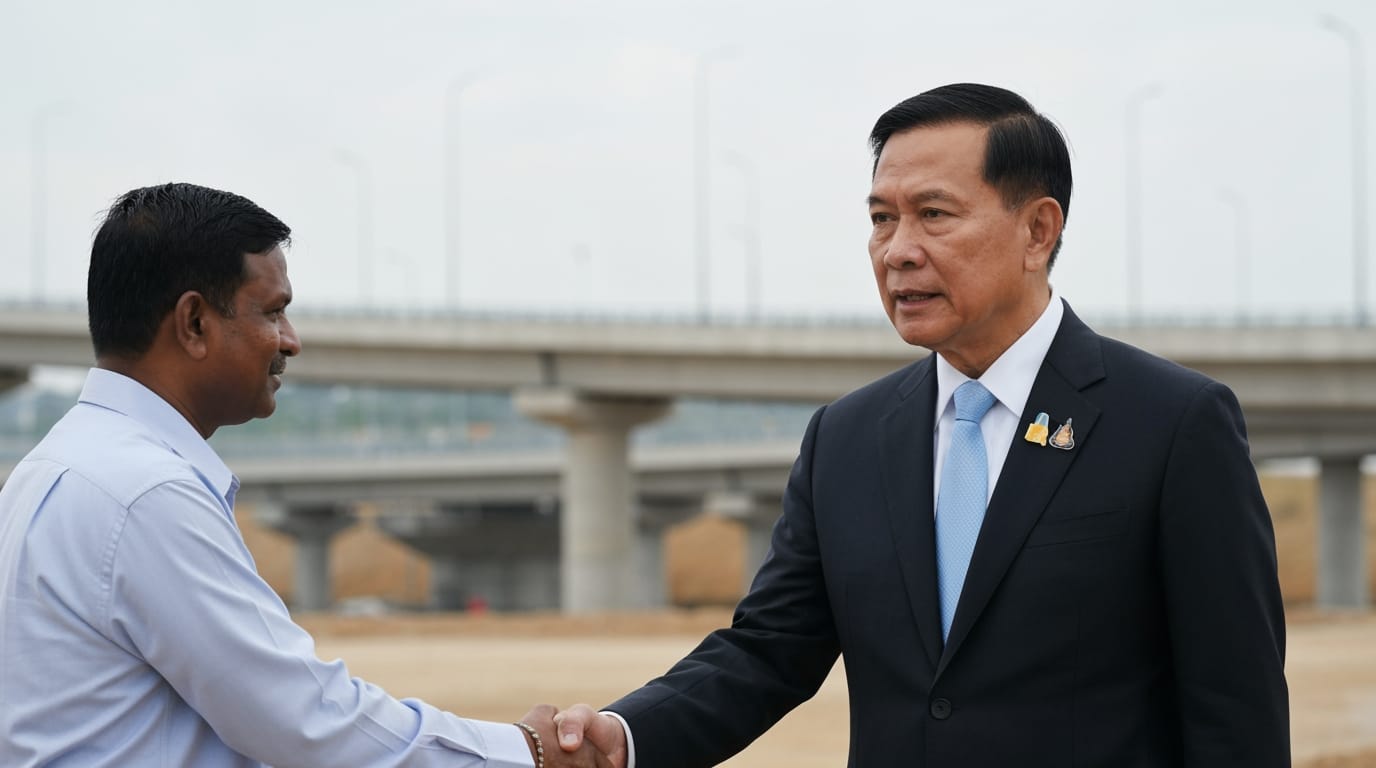
BANGKOK — Thailand’s economy faces a critical juncture as the new government, led by Prime Minister Anutin Charnvirakul, navigates persistent challenges and rolls out ambitious policies aimed at stimulating growth. With a backdrop of sluggish performance and a complex global economic landscape, the administration's ability to revitalize Southeast Asia's second-largest economy hangs in the balance. The path forward demands a delicate equilibrium between immediate stimulus and long-term structural reforms to overcome deep-seated issues and propel the nation toward sustainable prosperity.
A Lagging Economy Seeks Momentum
For several years, Thailand's economic growth has trailed behind its regional peers, prompting a concerted effort by successive administrations to inject vitality into key sectors. In 2024, the economy expanded by a weaker-than-expected 2.5%, an improvement from the revised 2% growth in 2023, but still below initial forecasts and lagging regional averages. Projections for 2025 anticipate a strengthening to 3.3%, with the National Economic and Social Development Council (NESDC) raising its 2026 outlook to between 1.5% and 2.5%.
The economy is grappling with a confluence of factors, including subdued domestic demand, significant household debt (reaching 90% of GDP), and the long-term implications of an aging population. The manufacturing sector has been particularly hard hit by an influx of cheaper imported goods, exacerbating trade policy challenges. While tourism remains a crucial pillar, contributing significantly to recovery, the sector has yet to fully rebound to pre-pandemic levels, notably with a reduced number of Chinese visitors. The Bank of Thailand (BOT) has maintained its policy rate at 2.5%, resisting calls for cuts amid concerns about financial stability and the potential to further inflate household debt. Moreover, political transitions and delays in government budget approvals have historically created periods of economic uncertainty, affecting investment and public spending.
The Digital Wallet: A Bold Stimulus Attempt
At the heart of the government's strategy is the highly anticipated "digital wallet" scheme, a flagship policy initiated by the Pheu Thai party under former Prime Minister Srettha Thavisin and now overseen by the current administration. This program aims to distribute 10,000 baht (approximately $275 USD) to an estimated 45 to 50 million eligible Thai citizens. The total cost is projected to be between 450 billion and 500 billion baht, designed to inject capital directly into the economy, stimulate local consumption, and promote digital literacy.
Eligibility for the handout is broad, encompassing Thai citizens aged 16 or older with an annual income below 840,000 baht and less than 500,000 baht in their bank accounts as of March 31, 2025. To maximize its local impact, the funds must be spent within six months of receipt and are restricted to registered small businesses within the recipient's domicile district. Prohibited purchases include alcohol, tobacco, and online goods, ensuring the scheme directly benefits community-level commerce. Implementation primarily occurs through the Thang Rath app, with registration phases rolled out starting in late 2024. The funding mechanism for this massive handout has evolved, shifting from initial proposals for extensive borrowing to a mix of existing budget adjustments and contributions from the Bank for Agriculture and Agricultural Cooperatives (BAAC).
Broader Economic Transformation: Wages, Infrastructure, and Green Ambitions
Beyond the immediate stimulus of the digital wallet, the government is pursuing a multi-faceted approach to foster long-term growth and competitiveness. A significant component involves adjustments to the minimum wage, which saw phased increases beginning January 1, 2025, ranging from 337 to 400 baht per day across different provinces. By July 1, 2025, Bangkok, Category 2-4 hotels, and licensed entertainment venues nationwide are expected to implement a unified 400 baht per day minimum wage. This measure is intended to boost worker welfare, reduce income inequality, and stimulate consumer spending, particularly within labor-intensive sectors like tourism and hospitality.
Infrastructure development is another cornerstone, with plans for major projects such as a north-south railway system and a land bridge connecting the Andaman Sea and the Gulf of Thailand. These initiatives aim to enhance trade flows, improve connectivity, and attract investment. The government is also prioritizing the "green" and "digital" economies, seeking to cultivate future-proof industries. This includes promoting electric vehicle (EV) adoption through incentives and policies like the EV3.5 scheme, targeting 30% of total automotive output from EVs by 2030. Efforts extend to smart electronics, semiconductors, artificial intelligence (AI), and biotechnology, alongside a commitment to a green energy transition and achieving carbon neutrality by 2050. Furthermore, there is a renewed focus on enhancing the "ease of doing business" through regulatory modernization and streamlined public services, alongside strategies to shift Thailand's tourism focus from volume to higher value experiences.
Navigating Scrutiny and Structural Headwinds
While the government's economic agenda is ambitious, it faces considerable scrutiny and inherent challenges. The digital wallet scheme, despite its populist appeal, has drawn criticism from economists and international bodies like the World Bank. Concerns center on its substantial cost, potential inflationary pressures, and the long-term impact on the nation's fiscal health, with public debt projected to rise significantly. Critics argue that such broad-based handouts offer only short-term relief without addressing the fundamental structural issues impeding sustained economic expansion.
Similarly, the minimum wage increases, while beneficial for workers, have generated apprehension among business communities, particularly small and medium-sized enterprises (SMEs). Concerns include heightened operational costs, potential job losses, and a perceived erosion of competitiveness, especially if these costs cannot be absorbed or passed on.
Economists consistently emphasize that long-term solutions require bold structural reforms that move beyond temporary stimulus measures. Thailand's economy suffers from declining industrial competitiveness, exacerbated by an aging workforce, and an often overvalued currency. Addressing these deep-seated issues necessitates systemic changes in agriculture, energy, and governance to unlock higher growth potential. Compounding these domestic challenges are unpredictable global headwinds, including ongoing trade tensions between major economies and geopolitical instability that can disrupt supply chains and elevate energy costs, as seen with recent oil price surges following Middle East conflicts.
Conclusion: A Path of Promise and Peril
Thailand's new government stands at a critical juncture, armed with a comprehensive set of policies designed to invigorate a sluggish economy. The digital wallet scheme and minimum wage hikes represent significant efforts to boost domestic consumption and improve livelihoods, while investments in infrastructure and green and digital technologies aim to modernize the economic landscape. However, the success of these initiatives hinges on the government's ability to deftly manage their implementation, mitigate potential negative impacts such as inflationary pressures and fiscal strain, and convince a skeptical public and expert community of their long-term efficacy.
The real test for Prime Minister Anutin Charnvirakul's administration will be its capacity to reconcile immediate stimulus needs with the urgent requirement for fundamental structural reforms. Overcoming the persistent challenges of high household debt, an aging population, and a changing global economic order demands not just bold promises, but sustained strategic action and a commitment to policies that foster sustainable, inclusive growth beyond the electoral cycle. The path ahead is fraught with both promise and peril, and Thailand's economic future will largely depend on its government's ability to navigate this complex terrain.


