The Enduring Echo: How Dominican Feminists Illuminated the Global Fight Against Gender-Based Violence
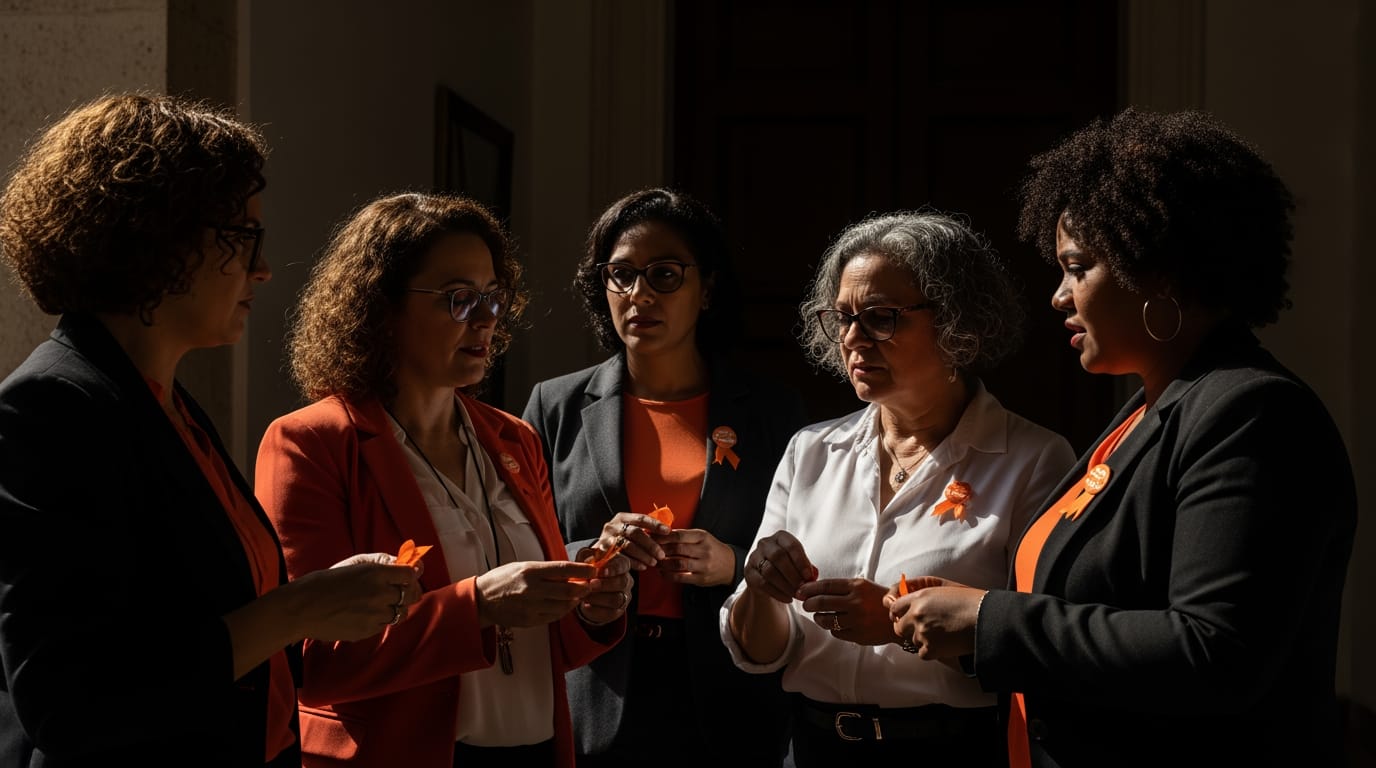
GENEVA, SWITZERLAND – Each year, as November draws to a close, a vibrant wave of orange sweeps across the globe. From iconic landmarks bathed in amber light to communities rallying in solidarity, "Orange Days" serve as a powerful international call to action against gender-based violence. This annual campaign, culminating in the 16 Days of Activism, is not merely a symbolic gesture; it is deeply rooted in the harrowing sacrifice of three Dominican sisters whose courageous resistance against tyranny forged an indelible link between their fate and the universal struggle for women's safety and human rights. Their story, championed by Dominican feminists, stands as the poignant origin of a global movement.
The Global Call to "Orange the World"
The "Orange Days" campaign is primarily anchored on November 25th, designated as the International Day for the Elimination of Violence against Women. This day initiates the "16 Days of Activism Against Gender-Based Violence," a period extending until December 10th, Human Rights Day, emphasizing that violence against women is a profound violation of human rights. The United Nations Secretary-General's UNiTE campaign, launched in 2008, adopted orange as its signature color, symbolizing a brighter future free from violence against women and girls. Beyond the annual 16-day focus, the UNiTE campaign also advocates for the 25th of every month to be observed as an "Orange Day," aimed at sustaining global momentum and ongoing awareness. This consistent emphasis underscores the pervasive nature of gender-based violence, which impacts one in three women globally, often resulting in severe physical, psychological, and sexual harm. The campaign calls on individuals, governments, civil society, and the private sector to unite in preventing and eliminating this global pandemic.
A Nation's Tragedy, A Global Catalyst: The Mirabal Sisters
The profound inspiration for the International Day for the Elimination of Violence against Women stems directly from the brutal assassination of Patria, Minerva, and María Teresa Mirabal in the Dominican Republic. On November 25, 1960, these three sisters, known by their code name "Las Mariposas" (The Butterflies), were ambushed and murdered by secret police under the orders of then-dictator Rafael Trujillo. Their bodies, along with their driver's, were subsequently thrown into a ravine in an attempt to stage an accident, a deceit quickly exposed by the evident signs of violence.
The Mirabal sisters were not merely victims; they were fearless and outspoken political activists who actively opposed the oppressive Trujillo regime, which had ruled the Dominican Republic for decades. Born into a middle-class farming family, they organized alongside their husbands, becoming potent symbols of resistance against a dictatorship notorious for its cruelty and human rights abuses. Their unwavering opposition, even in the face of repeated arrests and harassment, made them potent figures of hope and defiance for many Dominicans. Their assassination, intended to silence dissent, instead ignited further outrage both within the Dominican Republic and internationally, further galvanizing opposition to Trujillo's rule, which ended with his own assassination a few months later. The Mirabal sisters' sacrifice tragically highlighted that violence against women is not only a personal tragedy but also a deeply political issue, often employed as a tool of repression and control.
From Caribbean Shores to International Recognition
The memory of the Mirabal sisters and the injustice of their deaths became a rallying cry for women's activists across Latin America and the Caribbean. It was at the first Latin American-Caribbean Feminist Encuentro (meeting) in Bogotá, Colombia, in 1981, that activists formally proposed November 25th as a day of remembrance against violence against women. This grassroots initiative gained significant traction over the following years, driven by feminist movements across the region. The United Nations officially recognized November 25th as the International Day for the Elimination of Violence against Women in 1999, adopting the date as a tribute to the Mirabal sisters and their ultimate sacrifice.
This formal recognition by the UN elevated the sisters' story from a regional tragedy to a global symbol, drawing international attention to the pervasive issue of gender-based violence and the urgent need for its eradication. The subsequent establishment of the "Orange Days" and the "16 Days of Activism" campaigns built upon this foundation, using the Mirabal sisters' legacy to inspire concrete actions and policy changes worldwide.
The Enduring Legacy of Dominican Feminism
The Mirabal sisters' story, while a pivotal moment, is part of a broader and complex history of feminist activism in the Dominican Republic. Dominican women have consistently challenged societal norms and political repression, striving for equality and justice. As early as 1931, the Acción Feminista Dominicana (AFD) was founded by Abigail Mejia, marking the country's first organized women's movement. Initially focused on achieving legal equality and women's suffrage, the AFD unfortunately allied itself with the Trujillo dictatorship. This alliance led to a "rightward shift" in Dominican feminism during the 1930s and 1940s, with elite, often light-skinned, activists aligning with Trujillo's political agenda, where the term "feminist" even became synonymous with "Trujillista."
However, the spirit of resistance represented by the Mirabal sisters illustrates a different, more radical current within Dominican women's activism. Beyond the Trujillo era, Dominican feminists have continued to fight against entrenched machismo and structural inequalities. Contemporary movements actively advocate for critical issues such as reproductive rights, including the decriminalization of abortion in specific cases (known as "Las Tres Causales"), and comprehensive laws against gender violence. Figures like Minerva Bernardino, a Dominican diplomat, also played a crucial role on the global stage, contributing to the drafting of the UN Charter and advocating for gender-inclusive language that enshrined the "dignity and worth of a human person." These ongoing struggles highlight the resilience and determination of Dominican women to dismantle systems of oppression and to secure fundamental rights.
A Future Free from Violence
The color orange, chosen to represent a future free from violence, is a visual beacon of this global commitment. It calls to mind the optimism and determination necessary to confront gender-based violence in all its forms, whether domestic abuse, sexual violence, human trafficking, or femicide. Statistics continually underscore the urgency of these efforts, with women disproportionately affected by various forms of violence. The campaigns encourage communities to participate actively – by wearing orange, hosting awareness events, and advocating for policy changes – because collective action is essential to shift mindsets and create safer environments for women and girls everywhere.
The legacy of the Mirabal sisters, championed by generations of Dominican feminists, remains a profound moral compass for the global movement to end violence against women. Their courage in the face of unspeakable brutality galvanized a universal recognition that the struggle for women's rights is inseparable from the pursuit of justice and freedom for all. The "Orange Days" are thus not merely a commemoration of past suffering, but a continuous, vibrant commitment to a future where no woman lives in fear. The persistent and unwavering activism of Dominican feminists has ensured that the memory of "Las Mariposas" continues to inspire action, transforming a national tragedy into a global emblem of resistance and hope.