The Enduring Reach: Britain's Global Military Footprint, From Cyprus's Sovereign Bases to Arctic Strategic Debates
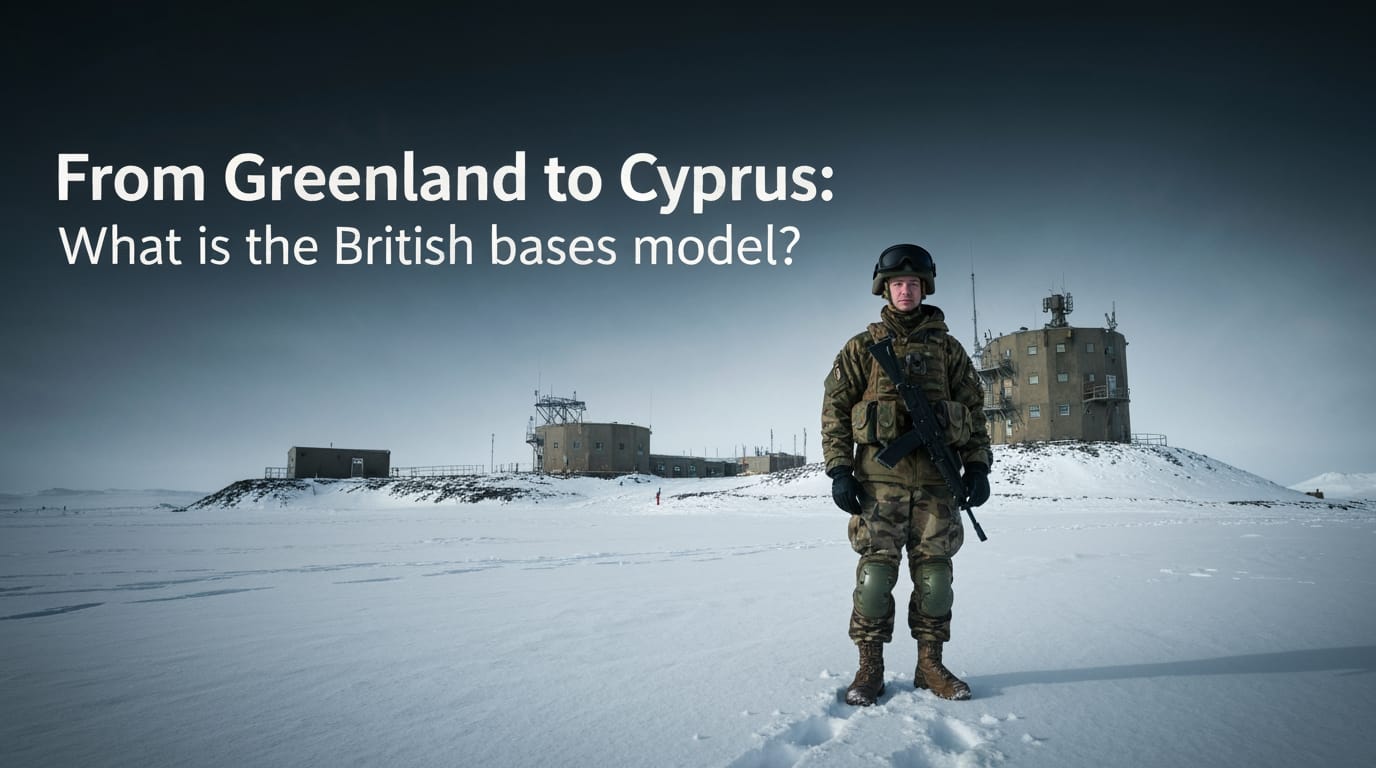
The United Kingdom maintains a sophisticated and geographically dispersed network of military installations globally, a testament to its enduring strategic interests and its role in international security. At the heart of this enduring presence lies a distinctive model of sovereign military bases, perhaps best exemplified by the British Sovereign Base Areas (SBAs) on Cyprus. This unique framework has recently garnered international attention as a potential template for other nations seeking strategic footholds, notably in discussions surrounding a proposed United States military presence in Greenland. From the Mediterranean to the High North, understanding this complex web of influence reveals the evolving nature of military projection and geopolitical strategy.
The Cyprus Model: A Legacy of Sovereignty and Strategic Depth
The British Sovereign Base Areas of Akrotiri and Dhekelia in Cyprus represent a unique arrangement, born from the island's independence in 1960. These two distinct territories, encompassing approximately 98 square miles, remained under full British sovereignty following the Treaty of Establishment. Unlike typical foreign military bases established via agreements or leases, the SBAs are legally British-owned territories embedded within the Republic of Cyprus. This status grants the UK direct and undisputed control over these vital strategic assets.
The primary purpose of the Cypriot SBAs is unequivocally military. They provide a permanent British military presence at a strategically crucial juncture in the Eastern Mediterranean, enabling the projection of power across a volatile region. Royal Air Force Akrotiri, one of the main installations, serves as an essential staging post for military aircraft and a critical hub for communications facilities, linking the UK to its global operations. The bases also offer invaluable training grounds with consistent weather conditions and challenging terrain, crucial for maintaining operational readiness. Governance of these areas falls under the Sovereign Base Area Administration, which reports directly to the UK Ministry of Defence, distinct from the Foreign and Commonwealth Office, underscoring their purely military mandate. Despite claiming full sovereign rights, the UK operates under a 1960 declaration that limits the development of these areas to military purposes, prohibiting the establishment of "colonies" or civilian commercial enterprises not directly linked to military requirements. This aspect of the model, while granting significant military autonomy, also introduces complexities, particularly concerning the civilian populations residing within these sovereign territories.
Beyond Cyprus: A Global Web of Influence
While Cyprus offers the most distinct example of direct British sovereignty over military territory abroad, it is but one component of a far broader and more intricate global defense network. A 2020 investigative report revealed that the UK maintains a permanent military presence at approximately 145 sites across 42 countries and territories worldwide. This extensive footprint positions the UK as possessing the second-largest global military network, trailing only the United States.
This vast network is composed of various types of presences, including 60 facilities directly managed by the British Armed Forces and another 85 where the UK maintains a significant presence through allied cooperation. Key permanent operating bases are strategically located to project power and safeguard interests across critical regions. These include British Forces Gibraltar, safeguarding the entrance to the Mediterranean; British Forces South Atlantic Islands, centered at the Mount Pleasant Complex in the Falkland Islands, which demonstrates sovereignty and supports operations in the South Atlantic; and British Forces British Indian Ocean Territory, notably Diego Garcia, a joint UK/US base vital for operations across the Indian Ocean and beyond.
Further East, the UK maintains garrisons in Brunei and a naval logistics base in Singapore, strategically positioned near vital shipping lanes like the Malacca Strait, critical for commerce and trade. In the Middle East, a region of enduring strategic importance, the UK has a significant presence, including facilities in Oman and Bahrain, supporting maritime security and joint exercises. These varied overseas installations serve multiple purposes: facilitating expeditionary warfare, ensuring a persistent forward presence for deterrence, enabling rapid deployment capabilities, providing crucial logistical support, and offering diverse training environments for British forces. The concept of "lily pads"—sites providing easy access for British Armed Forces when needed—underscores a flexible and adaptive approach to global military projection.
The Arctic Nexus: Greenland and the "Cyprus Model" Debate
The "Cyprus model" recently re-emerged in international discourse, not in relation to British expansion, but as a potential framework for a proposed United States military presence in Greenland. Recent reports indicated discussions between US President Donald Trump and NATO Secretary General Mark Rutte in Davos regarding a controversial framework that could see the US establish base zones in Greenland, potentially designated as American territory, similar to the UK's sovereign bases in Cyprus. Proponents reportedly envisioned these areas allowing US military operations, intelligence activities, and even access to rare earth minerals without Danish approval.
This proposition, however, faced immediate skepticism and outright rejection. Danish Prime Minister Mette Frederiksen affirmed that while security, investments, and economic matters could be discussed, sovereignty over Greenland was "not up for discussion." Critics warned that such an arrangement, if implemented, would amount to "sovereignty by stealth" and could set a dangerous precedent, especially given strong opposition from Greenlanders to any transfer of sovereignty. Denmark and Greenland possess legal mechanisms to constrain US ambitions, insisting on "rights of use" rather than sovereign control. Historically, while the US established significant military facilities in Greenland during World War II and has maintained a defense role since 1951, Greenland remains an autonomous territory of Denmark, with its defense falling under the Kingdom of Denmark. The UK, for its part, has explicitly downplayed suggestions of deploying its Joint Expeditionary Force to Greenland, emphasizing that the island's security is already guaranteed through NATO. The presence of a British helicopter base in Norway, "Clockwork," deep in the Arctic Circle, underlines the UK's broader interest and training capabilities in the High North, but distinct from a sovereign territorial claim.
Evolution and Adaptation in a Changing World
The British bases model, particularly its global reach, reflects a continuous adaptation to evolving geopolitical landscapes. The transition from a vast colonial empire to a modern global power has reshaped the nature and purpose of its overseas military presence. Historically, these bases were vital arteries of imperial control. Today, they serve as critical enablers for rapid response, intelligence gathering, training partnerships, and multilateral operations.
The shift towards a more agile and interconnected global defense posture is evident. The emphasis is less on static, large garrisons and more on flexible "lily pad" arrangements that allow for a responsive and effective forward presence. However, this model is not without its challenges. The costs associated with maintaining such a widespread network, coupled with political sensitivities in host nations, particularly those with complex colonial histories, remain ongoing considerations. Debates persist regarding the extent of sovereignty in areas like Cyprus and the justification for certain presences in countries with human rights concerns. The strategic review continuously assesses how these bases contribute to national security and global stability in an increasingly complex and contested world.
In conclusion, the British bases model, anchored by the unique sovereign territories in Cyprus and extending across a diverse array of global installations, remains a fundamental pillar of the UK's defense and foreign policy. While the conceptual "Cyprus model" for Greenland faced political headwinds, it highlighted the enduring relevance of established, directly controlled military outposts. This extensive network provides the UK with significant strategic advantages, enabling it to project influence, respond to threats, and uphold international commitments across a vast geographical expanse, from the vital shipping lanes of the Mediterranean and Indian Ocean to the increasingly strategic High North. Its future will undoubtedly be shaped by geopolitical shifts, technological advancements, and ongoing diplomatic engagements, yet its foundational principles of strategic positioning and agile power projection are likely to endure.


