The Nuclear Brink: Last US-Russia Arms Treaty Expires, Ushering in Era of Uncertainty
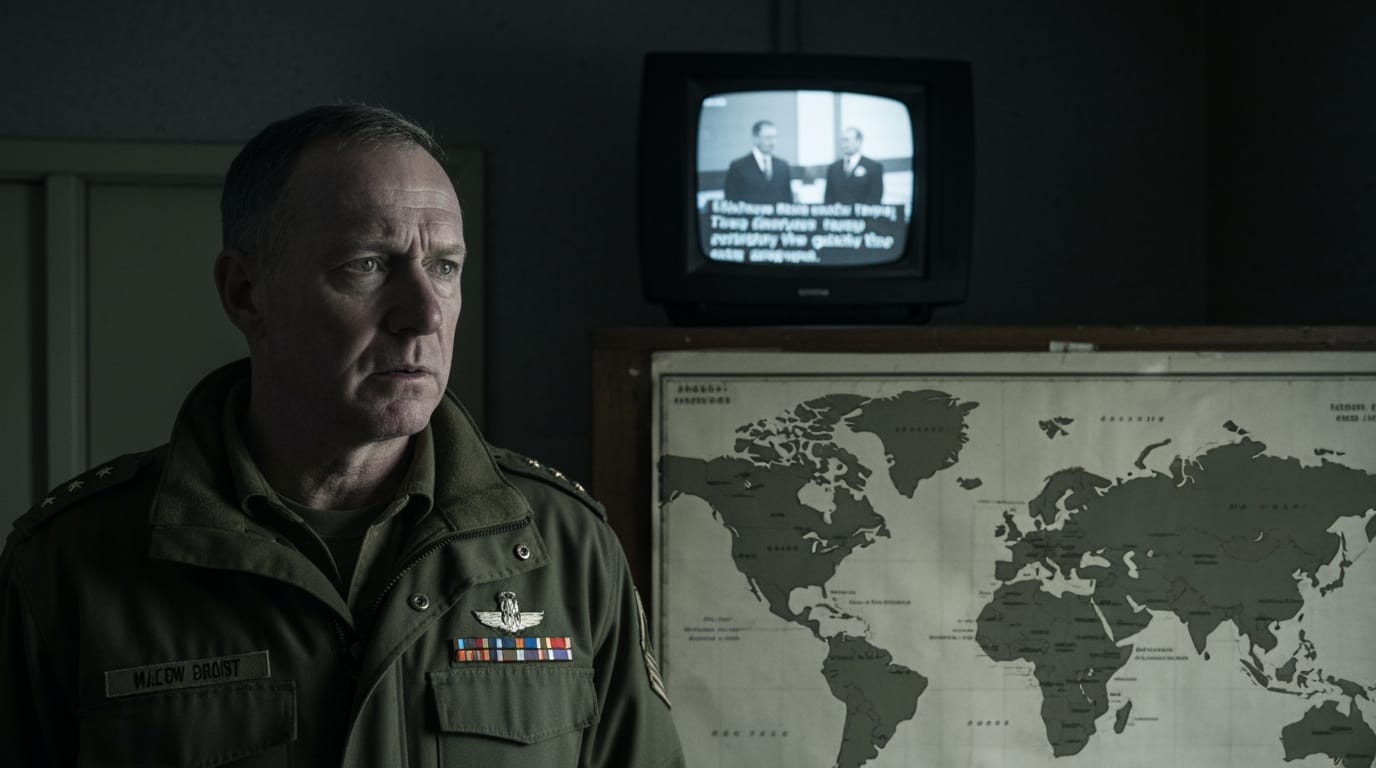
WASHINGTON D.C. – February 5, 2026 – The world stands at a critical juncture in nuclear arms control today as the New Strategic Arms Reduction Treaty (New START), the final remaining accord limiting the strategic nuclear arsenals of the United United States and Russia, officially expired. This watershed moment, marking the first time since 1972 that no verifiable agreement places limits on the world's two largest nuclear powers, has ignited widespread fears of an unbridled arms race and a perilous decline in global strategic stability. The expiration casts a long shadow over international security, eroding decades of diplomatic efforts to prevent nuclear proliferation and reduce the risk of catastrophic conflict.
The New START Treaty, signed in Prague in April 2010 by then-Presidents Barack Obama and Dmitry Medvedev, was a cornerstone of nuclear stability between Washington and Moscow, nations that collectively possess approximately 90% of the world's nuclear weapons. It mandated strict limits on deployed strategic nuclear warheads to 1,550 for each side, with a cap of 700 deployed intercontinental ballistic missiles (ICBMs), submarine-launched ballistic missiles (SLBMs), and heavy bombers. Crucially, the treaty also established an intricate and robust verification regime, involving on-site inspections, notifications, and biannual data exchanges, which provided unprecedented transparency into each nation's nuclear capabilities. This framework was instrumental in fostering predictability, building trust, and reducing the potential for miscalculation, proving that even fierce geopolitical rivals could find common ground on existential threats. Its extension for five years in early 2021 by Presidents Joe Biden and Vladimir Putin until today, February 5, 2026, underscored its perceived value, even amidst deteriorating relations.
However, the treaty, designed for a single five-year extension, found itself increasingly strained by escalating geopolitical tensions, particularly in the wake of Russia's full-scale invasion of Ukraine. In February 2023, citing "hostile actions" by the United States, Russia announced it would suspend its participation in New START, rejecting on-site inspections and data exchanges. This move effectively dismantled the treaty's vital verification mechanisms, although Moscow stated it would continue to observe the numerical limits. Washington, in response, assessed Russia to be in non-compliance and subsequently announced it would no longer share some information required by the treaty. While both sides have, by most open-source estimates, largely maintained the numerical limits, the absence of verification has severely degraded transparency and mutual confidence.
Adding another layer of complexity, the United States has increasingly voiced a desire to include China in any future arms control agreements, arguing that Beijing's rapidly expanding nuclear arsenal necessitates its inclusion. China, however, has consistently resisted such calls, maintaining that its nuclear stockpile remains significantly smaller than those of the US and Russia and that it is unfair to demand its participation in reductions until the two largest nuclear powers further reduce their arsenals. This diplomatic impasse has been exacerbated by the former Trump administration's expressed interest in a "better" and more comprehensive agreement that includes China, a stance that some analysts argue risks losing the existing bilateral guardrails. In September 2025, Russia did propose voluntarily abiding by New START limits for an additional year if the US reciprocated, but Washington has not officially accepted this offer, allowing the treaty to lapse fully.
The expiration of New START leaves an unprecedented void in global strategic stability. For the first time in over five decades, there are no legally binding, verifiable constraints on the strategic nuclear forces of the United States and Russia. Experts across the international community have warned that this lack of oversight could lead to a dangerous and costly arms race, foster greater unpredictability, and heighten the risks of miscalculation and accidental escalation, particularly in an already volatile global environment. Without the transparency provided by the treaty, both nations may default to "worst-case assumptions" about the other's capabilities, creating pressure to expand their own arsenals to ensure deterrence. This unchecked build-up could also encourage China to further accelerate its nuclear program, creating a potential "three-horse nuclear arms race." Beyond the direct US-Russia dynamic, the absence of New START significantly undermines the credibility and effectiveness of the Nuclear Non-Proliferation Treaty (NPT), which hinges on nuclear-weapon states making progress toward disarmament.
The path forward appears fraught with challenges. The current geopolitical landscape, marked by deep mistrust and a breakdown in communication channels between major powers, makes the negotiation of a new, comprehensive arms control treaty extraordinarily difficult. While some officials have expressed openness to future dialogue, no substantive negotiations on a new framework are currently underway. The immediate consequence is a world grappling with increased dangers for strategic stability and nuclear proliferation, prompting calls for renewed diplomatic efforts and a reimagining of arms control in a multipolar nuclear age. As the last major safeguard against an unchecked nuclear build-up vanishes, the international community faces the urgent task of finding new ways to manage the risks posed by these most destructive weapons.