U.S. Forges New Critical Minerals Bloc to Counter Global Dependencies
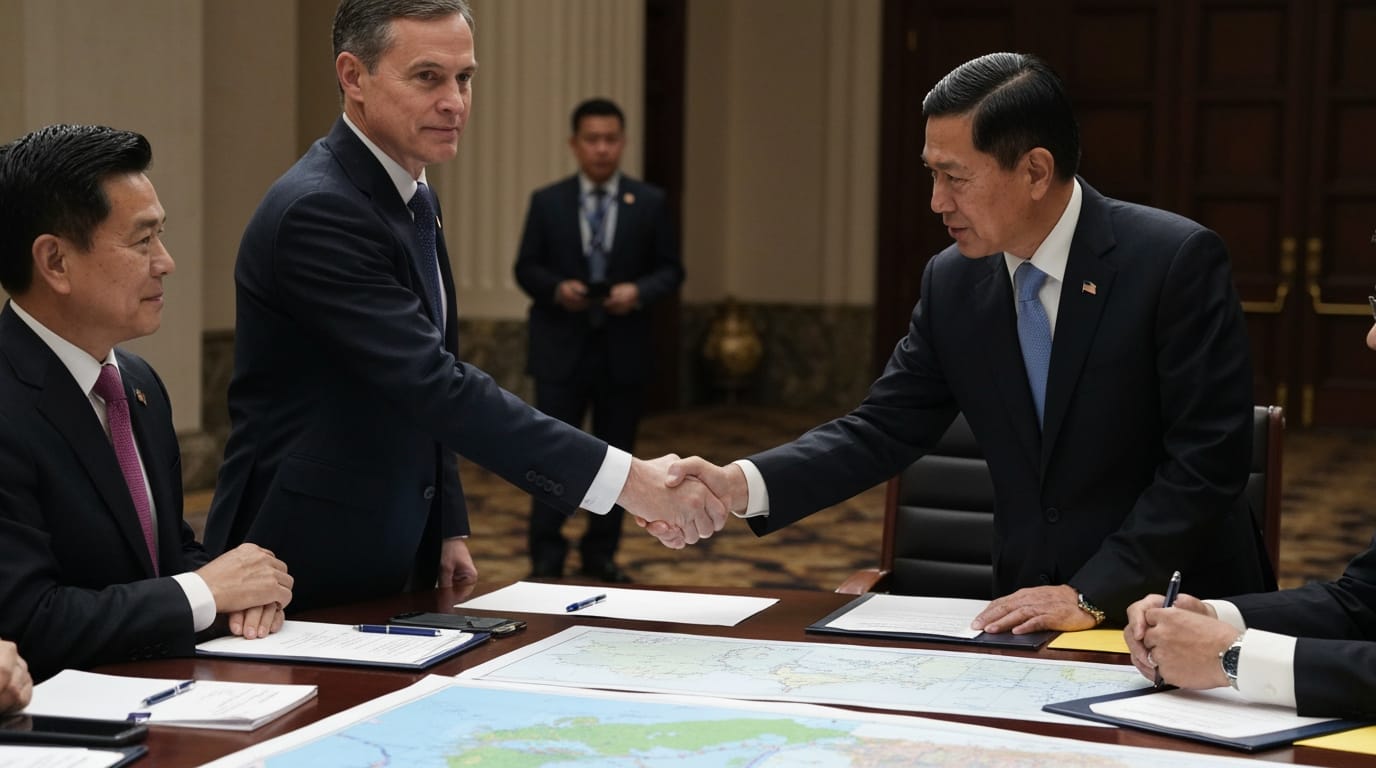
Washington, D.C. – In a significant move to reshape global supply chains and enhance national security, the United States on Wednesday announced the formation of a new critical minerals trading bloc aimed at drastically reducing reliance on foreign adversaries, particularly China. Vice President JD Vance unveiled the ambitious plans at a 55-nation ministerial conference in Washington, D.C., emphasizing the establishment of a "preferential trade zone" designed to ensure stable supply and pricing of these essential materials.
The initiative, characterized by the Trump administration as a critical step toward economic and strategic autonomy, seeks to bring together allies and partners in a coordinated effort to secure the minerals vital for advanced technologies, defense systems, and the burgeoning clean energy transition. The announcement follows years of growing concern over concentrated supply chains and the potential for geopolitical leverage.
The Geopolitical Imperative: A Quest for Mineral Security
The impetus behind the new trading bloc stems from a stark reality: the United States and many of its allies are heavily dependent on external sources for critical minerals, with China holding a dominant position across various stages of the supply chain. The U.S. is import-reliant for 31 of the 35 minerals deemed critical, and entirely dependent on imports for 12 of them. This vulnerability extends to key materials like lithium, cobalt, nickel, manganese, graphite, and rare earth elements, which are indispensable for everything from electric vehicle batteries and smartphones to fighter jets and advanced artificial intelligence systems.
China's near-monopoly in the processing of many of these minerals has created a strategic choke point. Beijing controls an estimated 40 to 90 percent of the world's processing capacity for lithium, cobalt, and copper, and accounts for almost 100 percent of heavy rare earth production, 85 percent of light rare earths, and 86 percent of tungsten. This dominance is not solely due to natural endowments but is the result of decades of targeted industrial, trade, and foreign policy decisions. U.S. officials and allies have increasingly viewed this concentration as a national security risk, fearing that critical minerals could be weaponized through export controls or supply disruptions. Vice President Vance articulated the core objective, stating the new bloc would "guarantee American access to American industrial might while also expanding production across the entire zone."
Forging Alliances: The Minerals Security Partnership and Beyond
The United States is building upon existing frameworks while simultaneously introducing new initiatives to achieve its critical minerals objectives. One such existing collaboration is the Minerals Security Partnership (MSP), which unites 13 countries and the European Union, including Australia, Canada, India, Japan, South Korea, and the United Kingdom. The MSP's mandate is to catalyze public and private investment in responsible critical mineral supply chains, focusing on projects that adhere to high Environmental, Social, and Governance (ESG) standards.
The newly proposed trading bloc, dubbed the "Forum on Resource Geostrategic Engagement" (FORGE), is designed to complement these efforts. During the recent ministerial conference, which saw attendance from delegations representing 54 countries and the European Commission, the U.S. signed eleven new bilateral critical minerals frameworks or Memoranda of Understanding (MOUs) with nations including Argentina, Ecuador, Guinea, Morocco, Peru, and Uzbekistan. Additionally, the U.S. and Mexico announced an action plan to explore coordinated trade policies and the implementation of price floors for critical mineral imports, signifying a concerted push for regional cooperation.
A key feature of the new preferential trade zone will be the establishment of "reference prices" for critical minerals at each stage of production. These prices, reflecting "real-world fair market value," would be maintained through "adjustable tariffs" for members of the bloc, aiming to shield participants from external disruptions and ensure consistent pricing. The administration is also committing significant financial resources, mobilizing over $30 billion in support for critical mineral supply chains over the past six months, including a $10 billion loan from the U.S. Export-Import Bank for "Project Vault," a domestic strategic reserve for critical minerals.
Economic Incentives and Environmental Safeguards
The proposed trading bloc aims to deliver immediate and durable economic benefits for participating nations. By creating a stable and predictable market within the preferential trade zone, the U.S. seeks to incentivize investment in mining, processing, and recycling capacities across member countries. This strategy is intended to foster diverse centers of production and supply chains resilient to the kind of geopolitical and economic pressures that have historically characterized the critical minerals market.
However, the path to secure critical mineral supply chains is not without its challenges. Mining and processing these materials often involve substantial risks, long project development timelines, and significant capital investment. There are also considerable environmental concerns associated with critical mineral extraction and processing, particularly the heavy use of chemicals and generation of toxic waste, especially prevalent in rare earth element production. Recognizing this, the MSP explicitly supports projects that meet high environmental, social, and governance (ESG) standards, aiming to ensure that the pursuit of mineral security aligns with sustainable development goals and benefits local communities.
While the long-term benefits are touted, the immediate market reaction has shown some volatility. Shares of rare earths and critical minerals companies experienced declines ranging from 1.8% to 7% following Vice President Vance's announcement, suggesting investor uncertainty regarding the implications of the new trading architecture.
The Road Ahead: Overcoming Hurdles for Long-Term Resilience
The ambitious goal of the U.S. and its partners to diversify and secure critical mineral supply chains faces several complex hurdles. Establishing common standards and regulatory frameworks across a diverse group of nations will require extensive diplomatic effort. Overcoming existing trade relationships and convincing all potential partners to align with the new bloc's mechanisms, including price floors and tariffs, will also be a significant undertaking. While the U.S. aims to bolster its own industrial base, it currently possesses limited processing capabilities compared to China, necessitating substantial investment in downstream infrastructure both domestically and among allies.
Despite these challenges, the initiative presents substantial opportunities for long-term global supply chain resilience. By fostering international cooperation, diversifying sources, and promoting responsible production practices, the trading bloc could insulate member economies from future supply shocks and geopolitical risks. The strategy emphasizes not only traditional mining but also investment in disruptive innovation, recovery, and recycling technologies, which are seen as potentially faster, cleaner, and cheaper alternatives to traditional methods.
Ultimately, the U.S.-led critical minerals trading bloc represents a strategic pivot in global resource diplomacy. It underscores a collective recognition among allied nations that the secure and sustainable supply of these vital materials is fundamental to their economic prosperity, technological advancement, and national security in the 21st century. The success of this endeavor will depend on sustained commitment, coordinated action, and the ability to navigate complex geopolitical and economic landscapes to build a truly resilient critical minerals ecosystem.